Time Period: Soviet

  • SSSR na Stroike Digital Archive

    SSSR na Stroike Digital Archive

    One of the most visual Soviet magazines of the Stalin era

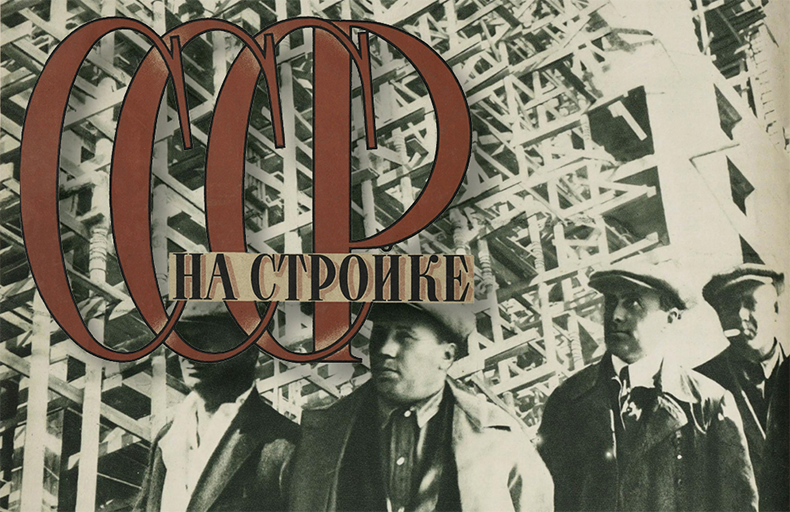
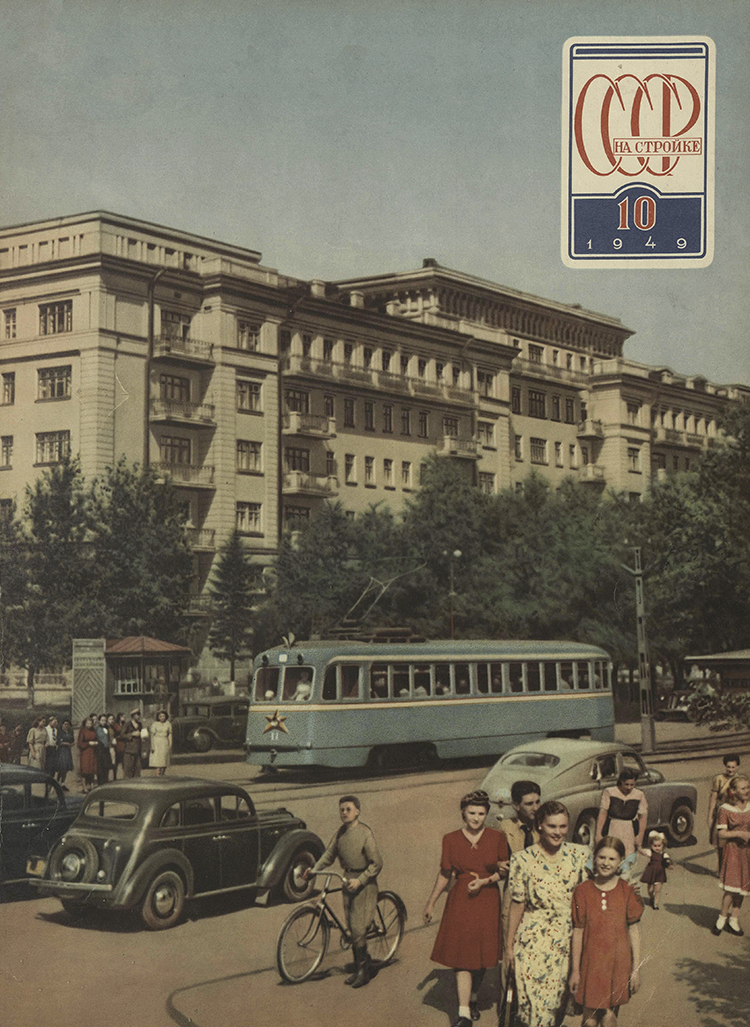
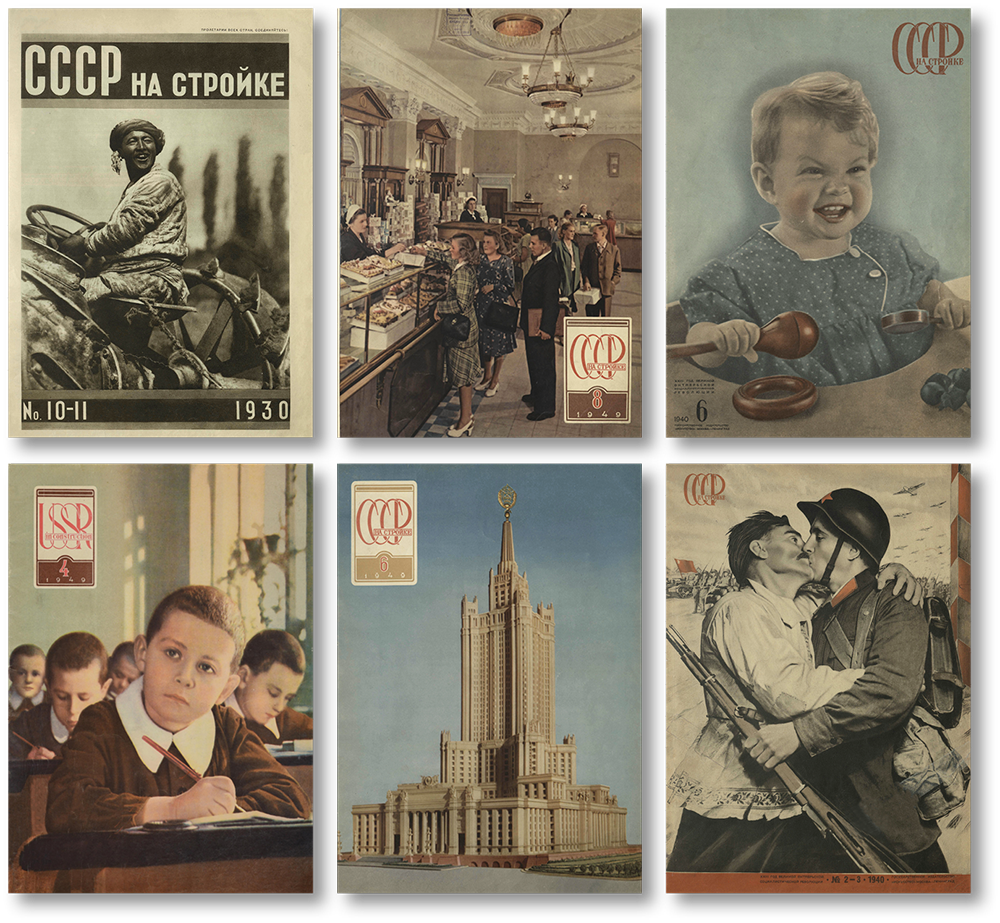
    SSSR na Stroike (СССР на стройке, USSR in Construction) was one of the most visually distinctive and ambitious Soviet periodicals of the Stalin era. Published from 1930 through 1941 and briefly revived in 1949, the journal was created as a lavishly illustrated showcase of Soviet industrialization, modernization, and social transformation. Today, it is an important primary source for the study of Soviet history, political communication, propaganda, photography, graphic design, visual culture, and the international representation of the USSR.

    The complete Russian-language edition comprises 133 issues. The journal was also produced for international audiences in English, French, German, and, beginning in 1938, Spanish. At present, we have located 80 English-language issues for inclusion in this digital collection, and we are continuing to search for additional English issues that can further strengthen the archive.

    Founded under the direction of Maxim Gorky, SSSR na Stroike brought together many leading Soviet photographers, artists, writers, and designers. Contributors included El Lissitzky, Alexander Rodchenko, Varvara Stepanova, Max Alpert, Isaac Babel, and Mikhail Koltsov. The journal became particularly notable for its innovative combination of photography, photomontage, typography, dramatic page layouts, foldouts, inserts, and large-format visual narratives.

    Early issues emphasized major industrial and infrastructure projects, while later journals addressed Soviet republics and regions, transportation, agriculture, aviation, education, children, the arts, everyday life, political events, and military and technological achievements.
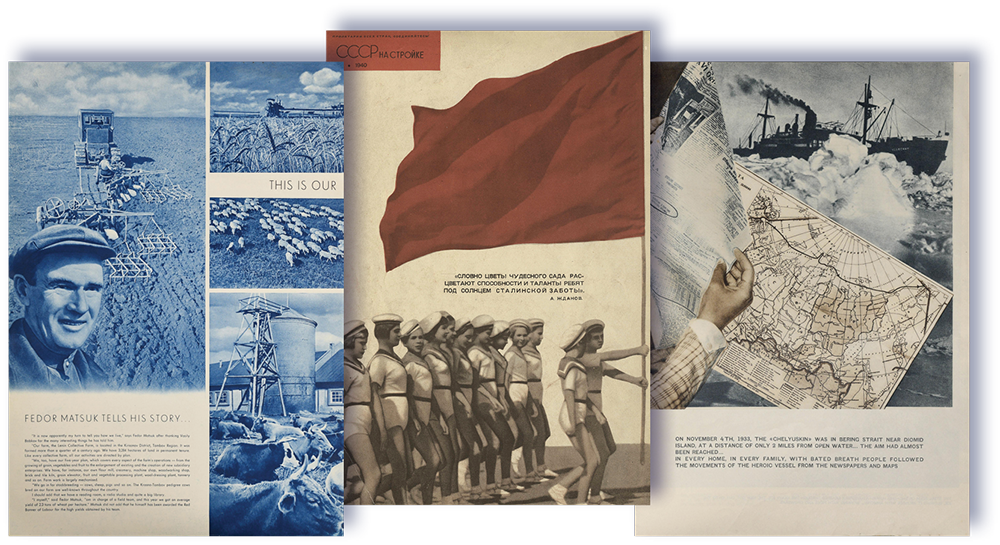
    The SSSR na Stroike Digital Archive offers scholars the most comprehensive collection available for this title, bringing together issues that have previously been scattered among libraries, archives, and private collections. The archive features full page-level digitization and complete original graphics. The archive has searchable text and is cross-searchable with numerous other Infoteka digital resources.

    The archive will be particularly valuable for research and teaching in Soviet and Russian history, Stalinism, propaganda and political communication, photography, graphic and information design, art history, visual and media studies, architecture and urban studies, industrial history, international relations, and Russian and East European studies. By making this rare publication available in a unified searchable digital environment—and by bringing together the Russian and surviving English-language editions—the collection will allow researchers to examine both the visual language of Soviet modernization and the ways in which that message was adapted for international audiences.
  • Early Soviet Cinema Collection. Part Two

    Early Soviet Cinema Collection. Part Two

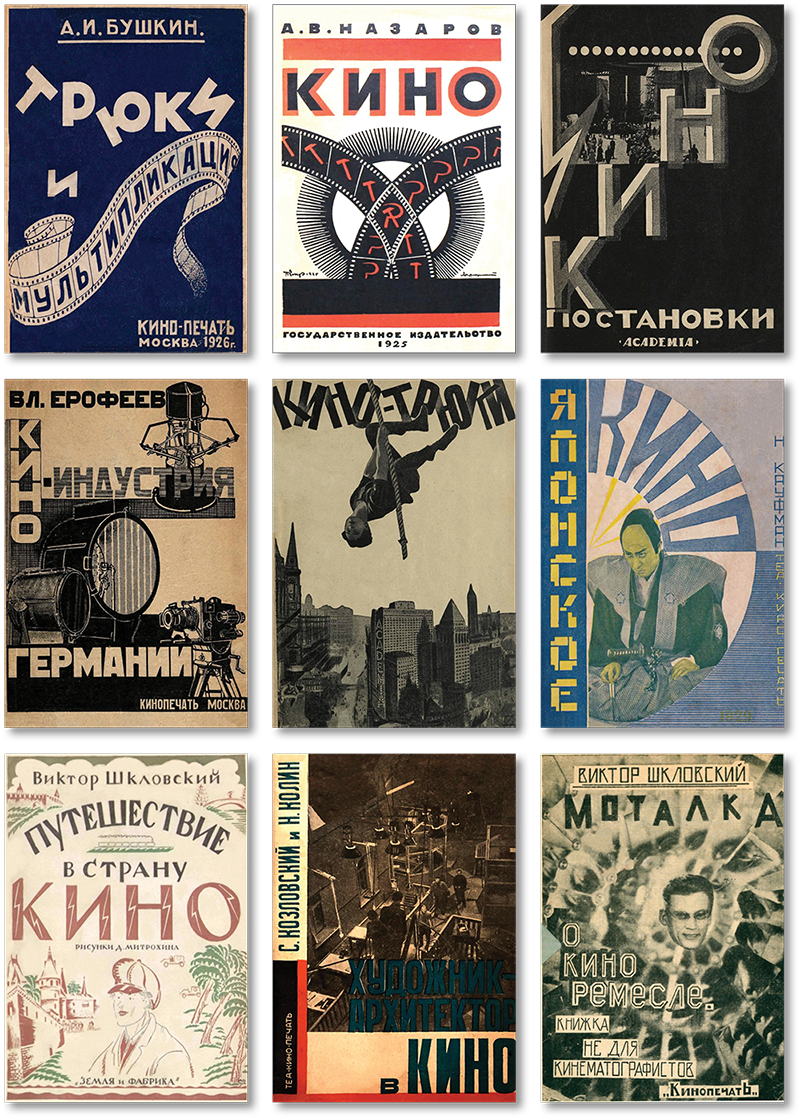
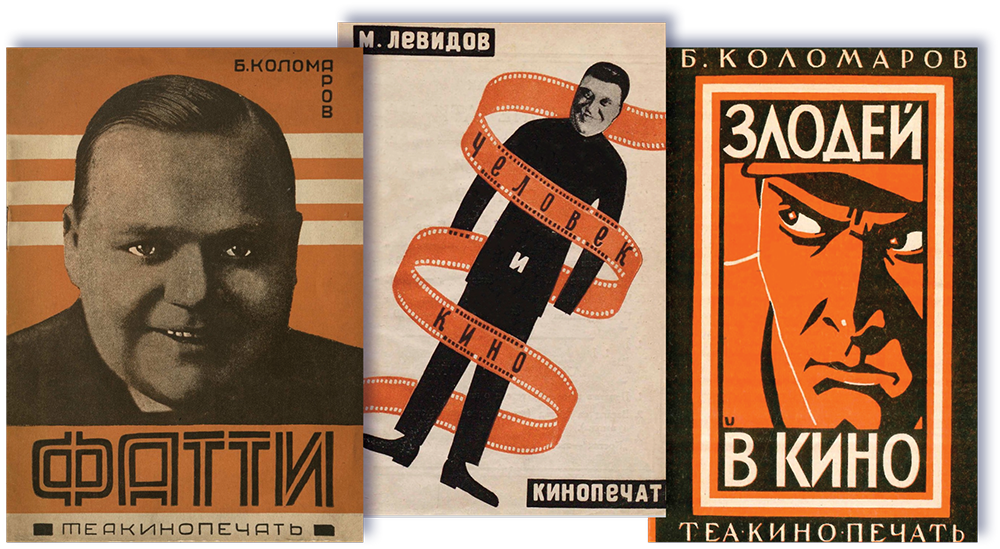
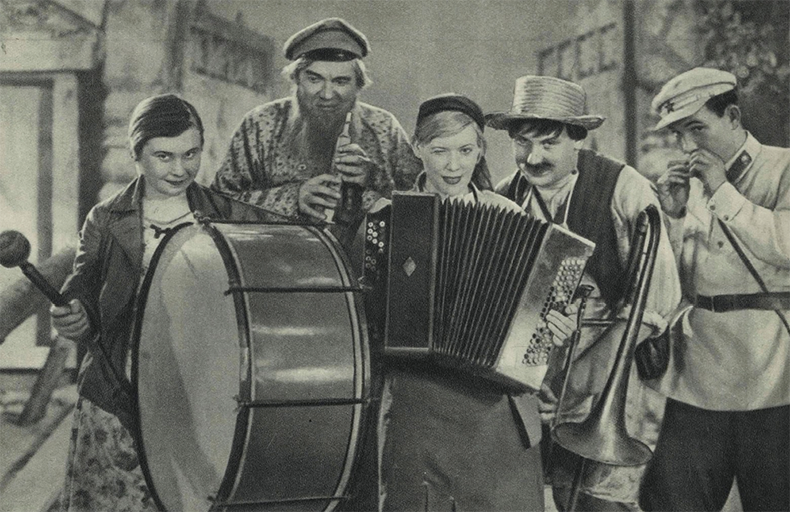
    The collection covers publications issued between 1908 and 1956, with particular strength in the formative decades of Soviet film culture. It includes works by and about leading figures in Soviet cinema, film theory, directing, acting, screenwriting, criticism, and production, including Lev Kuleshov, Vsevolod Pudovkin, Mikhail Romm, Vladimir Nielsen, Isaac Babel, Ilya Trauberg, Nikolai Anoshchenko, Veniamin Vishnevsky, and others. Among the included titles are works on film directing, montage, screen acting, visual composition, sound cinema, cinema architecture, film scripts, the history of cinematography, and annual surveys of Soviet film production.

    Beyond film technique and aesthetics, the collection is especially valuable for the study of cinema as a Soviet cultural institution. The books address the political, educational, and ideological uses of film, including cinema and communist education, children and cinema, documentary and technical films, foreign film criticism, atheist documentaries, the representation of women, the role of film in public instruction, and the relationship between cinema, literature, theater, and state cultural policy. As a result, the collection will support not only film studies, but also research in Soviet history, Slavic studies, visual culture, media studies, cultural policy, propaganda, gender studies, education, and the history of technology.

  • Russian Film and Theater Periodicals Digital Archive

    Russian Film and Theater Periodicals Digital Archive

    Collection of rare film and theater magazines from critical period in Russian and Soviet history.

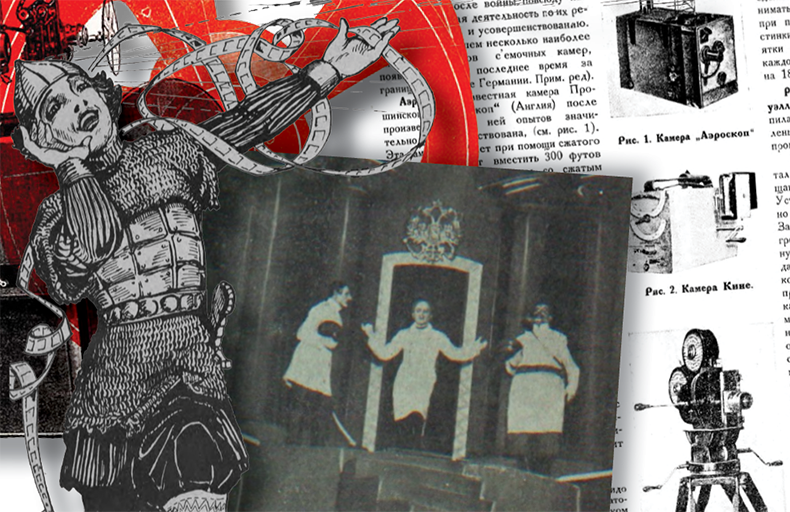
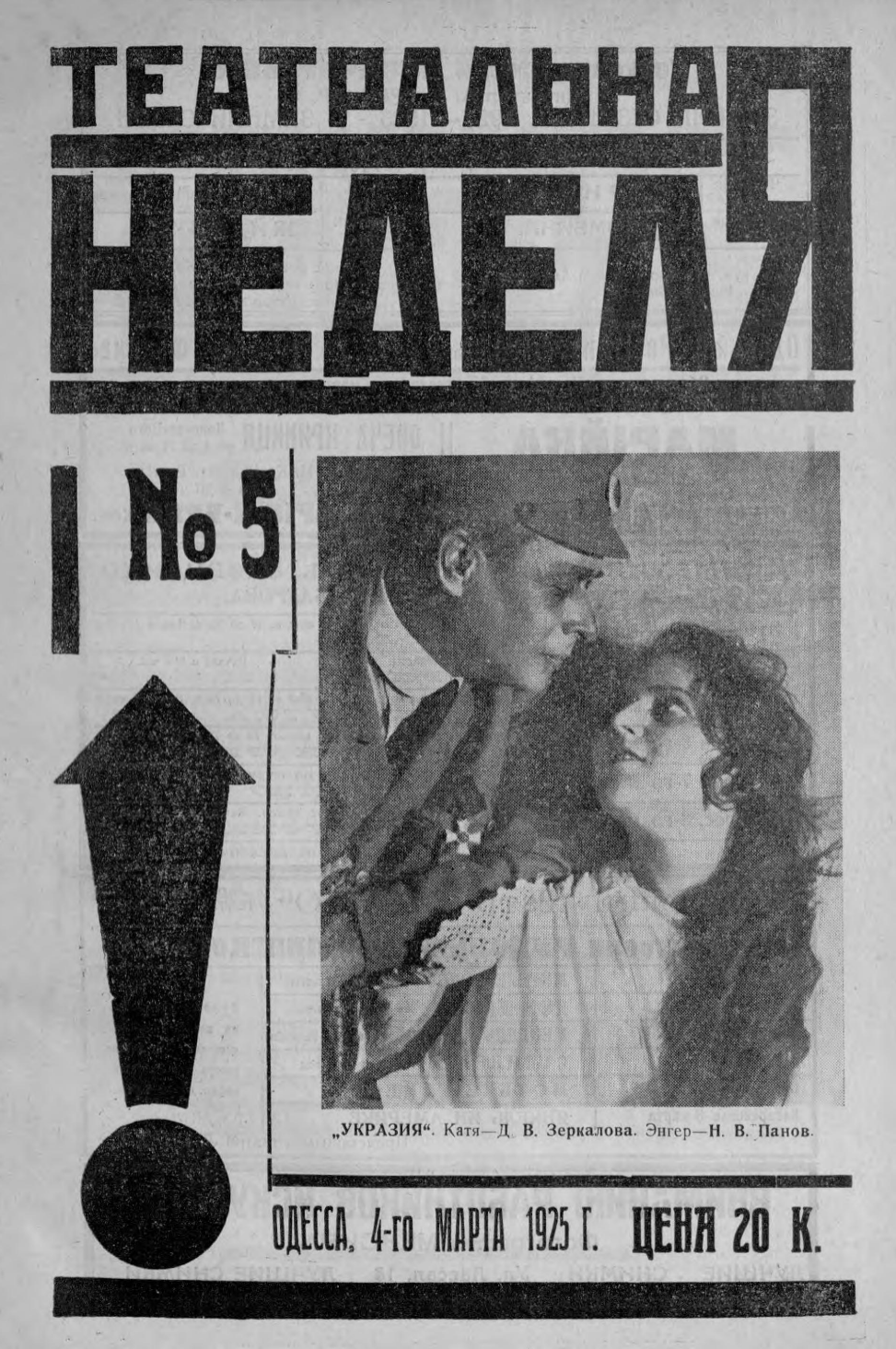
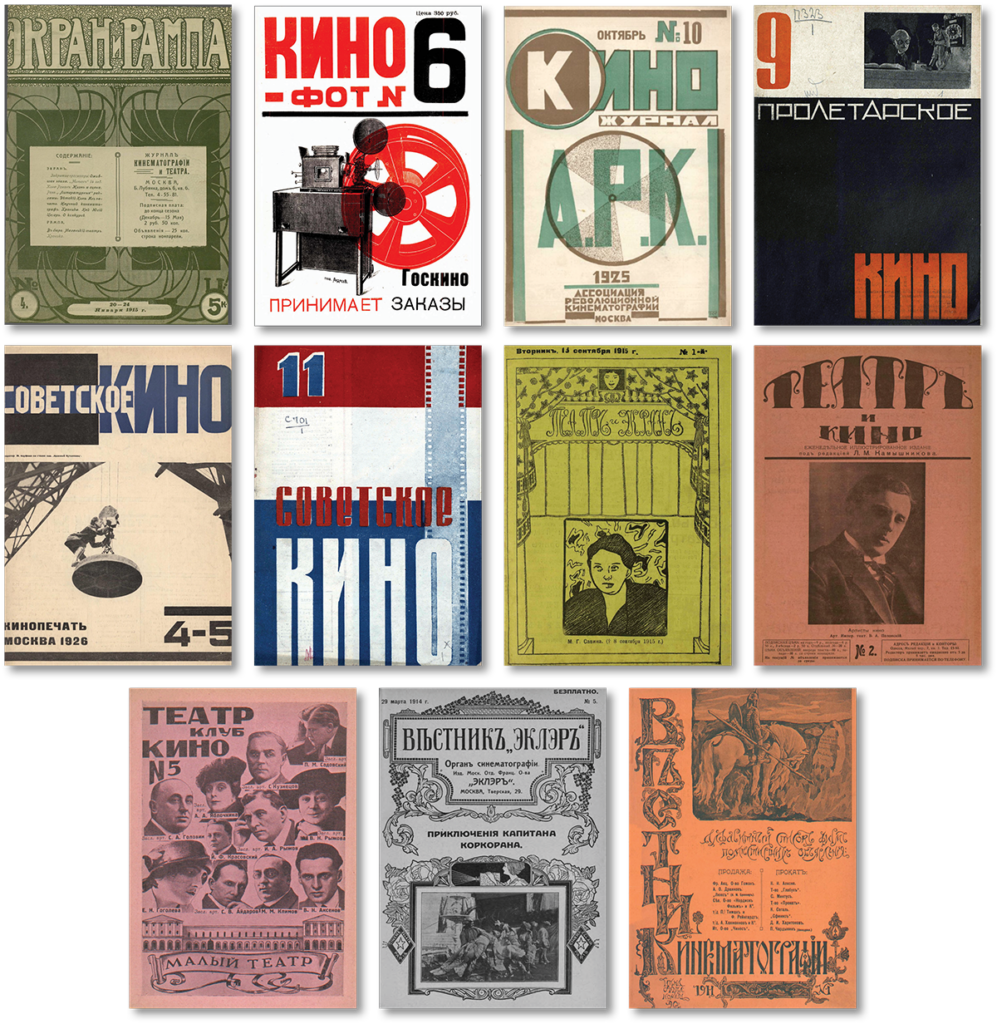
    Russian Film and Theater Periodicals Digital Archive is a curated digital collection of 11 rare Russian and Soviet film and theater magazines published between 1911 and 1935, covering the final years of the Russian Empire and the formative decades of Soviet cultural life. The archive brings together influential and often short-lived periodicals such as Vestnik kinematografii, Ekran i rampa, Teatr i kino, Kino-Fot, Kino-zhurnal A.R.K., Sovetskoe kino, and Proletarskoe kino, among others. Together, these titles document the emergence of cinema in Russia as a new artistic medium, commercial industry, technological system, and later as a central instrument of Soviet cultural policy and ideological education.

    The collection is especially valuable because it preserves the close relationship between film, theater, journalism, visual culture, and politics during a period of dramatic historical transformation. Pre-revolutionary titles capture the world of urban entertainment culture, theater repertories, film exhibition, advertising, audience formation, and the rapid growth of cinema before 1917. Soviet-era journals trace the rise of montage theory, Constructivist aesthetics, studio organization, documentary and newsreel production, proletarian cultural policy, and the increasingly institutionalized role of cinema in Soviet society.

    Richly illustrated and textually diverse, the archive includes articles, reviews, editorials, theoretical essays, production notes, repertory programs, advertisements, caricatures, film stills, photographs, and examples of avant-garde graphic design. It provides essential primary-source material for scholars and students in Slavic Studies, Russian and Soviet history, film and media studies, theater studies, art history, and Soviet visual culture. Russian Film and Theater Periodicals Digital Archive brings together rare, scattered and difficult to access periodicals into a single, searchable archive, making a crucial body of early Russian and Soviet film and theater journalism accessible for teaching, research, and collection development.

    Russian Film and Theater Periodicals Titles

    • Ekran i rampa (Экран и рампа)
    • Kino-fot (Кино-фот)
    • Kino-zhurnal A.R.K. (Кино-журнал А.Р.К.)
    • Proletarskoe kino (Пролетарское кино)
    • Sovetskoe kino (Советское кино)
    • Sovetskoe kino (Советское кино)
    • Teatr i ekran (Театр и экран)
    • Teatr i kino (Театр и кино)
    • Teatr, klub, kino (Театр, клуб, кино)
    • Vestnik «Ekler» (Вестник «Эклер»)
    • Vestnik kinematografii (Вестник кинематографии)
  • Krasnaia Niva Digital Archive

    Krasnaia Niva Digital Archive

    One of the most significant illustrated literary and cultural journals of the early Soviet period.

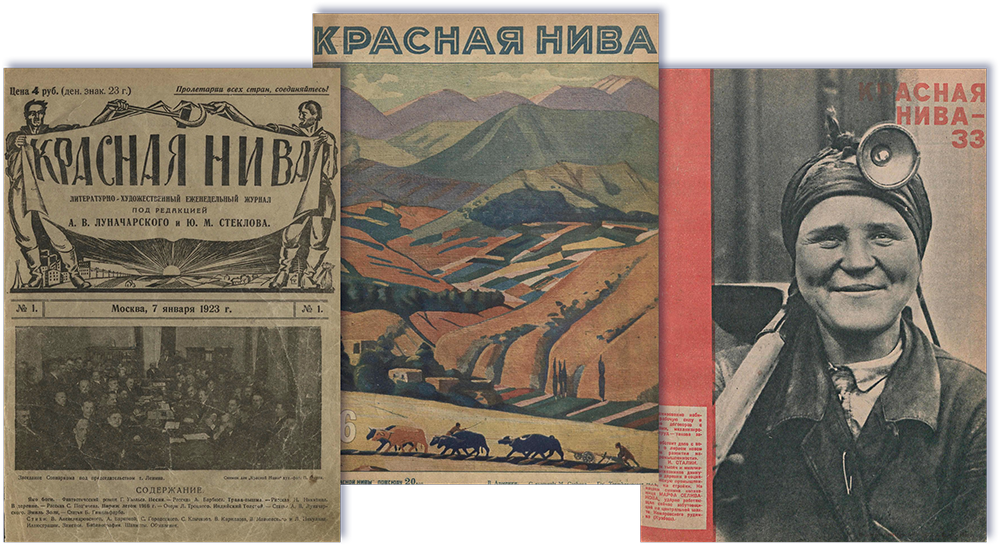
    Appearing during the formative decade between the end of the Civil War and the consolidation of Stalinist cultural policy, Krasnaia Niva offers an unusually rich record of Soviet intellectual and artistic life before the full standardization of Socialist Realism and the later mechanisms of cultural control. Its pages preserve the pluralism, contradictions, and experimentation of the 1920s: revolutionary rhetoric coexists with literary variety, popular education, internationalism, peasant themes, technological enthusiasm, satire, and visual modernism.

    Krasnaia Niva published fiction and poetry by major and now-canonical writers, including Aleksandr Grin, Boris Pilniak, Mikhail Prishvin, Andrei Platonov, Vladimir Mayakovsky, Sergei Esenin, and others. It also featured translated literature by such international authors as Henri Barbusse, Romain Rolland, and O. Henry, reflecting the early Soviet effort to situate Russian readers within a global literary and political culture. Because some of its contributors later became politically suspect, marginalized, censored, or retrospectively rewritten out of Soviet literary history, the archive is especially valuable for reconstructing the cultural openness and instability of the 1920s.

    As an illustrated magazine, Krasnaia Niva is also an important source for the study of Soviet visual culture. Its pages feature reproductions of artworks, drawings, caricatures, decorative layouts, and striking cover designs that trace the changing graphic language of the early Soviet period—from post-revolutionary illustration and political satire to photomontage, Constructivist design, and the increasingly monumental imagery of socialist construction.

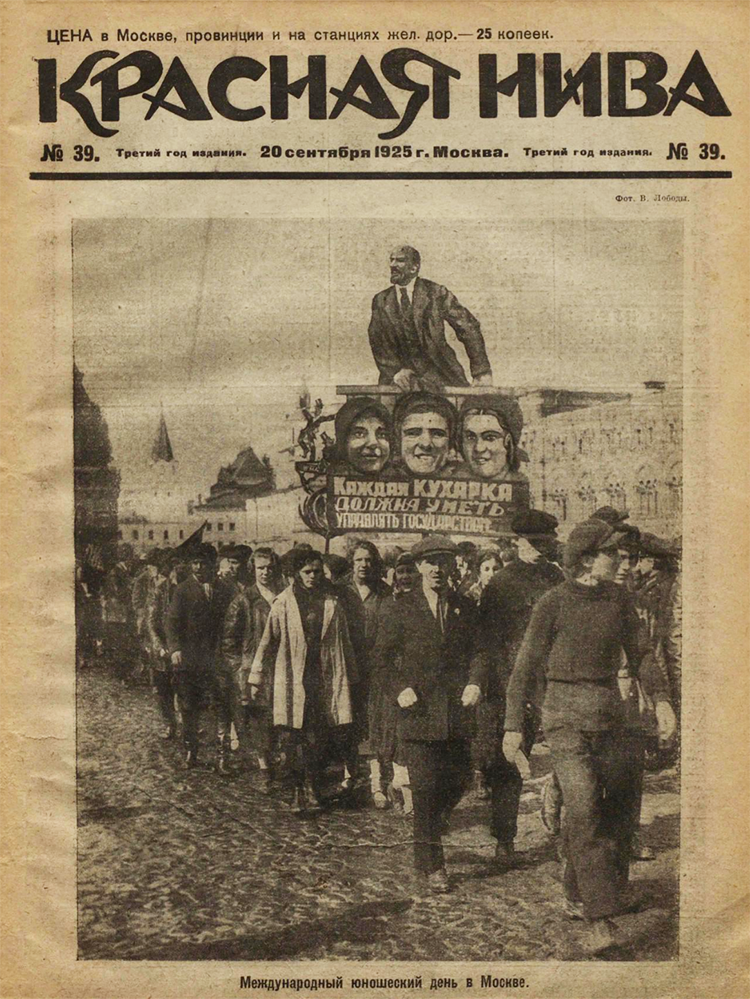
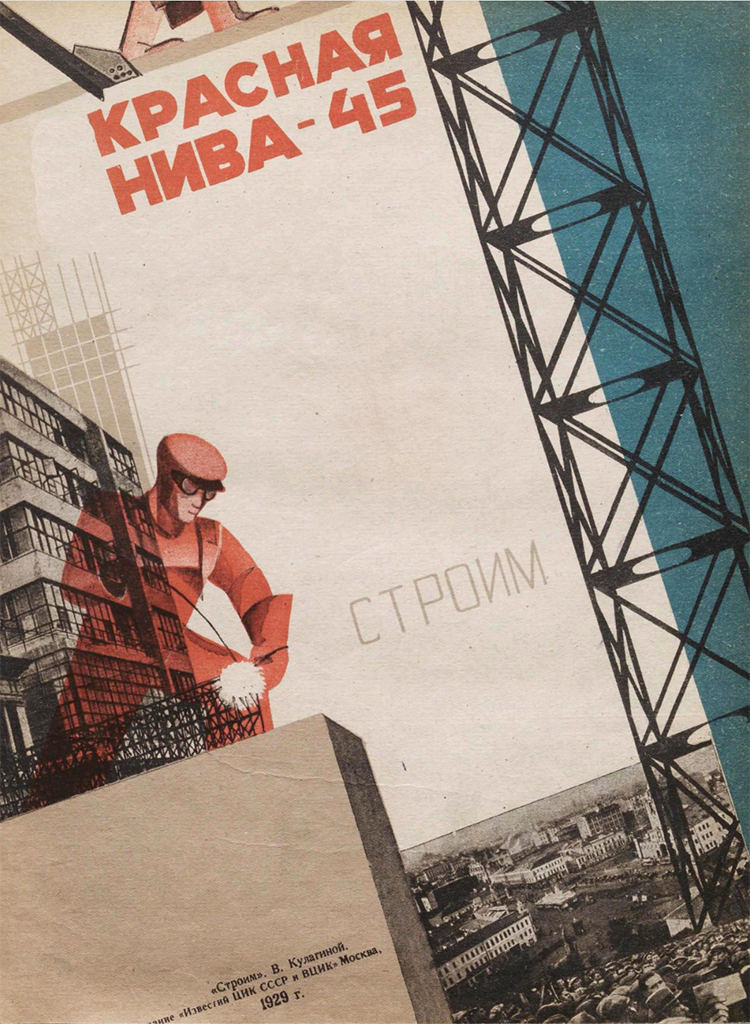
    The journal’s visual significance is underscored by the fact that MoMA in New York holds Krasnaia Niva, no. 45, 1929, designed by Valentina Kulagina, as a letterpress-printed journal with a lithographed cover, associated with the Merrill C. Berman Collection of modern graphic material.

    Krasnaia Niva, no. 45, 1929

    The Krasnaia Niva Digital Archive is particularly valuable for scholars and students working in Slavic studies, Soviet history, Russian literature, art history, visual culture, media studies, book history, comparative literature, translation studies, and the history of popular science. It supports research into the New Economic Policy period, Soviet readership and mass culture, the transformation of the illustrated press, debates over “fellow travelers” and proletarian literature, representations of peasants and workers, the emergence of the “new Soviet everyday life,” and the gradual narrowing of cultural expression under ideological pressure.

    The Krasnaia Niva Digital Archive offers scholars the most comprehensive collection available for this title. It includes fully searchable scans of every issue, preserving the visual and textual richness of the original print editions, and is cross-searchable with numerous other Infoteka digital resources. By making the full run searchable and accessible in digital form, the archive allows researchers to move beyond isolated famous texts or individual issues and instead trace themes, authors, images, genres, and ideological vocabulary across nearly a decade of Soviet cultural development. It is an essential primary-source archive for understanding how early Soviet culture was presented to a mass readership.

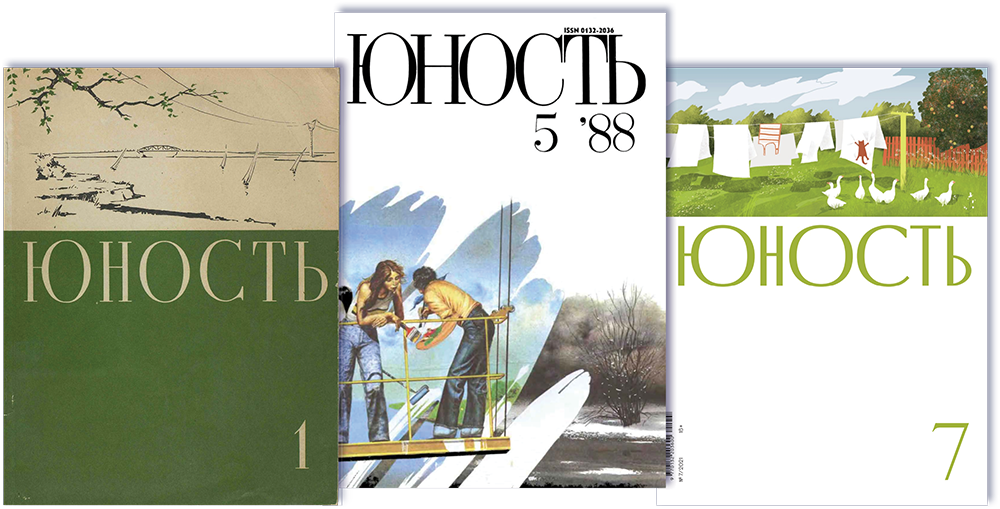
  • Iunost’ Digital Archive

    Iunost’ Digital Archive

    Influential illustrated literary journal geared toward younger readers.

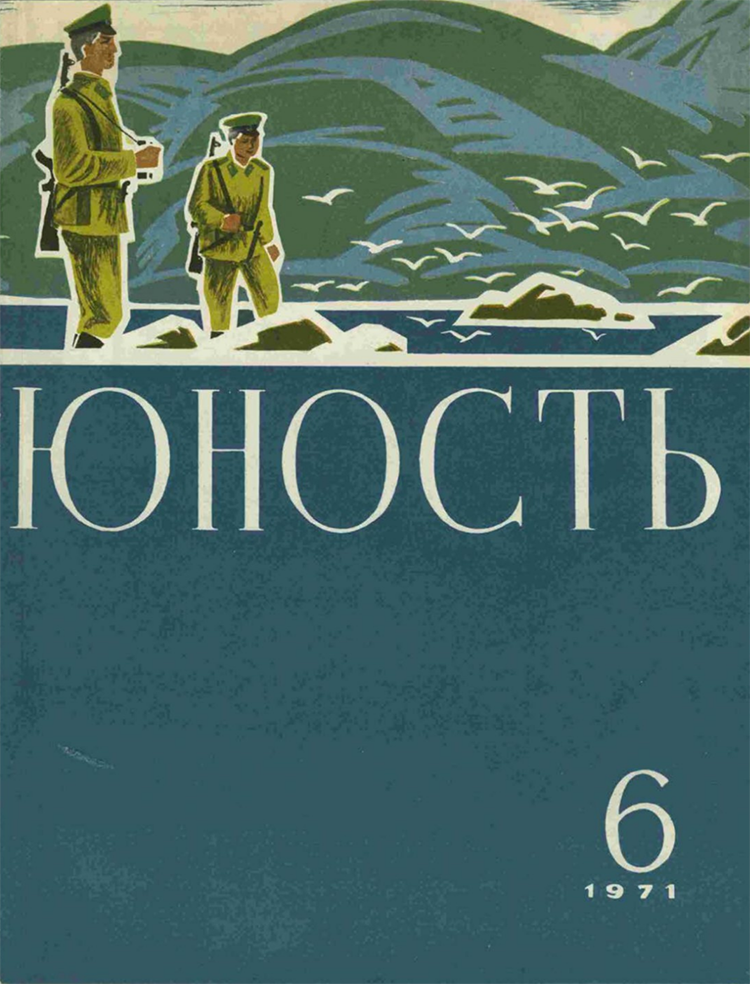
    The Iunost’ Digital Archive provides scholars with a rich primary-source record of Soviet and post-Soviet literary culture, youth identity, intellectual life, and changing boundaries of permissible expression. Beyond fiction and poetry, the journal engaged with contemporary society through writing on science and technology, sports, popular culture, art, and public debate. Its illustrated format, color art inserts, humor sections, and discussion forums make it a valuable resource not only for literary studies, but also for research in Soviet cultural history, media studies, visual culture, youth studies, censorship, and the history of everyday life.

    For academic libraries, the Iunost’ Digital Archive offers access to a publication that helped shape the literary and cultural experience of multiple generations. The archive enables researchers and students to trace the emergence of major authors, examine literary experimentation during the Thaw and later Soviet decades, study the interaction between cultural liberalization and political constraint, and follow the journal’s continued evolution after 1991 as an independent Russian literary publication. As a sustained record of literary discovery, cultural change, and youth-oriented public discourse, the archive is an essential addition to collections supporting Slavic studies, Russian literature, Soviet history, and modern European cultural research.

    The Iunost’ Digital Archive offers scholars the most comprehensive collection available for this title, with an additional year’s worth of content available for purchase on an annual basis. It includes fully searchable scans of every issue, preserving the visual and textual richness of the original print editions, and is cross-searchable with numerous other Infoteka digital resources.

    More about the Soviet “Thick Journals”

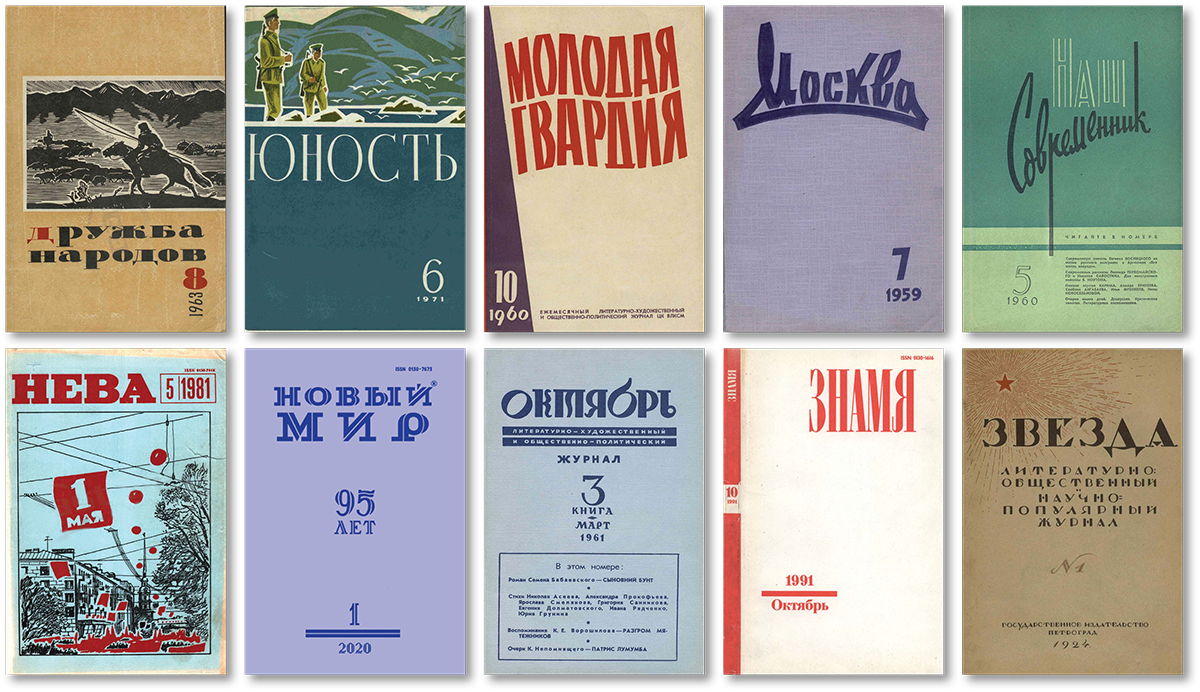
    The famed Soviet tolstye zhurnaly, or “thick journals,” were significant platforms for literary and intellectual discourse. Tolstye zhurnaly such as Iunost’ played a complex and multifaceted role in Soviet intellectual and literary life. They were not merely publications but institutions that shaped and were shaped by the cultural, intellectual, and political currents of their time. These journals served multiple roles:

    They acted as repositories of high culture, preserving the intellectual and literary achievements of the era. Given the limited avenues for independent publishing, these journals were the primary platforms where established and emerging writers could reach an audience.

    State-Controlled Outlets. While they were crucial platforms for intellectual and artistic expression, it’s important to remember that these journals were often used to propagate official ideologies, and the works published in them usually underwent rigorous censorship.

    Academic Importance. For academics studying the Soviet period, tolstye zhurnaly offer a valuable glimpse into the state-sanctioned intellectual climate of the time. They provide context for how literature and intellectual thought evolved under different political and social conditions.

    Catalysts for Change. During more liberal periods, such as the Khrushchev Thaw and the perestroika years, tolstye zhurnaly could act as catalysts for change, pushing the boundaries of what was acceptable to discuss and publish.

  • Molodaia Gvardiia Digital Archive

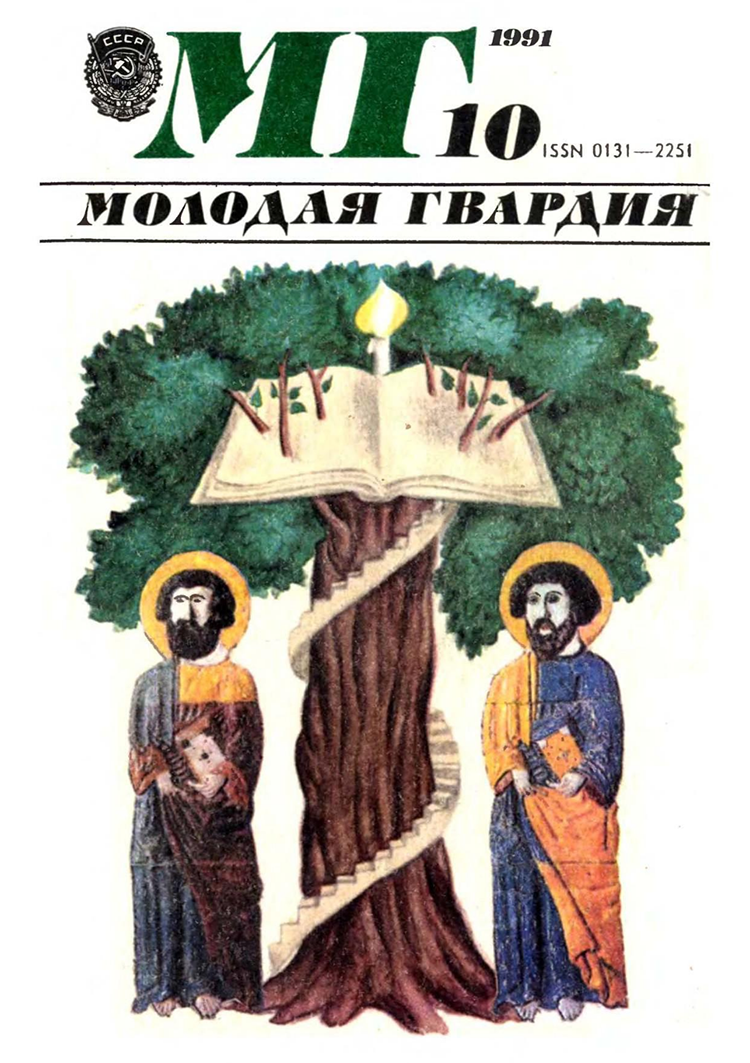
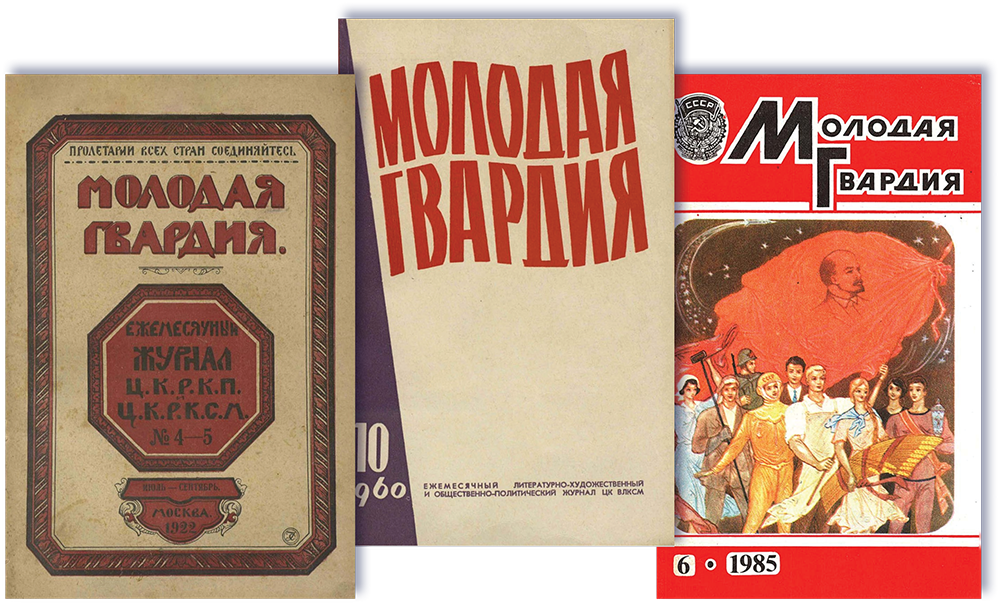
    Molodaia Gvardiia Digital Archive

    Official journal of the Young Communist League, tasked with shaping Soviet youth.

    From its early years, Molodaia Gvardiia served as a cultural training ground for aspiring Soviet writers and political thinkers, with early works by figures like Osip Mandelstam and Mikhail Sholokhov. Over the decades, it played a central role in shaping what would later be known as Russophile discourse, particularly during and after the Khrushchev Thaw.

    In the post-war decades, the journal came to be associated with a nationalist and traditionalist line. During the Gorbachev years, Molodaia Gvardiia was among the few Soviet journals that openly resisted perestroika, becoming a voice for those opposed to liberalization. Though its audience has diminished in the post-Soviet period, Molodaia Gvardiia remains a living institution of Russian conservative thought and literary life. Since 2009, it has been edited by Valerii Khatushin and continues to be published monthly in Moscow.

    The Molodaia Gvardiia Digital Archive provides researchers, students, and historians with a unique window into Soviet and post-Soviet cultural and ideological dynamics, spanning a century of literary evolution, political debate, and generational change. Users can trace the journal’s transformation over time: from its foundational role in Soviet youth mobilization and its post-war embrace of conservative, Russophile thought, to its defiant stance during the Gorbachev era and continued relevance in contemporary Russian discourse.

    This comprehensive resource includes fully searchable scans of every issue, preserving the visual and textual richness of the original print editions. The archive offers scholars the most comprehensive collection available for this title, with an additional year’s worth of content available for purchase on an annual basis. The archive is cross-searchable with numerous other Infoteka digital resources.

    More about the Soviet “Thick Journals”

    The famed Soviet tolstye zhurnaly, or “thick journals,” were significant platforms for literary and intellectual discourse. Tolstye zhurnaly such as Molodaia Gvardiia played a complex and multifaceted role in Soviet intellectual and literary life. They were not merely publications but institutions that shaped and were shaped by the cultural, intellectual, and political currents of their time. These journals served multiple roles:

    They acted as repositories of high culture, preserving the intellectual and literary achievements of the era. Given the limited avenues for independent publishing, these journals were the primary platforms where established and emerging writers could reach an audience.

    State-Controlled Outlets. While they were crucial platforms for intellectual and artistic expression, it’s important to remember that these journals were often used to propagate official ideologies, and the works published in them usually underwent rigorous censorship.

    Academic Importance. For academics studying the Soviet period, tolstye zhurnaly offer a valuable glimpse into the state-sanctioned intellectual climate of the time. They provide context for how literature and intellectual thought evolved under different political and social conditions.

    Catalysts for Change. During more liberal periods, such as the Khrushchev Thaw and the perestroika years, tolstye zhurnaly could act as catalysts for change, pushing the boundaries of what was acceptable to discuss and publish.

  • Zvezda Digital Archive

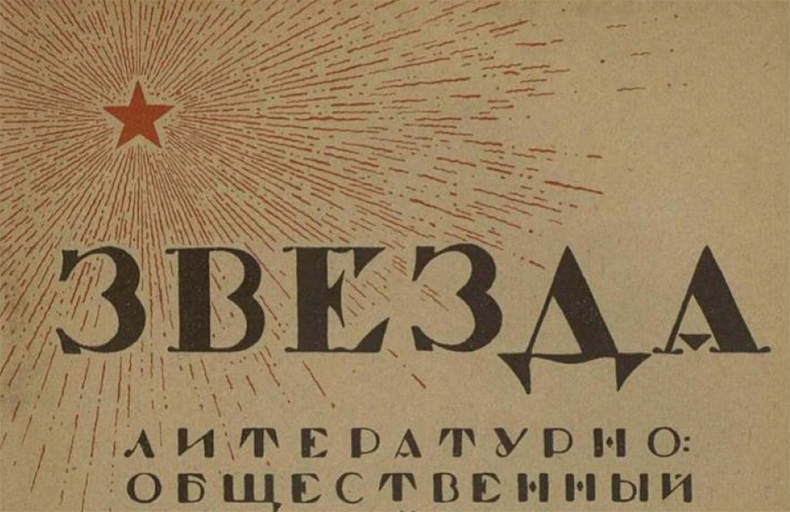
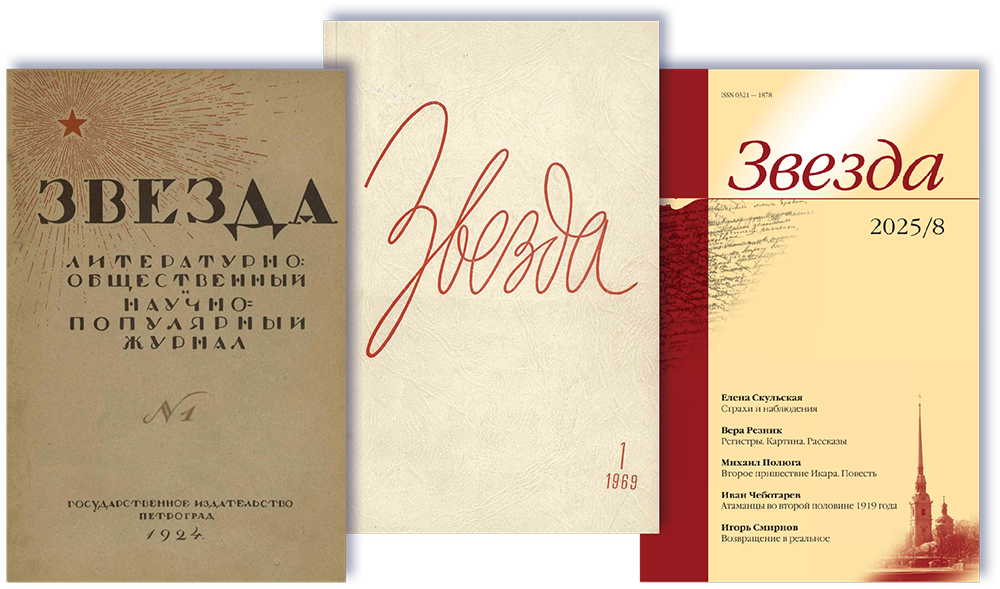
    Zvezda Digital Archive

    Key resource of Russian intellectual and literary circles for over a century.

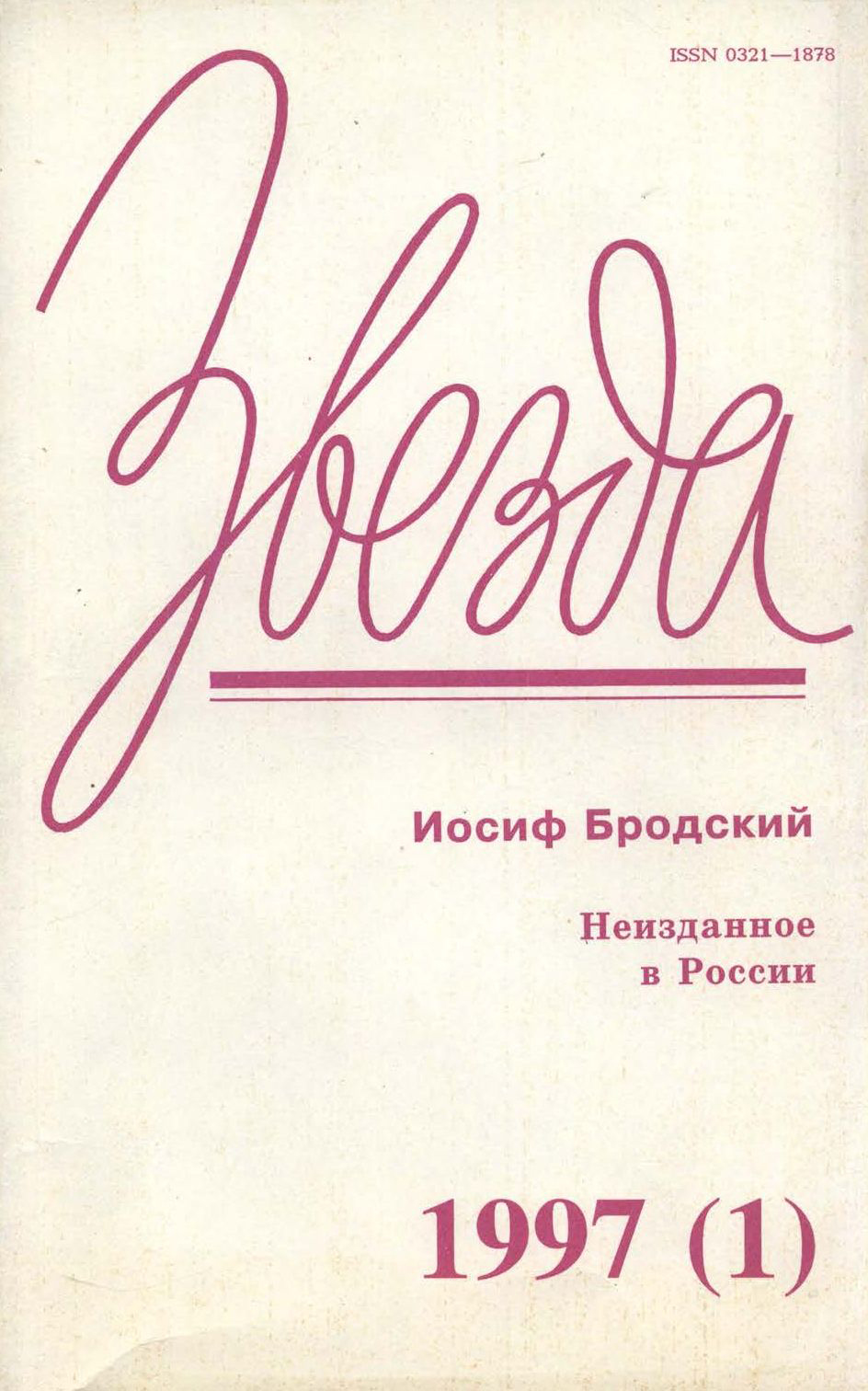
    The journal’s longevity and resilience through tumultuous periods of Soviet history, including the Siege of Leningrad and Stalinist repression, make it an essential resource for understanding the complexities of Russian cultural development over the past century. Notably, Zvezda faced severe criticism in August 1946 from the Soviet Communist Party in the infamous resolution “On the Journals ‘Zvezda’ and ‘Leningrad’,” where it was accused of publishing “ideologically harmful works,” particularly those by Mikhail Zoshchenko and Anna Akhmatova. During the era of perestroika, Zvezda began publishing previously prohibited works and articles by authors such as Alexander Solzhenitsyn, Joseph Brodsky, Andrei Sakharov, Yuri Lotman and many others.

    This extensive coverage provides researchers with access to:

    • Literary works by established and emerging Russian writers
    • Critical essays and reviews on literature, art, and culture
    • Discussions of social and political issues within the constraints of the era
    • Previously prohibited works published during the perestroika period
    • Evolving perspectives on Russian identity and cultural heritage

    The Zvezda Digital Archive offers a comprehensive collection spanning over 100 years, with an additional year’s worth of content available for purchase on an annual basis. The archive includes more than 25,000 works by over 10,000 authors, encompassing nearly 1,200 issues, over 23,000 articles, and over 280,000 pages. If converted to print, the archive for this title would occupy 49 feet of library shelf space. The archive offers scholars the most comprehensive collection available for this title, and features full page-level digitization and complete original graphics. The archive has searchable text and is cross-searchable with numerous other Infoteka digital resources.

    Note: In 1992 only 10 issues of Zvezda were published. This is not a gap in archive content but reflects the journal’s publication schedule that year.

    More about the Soviet “Thick Journals”

    The famed Soviet tolstye zhurnaly, or “thick journals,” were significant platforms for literary and intellectual discourse. Tolstye zhurnaly such as Zvezda played a complex and multifaceted role in Soviet intellectual and literary life. They were not merely publications but institutions that shaped and were shaped by the cultural, intellectual, and political currents of their time. These journals served multiple roles:

    They acted as repositories of high culture, preserving the intellectual and literary achievements of the era. Given the limited avenues for independent publishing, these journals were the primary platforms where established and emerging writers could reach an audience.

    State-Controlled Outlets. While they were crucial platforms for intellectual and artistic expression, it’s important to remember that these journals were often used to propagate official ideologies, and the works published in them usually underwent rigorous censorship.

    Academic Importance. For academics studying the Soviet period, tolstye zhurnaly offer a valuable glimpse into the state-sanctioned intellectual climate of the time. They provide context for how literature and intellectual thought evolved under different political and social conditions.

    Catalysts for Change. During more liberal periods, such as the Khrushchev Thaw and the perestroika years, tolstye zhurnaly could act as catalysts for change, pushing the boundaries of what was acceptable to discuss and publish.

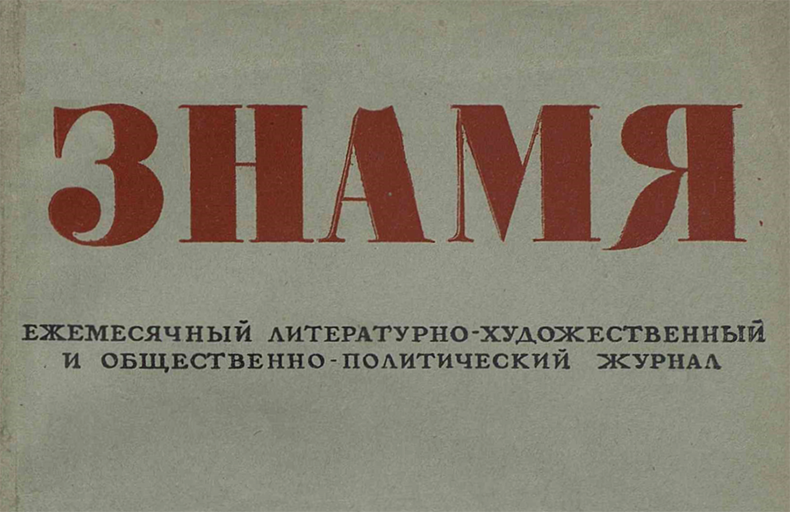
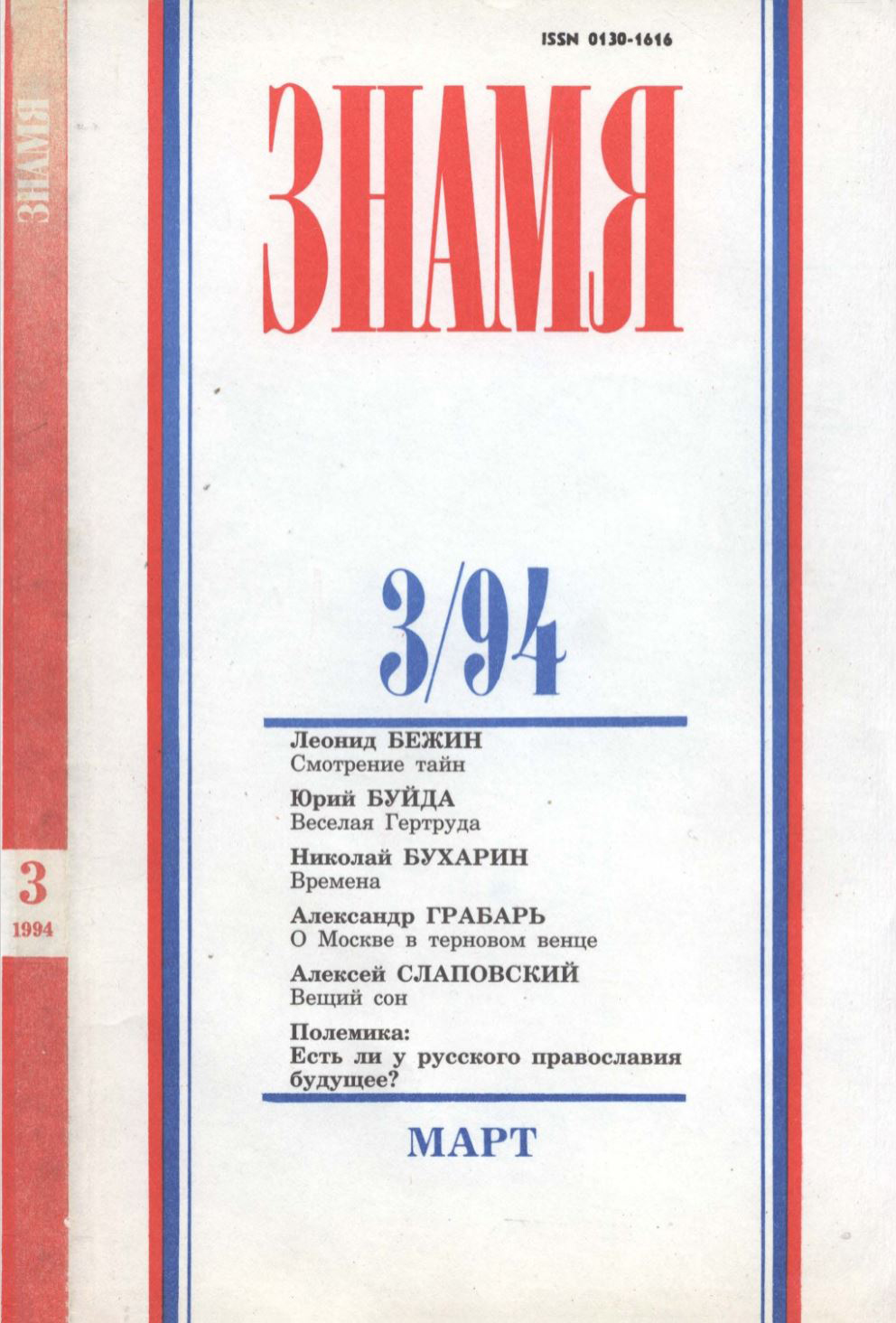
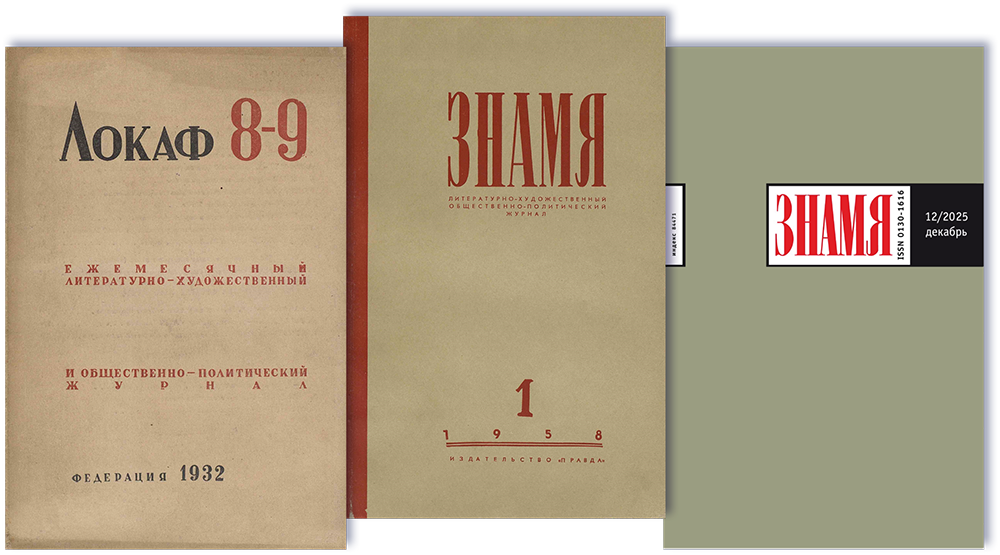
  • Znamia Digital Archive

    Znamia Digital Archive

    Prominent literary journal in publication since 1931.

    The Znamia Digital Archive contains all obtainable published issues from 1931 on, with an additional year’s worth of content available for purchase on an annual basis. Spanning over nine decades, it contains over 25,000 articles, or around 260,000 pages. If converted to print, the archive for this title would occupy 41 feet of library shelf space. The archive offers scholars the most comprehensive collection available for this title, and features full article-level digitization, complete original graphics, and searchable text, and is cross-searchable with numerous other Infoteka digital resources.

    More about the Soviet “Thick Journals”

    The famed Soviet tolstye zhurnaly, or “thick journals,” were significant platforms for literary and intellectual discourse. Tolstye zhurnaly such as Znamia played a complex and multifaceted role in Soviet intellectual and literary life. They were not merely publications but institutions that shaped and were shaped by the cultural, intellectual, and political currents of their time. These journals served multiple roles:

    They acted as repositories of high culture, preserving the intellectual and literary achievements of the era. Given the limited avenues for independent publishing, these journals were the primary platforms where established and emerging writers could reach an audience.

    State-Controlled Outlets. While they were crucial platforms for intellectual and artistic expression, it’s important to remember that these journals were often used to propagate official ideologies, and the works published in them usually underwent rigorous censorship.

    Academic Importance. For academics studying the Soviet period, tolstye zhurnaly offer a valuable glimpse into the state-sanctioned intellectual climate of the time. They provide context for how literature and intellectual thought evolved under different political and social conditions.

    Catalysts for Change. During more liberal periods, such as the Khrushchev Thaw and the perestroika years, tolstye zhurnaly could act as catalysts for change, pushing the boundaries of what was acceptable to discuss and publish.

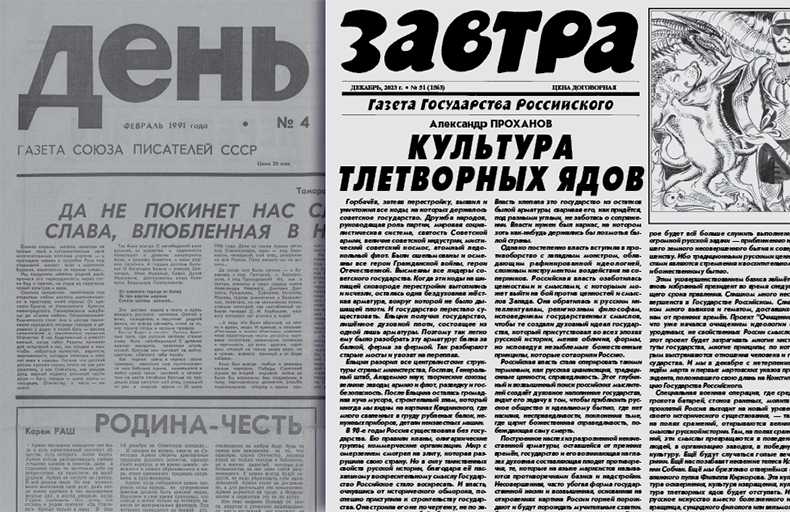
  • Zavtra Digital Archive

    Zavtra Digital Archive

    Influential newspaper of the right-wing opposition.

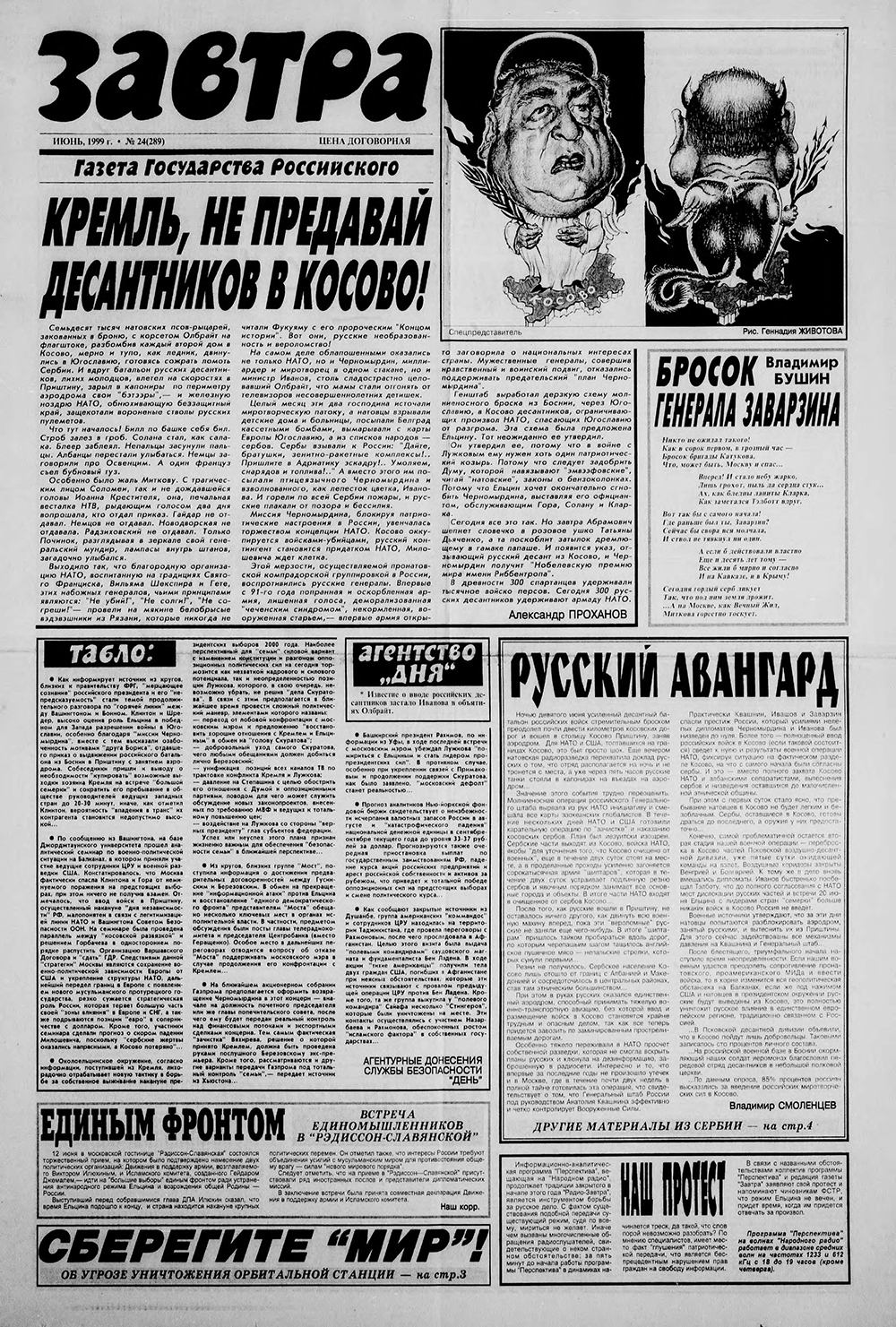
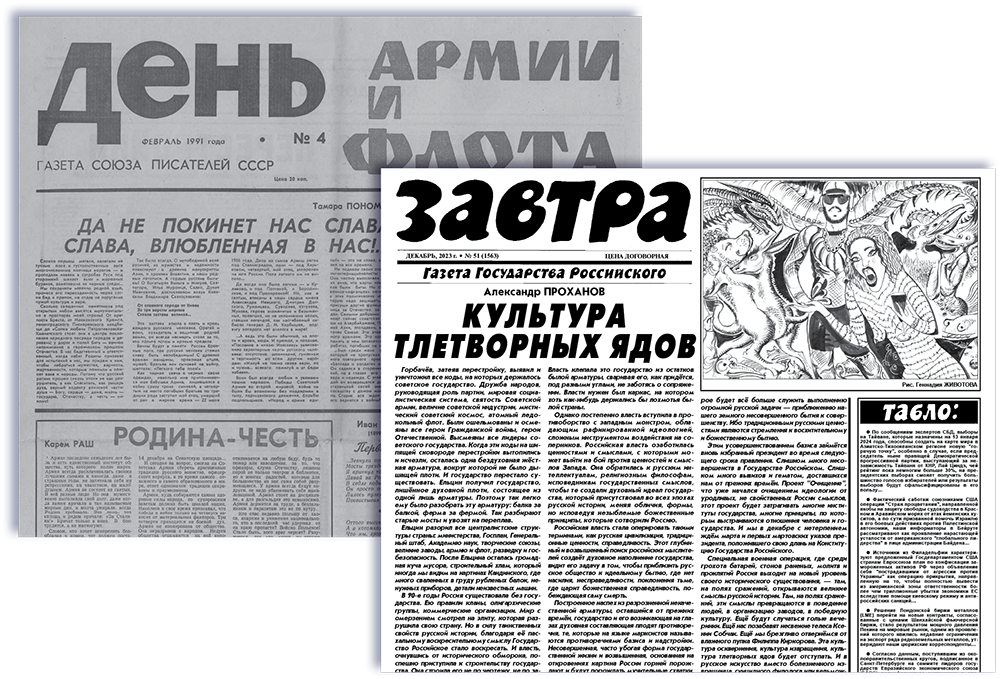
    Founded in Moscow in 1990 by noted Soviet journalist Alexander Prokhanov, Den’ (День, The Day) was created to serve as the “spiritual opposition” to the pro-Western government of Yeltsin. Following the coup in 1993, the paper was shut down by the authorities but was reborn as Zavtra (Завтра, Tomorrow), with Prokhanov still in the lead as editor in chief. One of the most influential publications of the right-wing opposition, Zavtra is a radical-conservative daily newspaper, bringing together a mix of nationalism, monarchism, and nostalgia for the Soviet era.

    Prokhanov has a very colorful personality, and his speeches and writings are poetic and full of metaphors. At a Slavic conference in the US he surprised many during his presentation by asserting that “state borders are not static, they are pulsating – back and forth.” Prokhanov is one of the few Russian citizens to receive an award from North Korean dictator Kim Jong-un, and he also received a medal “For the Liberation of Crimea and Sevastopol” in 2014 from Putin himself.

    The newspaper is a reflection of Prokhanov himself, a self-proclaimed “counter-liberal,” well known as a radical pro-imperial, nationalist figure and a neo-Stalinist. Just as he supported the failed military coup in 1991, the war in Chechnya, and aggression against Georgia in 2008, Zavtra has likewise been an ardent supporter of these actions, as well as the Crimea annexation, the war in Donbas, and the current war in Ukraine.

    The Zavtra Digital Archive contains all obtainable published issues from 1990 on, with an additional year’s worth of content available for purchase on an annual basis. The archive offers scholars the most comprehensive collection available for this title, and features full-text articles, with full page-level digitization and complete original graphics for later years. The archive has searchable text, and is cross-searchable with numerous other Infoteka digital resources.

  • Za Vozvrashchenie na Rodinu Digital Archive

    Za Vozvrashchenie na Rodinu Digital Archive

    Rare newspaper targeting Russian émigrés in the West.

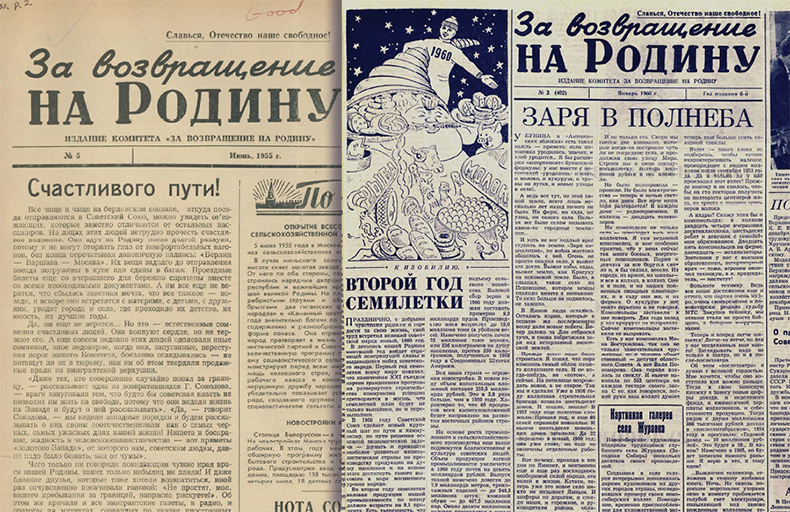
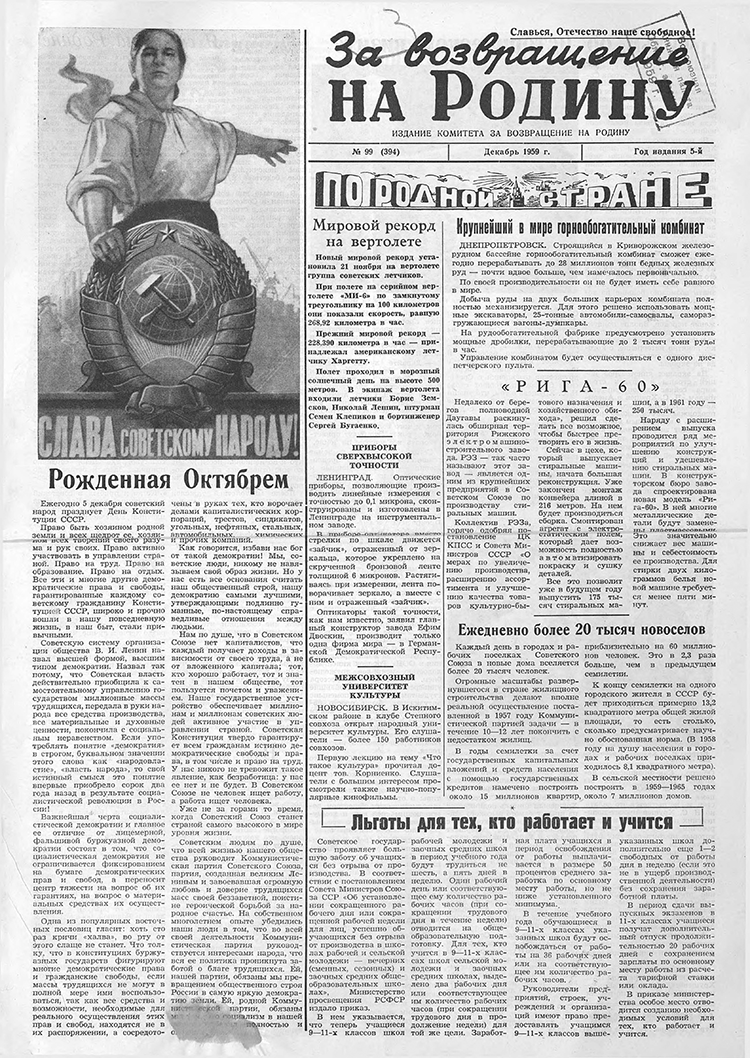
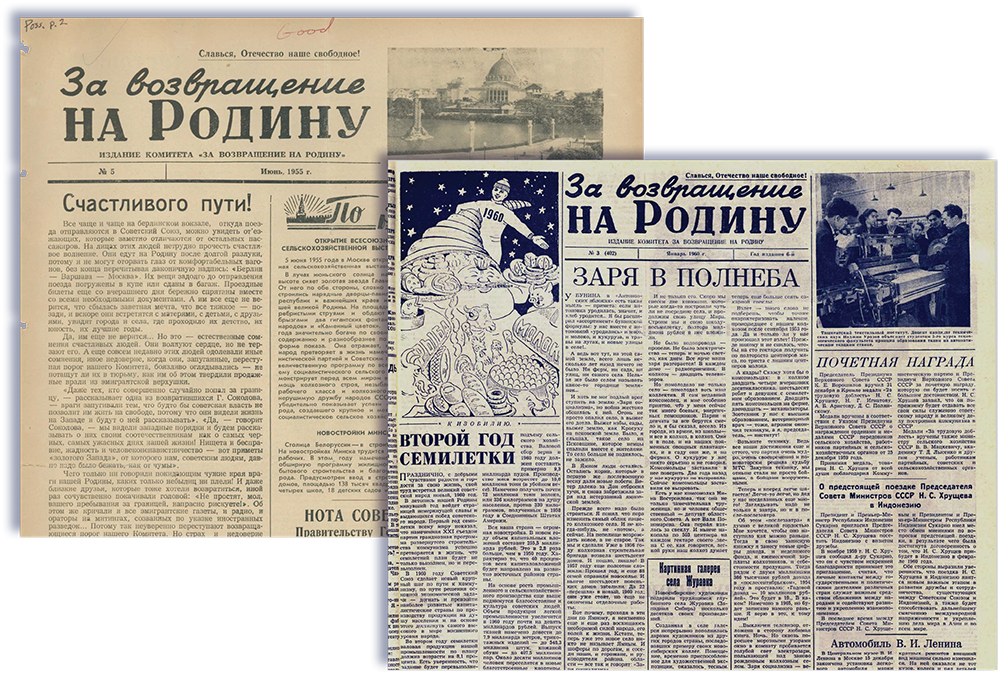
    Established under the watchful eye of the KBG, Za vozvrashchenie na Rodinu (За возвращение на Родину, Return to the Motherland) was a newspaper created by the Cold War. Established in April 1955 in East Berlin as a bi-weekly publication, the newspaper was published by the Soviet Repatriation Committee, which was also established in 1955 and stayed active until 1958. The main objective of Za vozvrashchenie na Rodinu was to create a favorable image of the Soviet Union and to criticize émigré organizations in the post-war period and during the Cold War. The newspaper was principally aimed at Russian emigrants and was an important anti-Western propaganda outlet for the USSR. During its publication, the newspaper was not available to the public on a subscription basis, and therefore it has become a rare information resource.

    The Za Vozvrashchenie na Rodinu Digital Archive contains all obtainable issues published under this title from 1955–1960 (over 1,600 pages). After the third issue of 1960 the name of the newspaper was changed to Golos Rodiny (Голос Родины, Voice of the Motherland). The archive offers scholars the most comprehensive collection available for this title, and features full page-level digitization, complete original graphics, and searchable text, and is cross-searchable with numerous other Infoteka digital resources.