Resource Type: Digital Archive – Journals

  • Krokodil Digital Archive

    Krokodil Digital Archive

    The leading satirical publication of the Soviet Era.

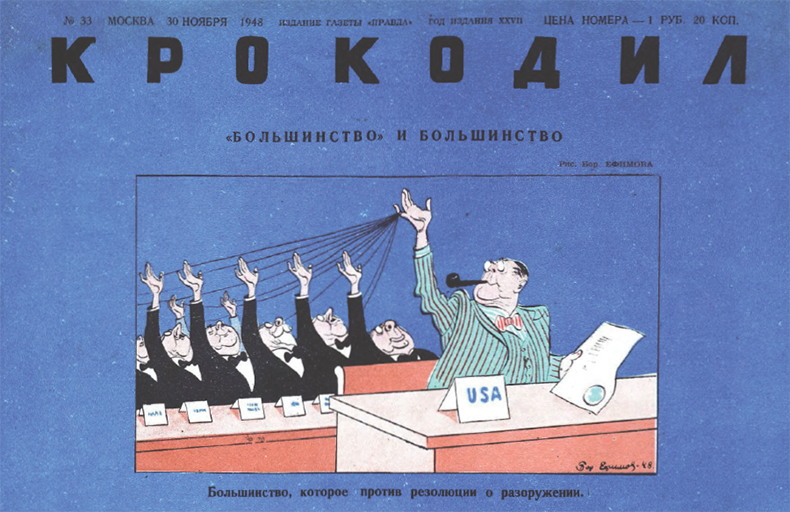
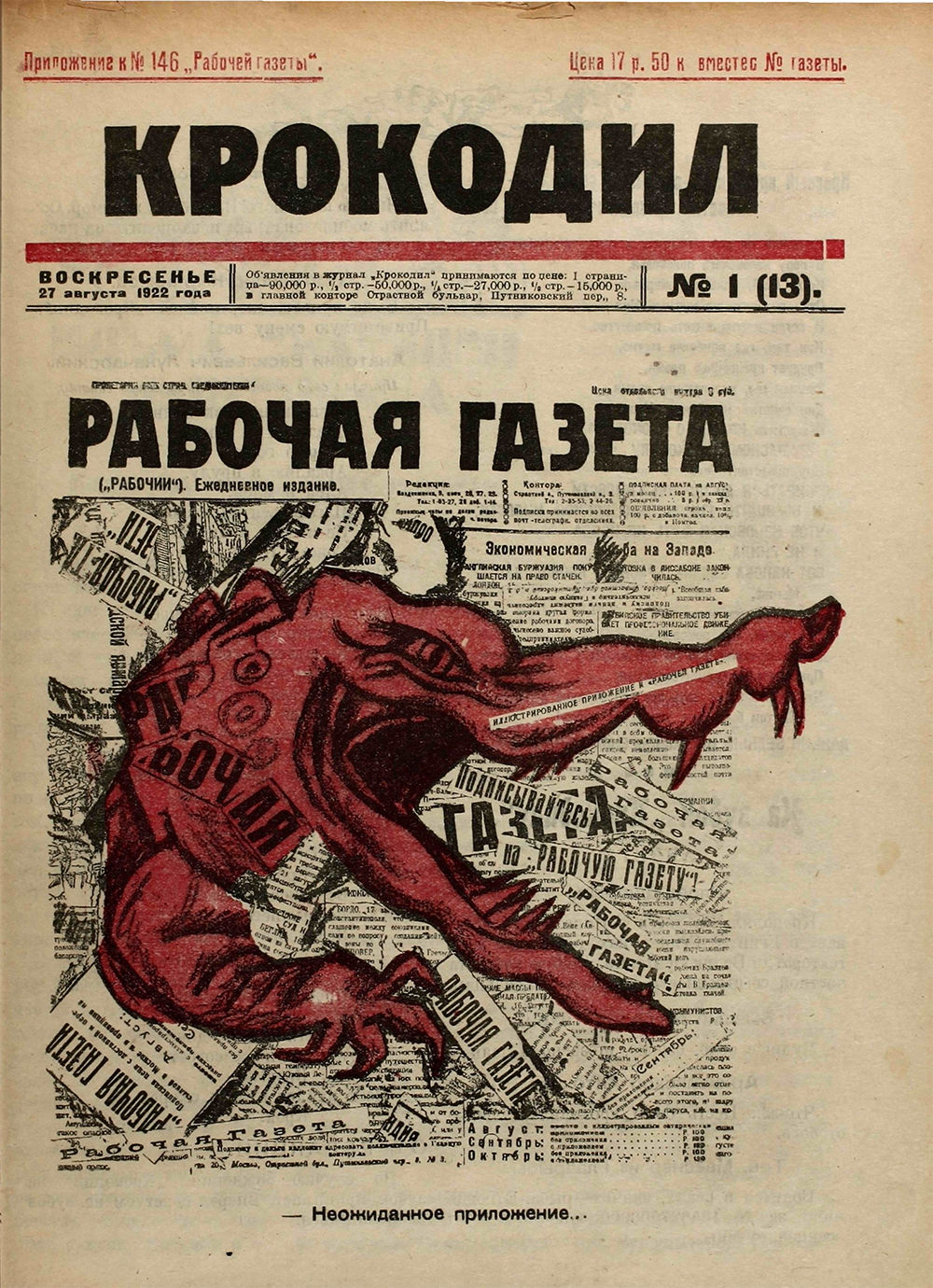
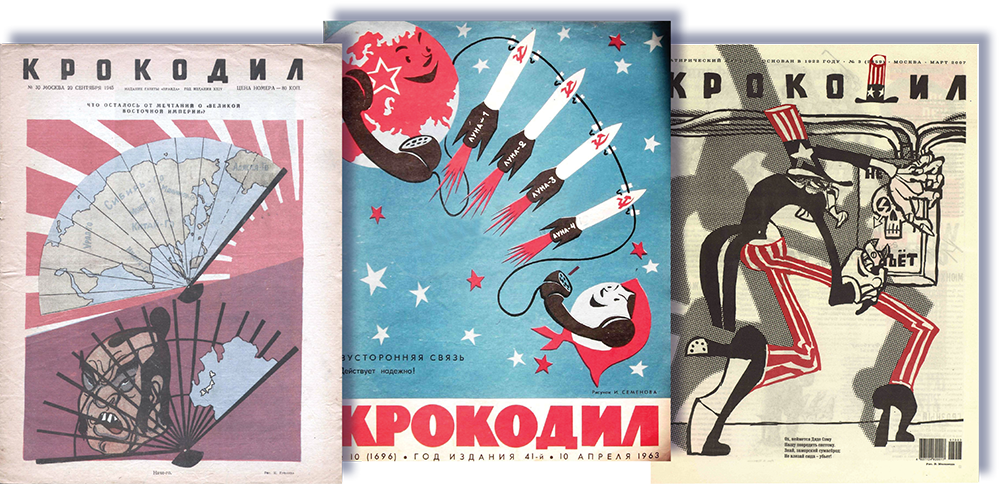
    Krokodil (Крокодил, Crocodile) was a satirical magazine published in the Soviet Union. It was first published as an illustrated Sunday supplement to Rabochaia gazeta (Рабочая газета, Workers’ Newspaper; formerly Rabochii [Pабочий, The Worker]). The increasing popularity and circulation of Rabochaia gazeta, combined with the fact that many satirical voices were present in the widening pool of talented journalists, led the editors of Rabochii to establish a separate satirical issue to be circulated free of charge to the subscribers of the newspaper.

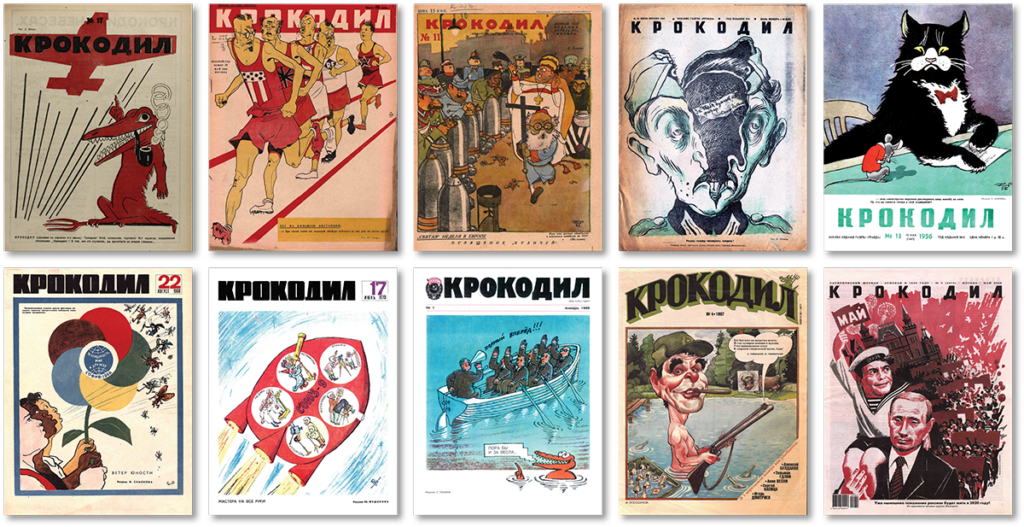
    The newly established supplementary issue satirized a host of issues and holdovers from pre-revolutionary Russia, including White Russian emigres, the Orthodox Church, bourgeois intellectuals, as well as diverse groups of social outcasts (moonshiners, black marketeers, etc.). After a three-month period of largely haphazard satirical writing, the supplement found its stride and honed its method of bringing its readers incisive satirical commentary. The success of the experiment among its growing readership would directly lead to the establishment of Krokodil as a separate publication on August 27, 1922. Bursting from its front cover was a snarling red crocodile, an avatar that has symbolized the journal and its brand of political satire ever since.

    Published continuously until 2008, Krokodil was at one time the most popular magazine for humorous stories and satire, with a circulation reaching 6.5 million copies. Krokodil lampooned religion, alcoholism, foreign political figures and events. It ridiculed bureaucracy and excessive centralized control. The caricatures found in Krokodil can be studied as a gauge of the ‘correct party line’ of the time. During the height of the Cold War, cartoons criticizing Uncle Sam, Pentagon, Western colonialism and German militarism were common in the pages of Krokodil.

    About the Archive

    Featuring the most complete set of the journal available (more than 2,740 issues), the Krokodil Digital Archive has been designed specifically to show the rich images found in these pages and provide the convenience of browsing full pages, similar to working with print originals. Full-text searchable tags have been carefully added to identify individuals and organizations within the artwork, where full-text searching would not normally find results. Thanks to this added value, users are able to search for people and organizations and find them not only within the articles, but also wherever they are represented in caricatures and drawings. The Krokodil Digital Archive is also cross-searchable with numerous other Infoteka resources.

  • LEF Digital Archive

    LEF Digital Archive

    Iconic Soviet art journal that defined an era.

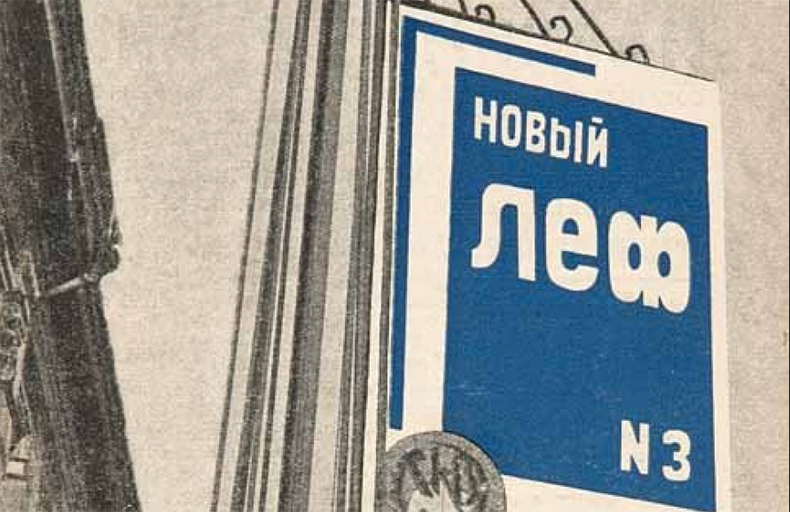
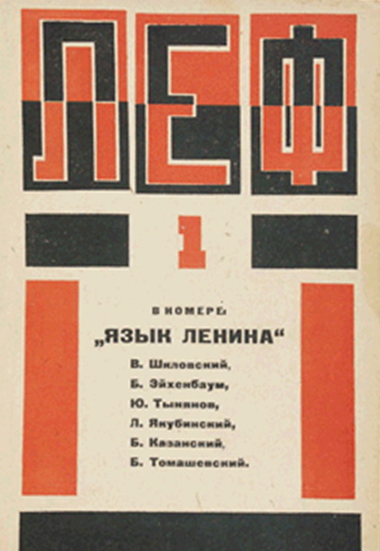
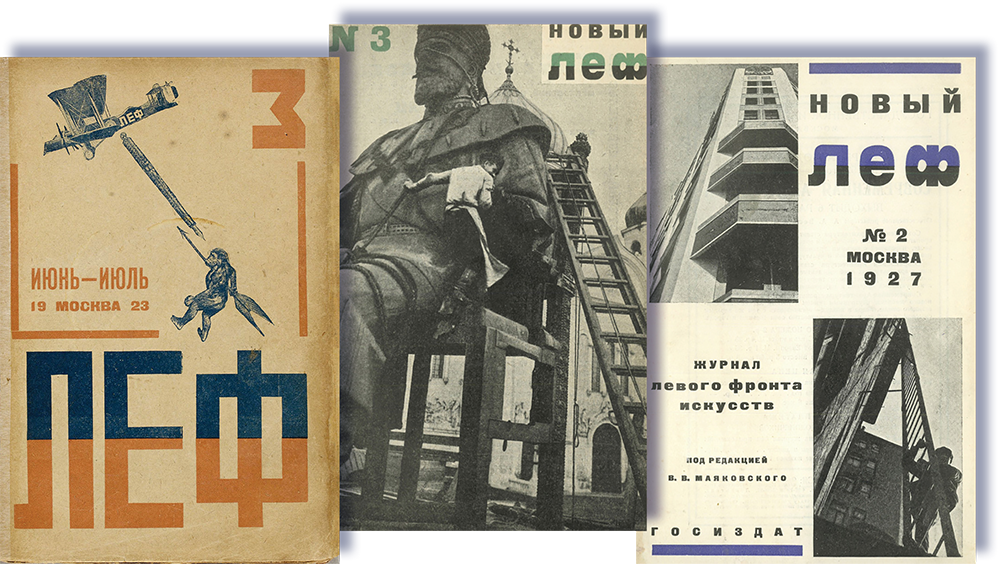
    In the wake of the Russian Revolution, the group “Left Front of the Arts” was formed in Moscow, bringing together creative people of the era—avant-garde poets, writers, photographers, and filmmakers, including Vladimir Mayakovsky, Osip Brik, and others. The group’s philosophy was to re-examine the ideology of so-called leftist art, abandon individualism, and increase art’s role in building communism. The group considered itself as the only representative of revolutionary art. In 1923 they founded the journal LEF (ЛЕФ [Левый фронт искусств], Left Front of the Arts), which was published until 1925. In 1927, it was succeeded by Novyi LEF (Новый ЛЕФ, New LEF) and published until 1928. Despite its short run of only 33 issues, LEF inspired entire movements and artists not only in Russia, but throughout the world.

    LEF served as a forum for intense debate, including manifestos, polemics and critical articles on photography, film, theater, architecture, and design. The journal encouraged experimentation with writing and promoted the idea of “factography,” or the use of language or art to describe or depict the realities of everyday life in the Soviet Union. The journal also championed photography and film as the most suitable forms for postrevolutionary art. The journal’s striking illustrations and covers, many of which were designed by the renowned artist and photographer Alexander Rodchenko, served as an alternative model for realism, challenging the grand, monumental style that was quickly dominating official Soviet art.

    The LEF Digital Archive comprises the entire collection of the 33 published issues, completely digitized for the first time (over 450 articles). The archive offers scholars the most comprehensive collection available for this title, and features full-text articles with full page-level digitization and complete original graphics. The archive has searchable text, and is cross-searchable with numerous other Infoteka digital resources.

  • Krasnyi Arkhiv Digital Archive

    Krasnyi Arkhiv Digital Archive

    The most important historical journal in Soviet Russia.

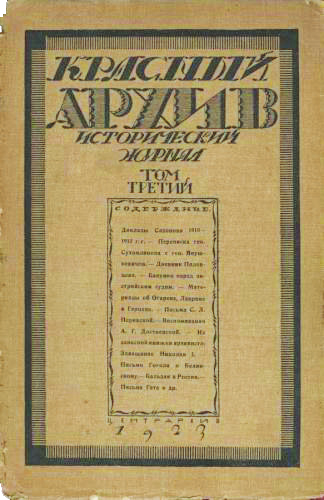
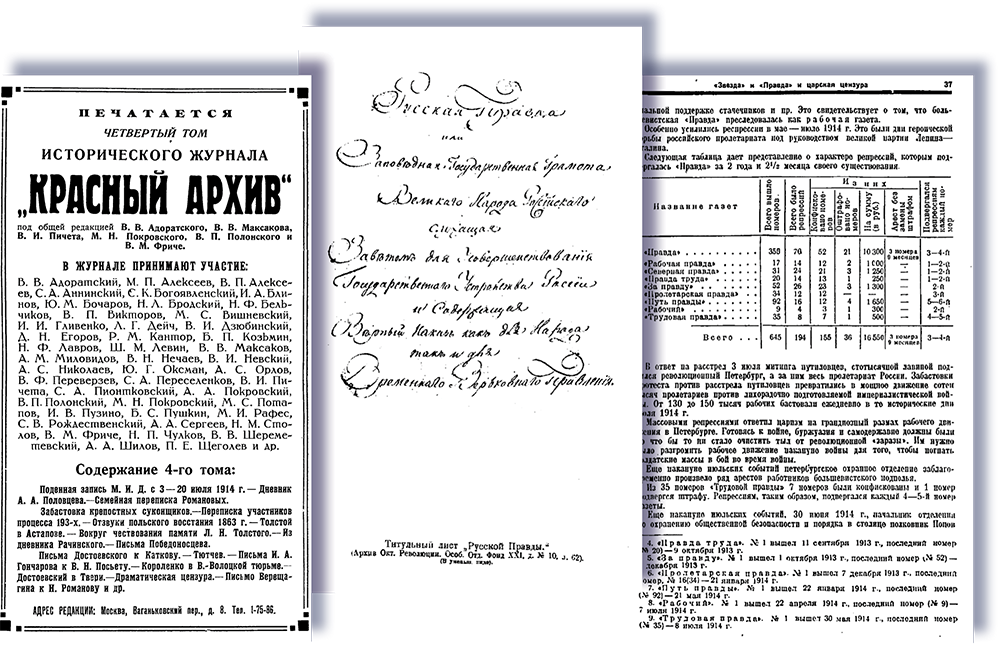
    Krasnyi arkhiv (Красный Архив, Red Archive) was published in Moscow from 1922 until June 1941, first by the Central Archives of the USSR and later by the Central Archival Administration. The proclaimed goal of this journal was to reveal the secrets of diplomatic documents hidden in the archives of Tsarist Russia and to regularly publish important archival papers “for the education of the proletariat.” These included official documents of the political police department, diaries and personal correspondence of the highest political figures (members of the royal family, top officials of the Tsarist Russia, etc.).

    The complete set of Krasnyi arkhiv contains more than 900 unique archival documents on the history of Russia in the 19th and 20th centuries, development of the Bolshevik movement and the Russian communist party, the Russian civil war, Russia’s foreign policy, and the history of Russian endeavors in Siberia, Central Asia and Kazakhstan. The journal also includes literary-historical materials, such as 16 publications on Alexander Pushkin, 12 publications on Fyodor Dostoyevsky, 14 publications on Leo Tolstoy and numerous other materials on famous Russian classical writers and literary critics.

    The Krasnyi Arkhiv Digital Archive comprises the entire collection of 106 published issues, completely digitized for the first time, totaling over 1,180 articles and more than 23,000 pages. The archive offers scholars the most comprehensive collection available for this title, and features full-text articles, with full page-level digitization and complete original graphics. The archive has searchable text, and is cross-searchable with numerous other Infoteka digital resources.

  • Kino-Zhurnal A.R.K. Digital Archive

    Kino-Zhurnal A.R.K. Digital Archive

    Critical journal from the early years of Russian cinema.

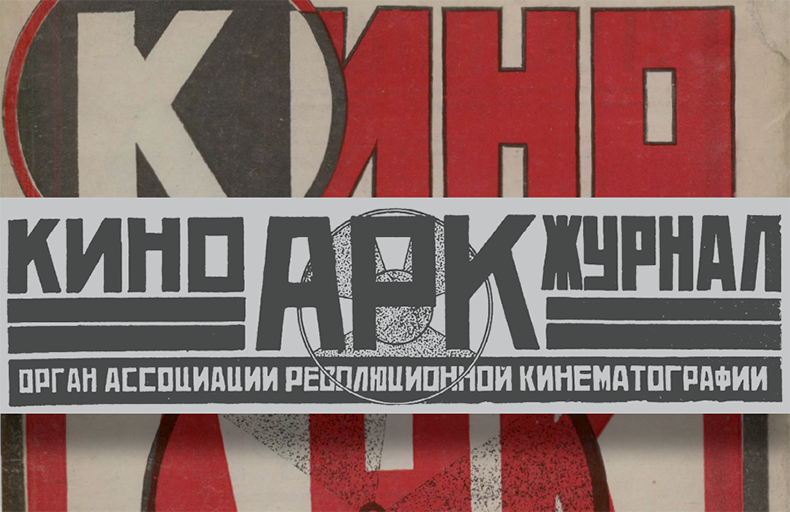
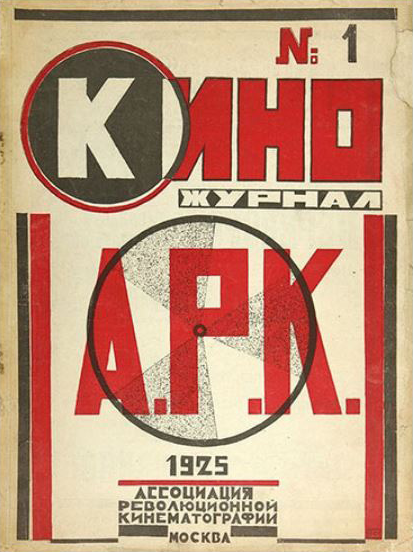
    The beginning of 1920s in the Soviet Russia is known for fresh creative cinematographic forces. It was in this era that world-renowned directors such as Eisenstein, Pudovkin, Trauberg, Ermler, Ardov, Kozintsev and other artists of the first generation of Soviet directors made their debut. Kino-zhurnal A.R.K. (Кино-журнал А.Р.К., Cinema-Journal A.R.K.), published by the Association of Revolutionary Cinematography, is where these groundbreaking directors expounded on their art, reflecting the dynamic era of 1920s Soviet Russia. New theories simultaneously pushed the limits on and aligned with Soviet thought on film montage, and debate in the pages of the journal led to novel methods of movie editing and directing. The painter Kazimir Malevich also contributed to the journal, describing his views towards cinema as an art form.

    Kino-zhurnal A.R.K. also covered Soviet, European, American and Asian film news, film technology, international cinema industry exhibitions like the 1925 Berlin Film Exhibition. The US film industry was booming at that time, with some pages dedicated to American actors and new film out of Hollywood. The magazine also published sociological data on Soviet viewers and film statistics.

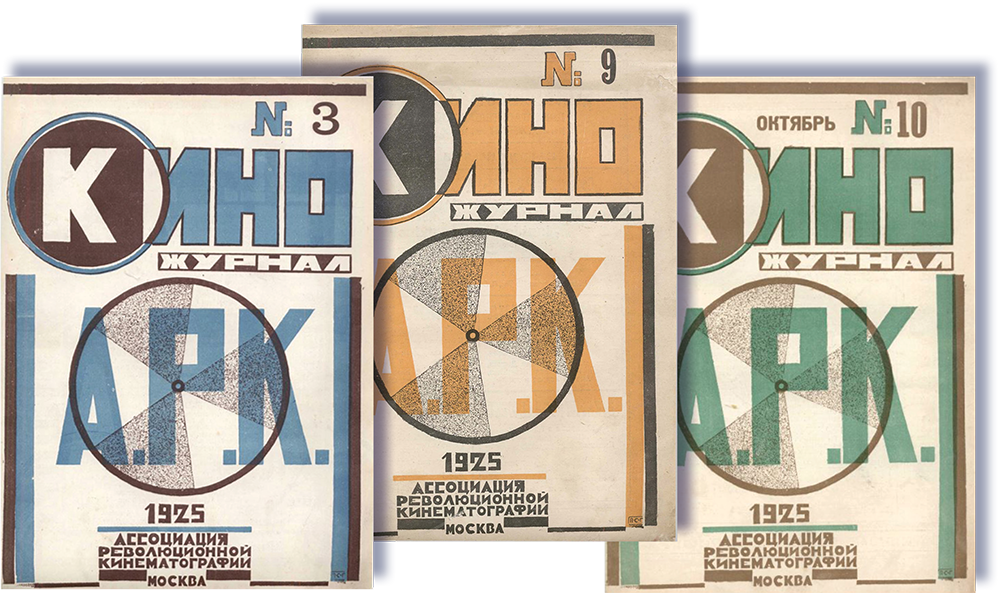
    The constructivist design of the magazine covers was created by Piotr Galadzhiev (1900-1971), a well-known Soviet artist and illustrator for several early Soviet film publications (Kino-Glaz, Kinopechat, etc.).

    An extremely rare Soviet film magazine, only twelve issues of this monthly magazine were published. The magazine ceased publishing in 1926 when its editor Nikolay Lebedev wrote an article blaming Maxim Gorky for disliking cinema as a genre. Although Lebedev later apologized, he was nevertheless fired soon after and the magazine was transformed into a different journal, Kino-front.

    The Kino-Zhurnal A.R.K. Digital Archive contains all published issues of the journal (1925-1926) for a total of 12 issues and 444 articles. The archive features full page-level digitization, complete original graphics, and searchable text, and is cross-searchable with numerous other Infoteka digital resources.

  • Knizhnaia Letopis’ Digital Archive

    Knizhnaia Letopis’ Digital Archive

    Russia’s definitive bibliographic book index.

    Knizhnaia letopis’ (Книжная летопись, The Book Index) is the most definitive reference guide available for published books in Russia. For decades, libraries and researchers have turned to this weekly publication to follow book publishing trends in the USSR and Russia. As the main Soviet/Russian bibliographic publication for books, Knizhnaia letopis’ represents the most comprehensive bibliographic resource available on printed books in Russia. For scholars of Russian history, literature, and print culture, the digital archive of Knizhnaia Letopis represents an invaluable resource, offering a unique window into the evolution of publishing and intellectual life in Russia from the late Imperial period through the Soviet era.

    Covering the period of 1907–1979, the Knizhnaia Letopis’ Digital Archive comprises over 105,000 articles, and features full page-level digitization, searchable text, and complete original graphics. This searchable format allows users to explore trends in publishing, track specific authors or topics, and gain insights into the intellectual and cultural landscape of Russia and the Soviet Union throughout much of the 20th century.

    The archive is organized at the chapter level, with each issue divided into thematic chapters (articles). Issues of Knizhnaia letopis’ feature entries detailing new book publications across all fields of knowledge and practical activities, providing primary bibliographic registrations of new books published within the Russian Federation, as well as books published abroad on behalf of Russian publishers. Each bibliographic entry typically contains a sequential record number, a full bibliographic description, the state registration number assigned by the Russian Book Chamber and the UDC (Universal Decimal Classification) indices. The archive also preserves additional features of the original publication, such as author indexes, language indicators for non-Russian publications, and listings of ISBN errors.

    The Knizhnaia Letopis’ Digital Archive also includes a number of important supplements, such as Knizhnaia Letopis’. Dopolnitelnyi vypusk (Supplement, includes dissertation abstracts), Knizhnaia Letopis’. Vspomogatelnye ukazateli (Name, Subject and Geographic Indexes), Dopolnitelnyi vypusk. Vspomogatelnye ukazateli (Name and Geographic Indexes), and Ukazatel seriinykh izdanii (annual Index to Book Series).

  • Kino-fot Digital Archive

    Kino-fot Digital Archive

    Short-lived but influential Russian cinema and photographic art journal.

    Kino-fot (Кино-фот, Cinema-Photo), the legendary Russian cinema and photographic art journal, represented the core of the Gan-Rodchenko-Stepanova collaboration. Published in 1922-1923, issues of the journal were illustrated throughout with typographic designs and photos of abstract compositions by Rodchenko; articles by Kuleshov, Dziga Vertov and N. Bernstein, and numerous letterpress designs. All advertisements were also designed in dynamic black and red Constructivist style. Photography and cinema were both still very new and exciting for a new emerging audience and its photomontage pictures, avant-garde layouts, unusual types and other elements put the Kino-fot journal on the very edge of design and influenced the creative flow of the 1920s.

    The Kino-fot Digital Archive contains all published issues of the journal (1922-1923) for a total of six issues and 99 articles. The archive features full page-level digitization, complete original graphics, and searchable text, and is cross-searchable with numerous other Infoteka digital resources.

  • Izvestiia RAN. Seriia Literatury i Iazyka Digital Archive

    Izvestiia RAN. Seriia Literatury i Iazyka Digital Archive

    Leading Russian journal in the fields of literature, linguistics, and philology.

    Izvestiia Rossiiskoi Akademii Nauk (RAN). Seriia Literatury i Iazyka (Известия Российской Академии наук. Серия литературы и языка, The Bulletin of the Russian Academy of Sciences. Series: Literature and Language) is a highly respected academic journal that has been published by the Soviet/Russian Academy of Sciences since 1940. The journal’s focus is on research in the fields of literature, linguistics, and philology. It is widely considered to be one of the most prestigious academic publications in Russia.

    The scope of the journal includes a broad range of topics related to Russian literature and language. Published six times a year, the journal features original research articles, reviews, and critical essays on literary theory, history of literature, comparative literature, linguistics, and cultural studies.

    Authors for the journal include esteemed scholars, experts, and university professors from Russia and abroad, while its distinguished editorial board ensures the quality of the published research. The journal’s interdisciplinary approach allows for a wide range of perspectives on the study of Russian literature from its earliest beginnings to contemporary works, and its coverage of linguistics includes a range of approaches, from syntax and semantics to sociolinguistics and discourse analysis.

    The Izvestiia RAN. Seriia Literatury i Iazyka Digital Archive includes all issues published from 1940 on, with an additional year’s worth of content available for purchase on an annual basis. The archive offers scholars the most comprehensive collection available for this title, features full page-level digitization and complete original graphics, and is cross-searchable with numerous other Infoteka digital resources.

  • Iskusstvo Kino Digital Archive

    Iskusstvo Kino Digital Archive

    The leading journal of Soviet and Russian cinema.

    With more movie screens than any nation at any time, the Soviet Union’s cinematic legacy helped shape the artistic and social agenda of the socialist world for most of the twentieth century. Iskusstvo kino (Искусство кино, Art of Cinema), founded in 1931, chronicled that cinematic legacy with its devotion to art in Russian film.

    Renowned as one of Russia’s premier journals of cinema, Iskusstvo kino offers Russian and foreign movie reviews, articles on filmmaking and cinema culture, criticism, and essays. More than that, Iskusstvo kino traces Russian arts and culture from the ‘socialist realism’ era — when film became the prime propaganda tool (“agitki”) for instilling Communist fervor in the masses — all the way through contemporary filmmaking.

    Iskusstvo kino was first published under the title Proletarskoe kino (Пролетарское кино, Proletarian Cinema, 1931–1932), then Sovetskoe kino (Советское кино, Soviet Cinema, 1933–1935), and finally under its present name (since 1936). A monthly publication from 1931–1941, Iskusstvo kino went on hiatus during World War II and then was published irregularly during 1945-1947 and bimonthly during 1947–1951 before resuming monthly publication in 1952.

    The Iskusstvo Kino Digital Archive offers scholars the most comprehensive collection available for this title, and features full-text articles, with full page-level digitization and complete original graphics. The archive has searchable text, and is cross-searchable with numerous other East View digital resources.

    Note: Translations provided by Infoteka’s English Reader are intended for informational purposes only and are not a substitute for certified translation. No warranty is made regarding the accuracy or reliability of the translations. For citation and scholarly use, please refer to the original language text.

  • International Affairs Digital Archive

    International Affairs Digital Archive

    A Russian journal of world politics, diplomacy and international relations.

    Offering unique, first-hand analysis of major foreign policy and security issues facing Russia and other former Soviet republics, this internationally renowned journal is the English translation of the Russian-language journal Mezhdunarodnaia zhizn, which is published by the Ministry of Foreign Affairs of the Russian Federation. The editorial board of this journal is traditionally headed by the minister himself, while the journal’s contributors are primarily experienced, high-ranking diplomats. As such, International Affairs is an excellent primary source for anyone interested in the course of Russian policy in foreign affairs. International Affairs often includes material from independent analysts, whose opinions may or may not differ from the official line. Roundtable discussions on topical world issues will also usually include representatives from the Russian Academy of Sciences, as well as from think tanks and universities.

    International Affairs sheds light on issues of foreign policy and diplomacy of Russia as well as:

    • Interrelations of Russia between foreign countries
    • Economies and policies of neighboring states
    • History of foreign relations, history of the Ministry of Foreign Affairs of Russia and the USSR
    • Analysis and commentary from experts on international life
    • Book reviews of relevant publications
    • Memoirs, often devoted to experiences of diplomats in contested or relatively unknown episodes of international relations
    • White papers from international organizations and conferences
    • Previously unpublished documents on Soviet and Russian foreign policy

    The International Affairs Digital Archive contains the most complete set of the journal, comprising more than 600 issues and nearly 16,000 articles. The archive offers scholars the most comprehensive collection available for this title, with an additional year’s worth of content available for purchase on an annual basis. The archive features full-text articles, with full page-level digitization and complete original graphics. The archive has searchable text, and is cross-searchable with numerous other Infoteka digital resources.

  • Illiustrirovannaia Rossiia Digital Archive

    Illiustrirovannaia Rossiia Digital Archive

    Encyclopedia of the émigré life of ex-Russians in the first half of the 20th Century.

    Illiustrirovannaia Rossiia (Иллюстрированная Россия, La Russie Illustrée, Illustrated Russia) was a weekly literary and illustrated journal, published in Paris from 1924-1939. The founding editor of the journal, Miron Mironov, was a prominent Russian émigré journalist who had started his career in Russia, honing his writing and editorial skills at prominent Russian publications in St. Petersburg and Kyiv before leaving the country.

    The target demographic of the journal was the growing community of Russian émigrés in France and elsewhere who left Russia behind in the wake of the Bolshevik Revolution. Contributing to the popular success of the journal were both its production quality and the quality of its content, which were lavishly underwritten by a coterie of wealthy benefactors in exile. As such, Illiustrirovannaia Rossiia was an unrivaled source of literary and cultural tidbits as well as long-form writing and serialized novels.

    Perhaps the greatest contributing factor to its success was the deliberately apolitical nature of the publication, unique among a growing list of Russian émigré publications of that time that were engaged in internecine ideological wars. The journal’s apoliticism had its limits, however, as communism and the Soviet authorities were periodically and mercilessly ridiculed on the pages of the publication, leaving no doubt as to its overall political orientation.

    Over the years the journal would become one of the most important, if not the most important, Russian émigré periodicals attracting literary and journalistic talent from the far-flung Russian diaspora communities. Despite its brief lifespan of 15 years, the journal published 748 issues, leaving an indelible mark on the Russian literary and cultural scene and becoming an important part of the twentieth-century Russian émigré cultural landscape. Illiustrirovannaia Rossiia remains an invaluable and unique repository of textual and visual representation, providing researchers with indispensable insight into Russian cultural life in exile.

    The Illiustrirovannaia Rossiia Digital Archive contains the complete set of the journal from the very first issue, comprising 748 issues and more than 21,000 pages. The archive features full page-level digitization, complete original graphics, and searchable text, and is cross-searchable with numerous other Infoteka digital resources.