Time Period: Pre-Revolutionary

  • Kavkaz Digital Archive

    Kavkaz Digital Archive

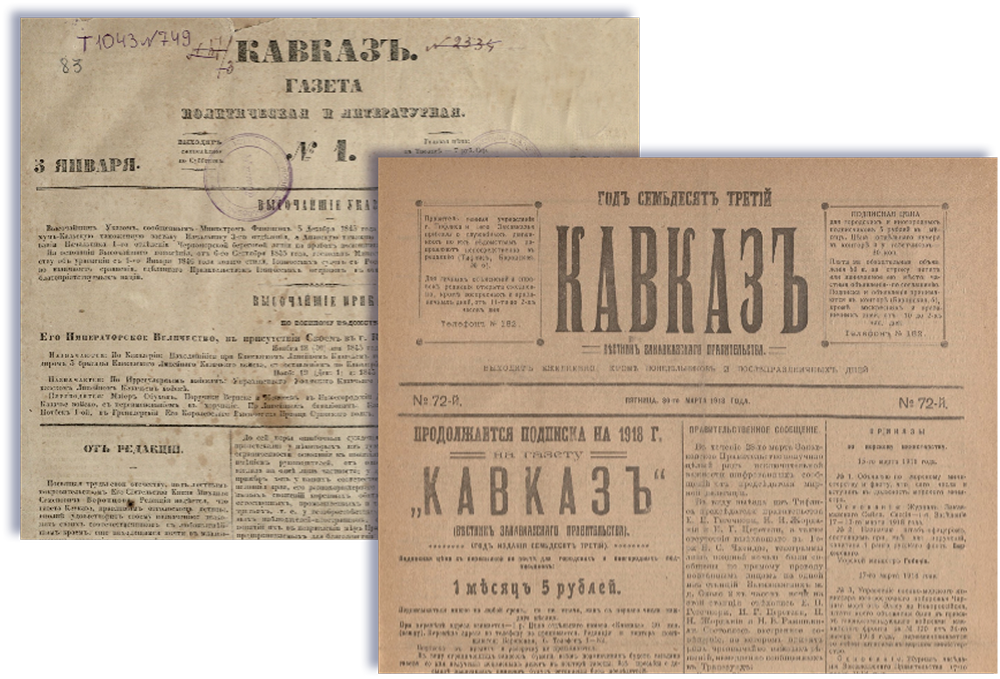
    A pre-revolutionary Russian-language newspaper from the Caucasus.

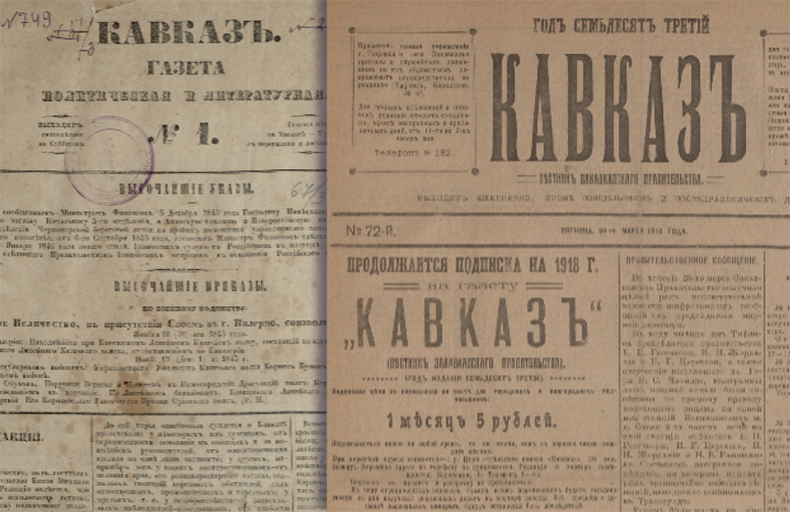
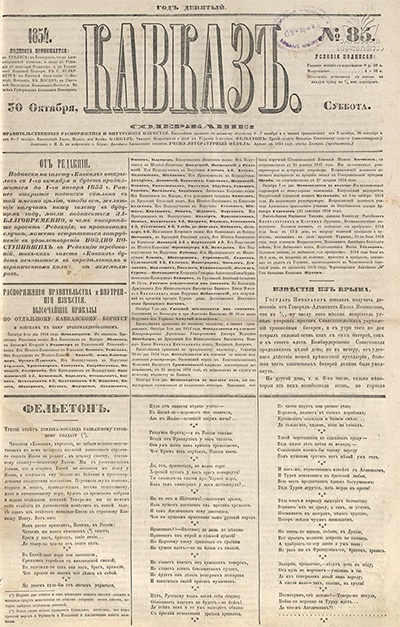
    The newspaper Kavkaz (Кавказ, The Caucasus) was published during 1846–1918. It was one of the first Russian-language newspapers in the Caucasus, published in Tiflis (Tbilisi), Georgia. The idea to publish this newspaper came from Prince Mikhail Vorontsov who was the imperial Governor-General of the province at that time. The main purpose of the newspaper was, on the one hand, to promote the Russian culture and Russian influence in the Caucasus, and on the other hand “to acquaint the Russian public with the life, habits and traditions of the tribes populating the province of the Caucasus.” Kavkaz published official documents of the Russian Empire, as well as many historical, cultural and archeological writings by prominent public and cultural figures of the local intelligentsia.

    Kavkaz began publication in 1846 as a weekly newspaper; from 1850 it started to come out twice a week; in 1868 its periodicity changed to three times per week; and from 1877 it became a daily publication until its closure in 1918. During the brief period from 1846–1847, this newspaper had an Armenian-language counterpart (not included as part of the archive).

    The Kavkaz Digital Archive offers scholars the most comprehensive collection available for this title, containing all known and available issues of the newspaper. The archive features full page-level digitization, complete original graphics, and searchable text, and is cross-searchable with numerous other Infoteka digital resources.
  • Essential Russian Classics

    Essential Russian Classics

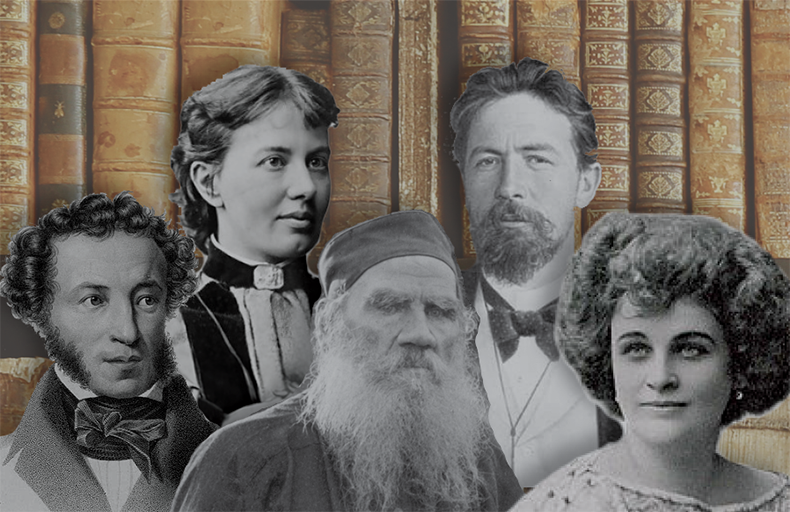
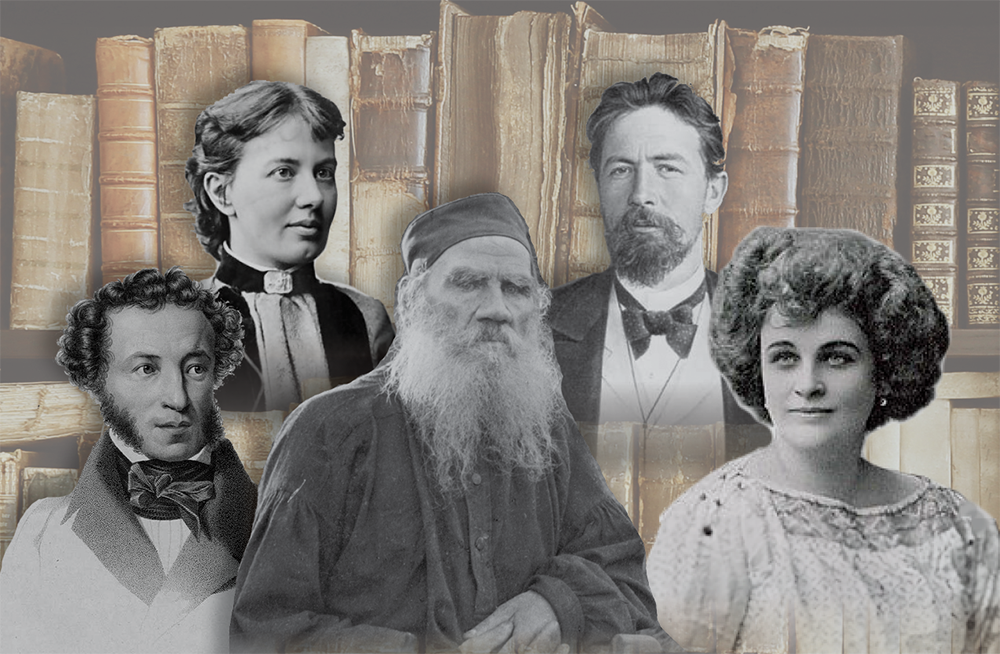
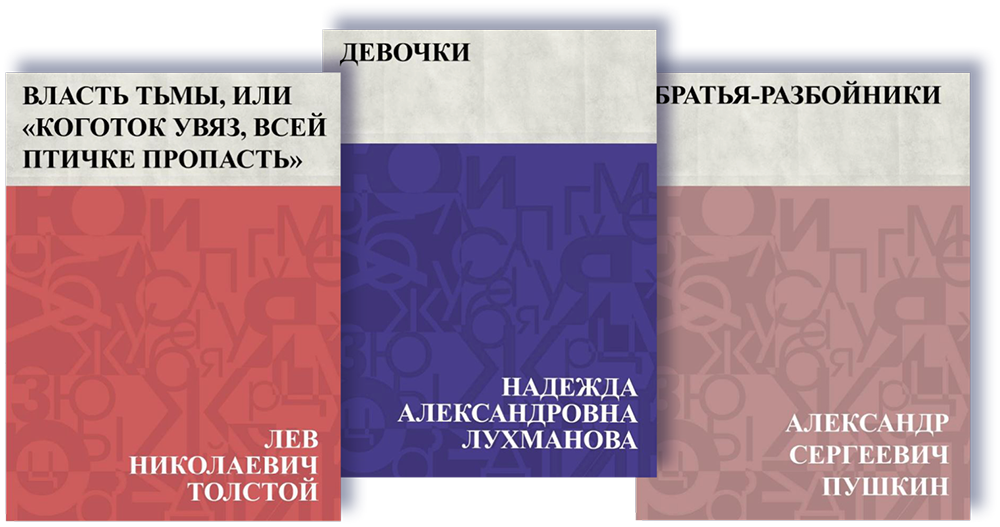
    The Essential Russian Classics e-book collection includes nearly 6,400 titles by 300+ famous Russian authors, thinkers and philosophers of the 18th, 19th and early 20th centuries who made notable contributions to the development of Russian literature, philosophy and culture.

    The collection comprises the works of world-renowned Russian playwrights, poets, essayists and historians, such as Chekhov, Pushkin, Lermontov, Mayakovsky, Bunin, and Karamzin, as well as the less well-known in the West, but still prominent cultural icons of Russia, such as Averchenko, Belyi, Briusov, Fet, Giliarovsky, Gumilev, Leskov, Rozanov, Teffi, and dozens of others.

    The collection is divided into four main genres:

    • Classic Russian Fiction
    • Classic Russian Non-Fiction
    • Classic Russian Poetry
    • Classic Russian Drama

    Non-fiction is represented mostly in such genres as philosophy, history, biography, memoirs and travel journals.

    The resource can be accessed through Infoteka’s e-book platform, allowing for filtering by genre and author, sorting by title, searching in Cyrillic and transliteration. The book format is “smart” PDF. Each title has been assigned a unique e-ISBN number. A free set of ePub files for each title is included with the purchase of the entire collection. All texts have been thoroughly proofread. In some instances, the old spelling was replaced with new. Some publications have been digitized for the first time and are not available in electronic formats elsewhere.

  • Early Soviet Cinema Collection. Part One

    Early Soviet Cinema Collection. Part One

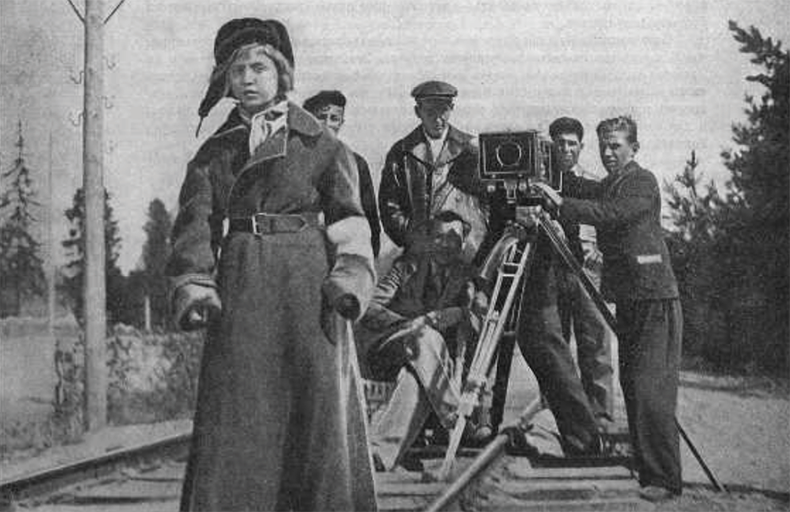
    With more movie screens than any nation at any time, the Soviet Union’s cinematic legacy influenced directors and actors around the world throughout the 20th century.

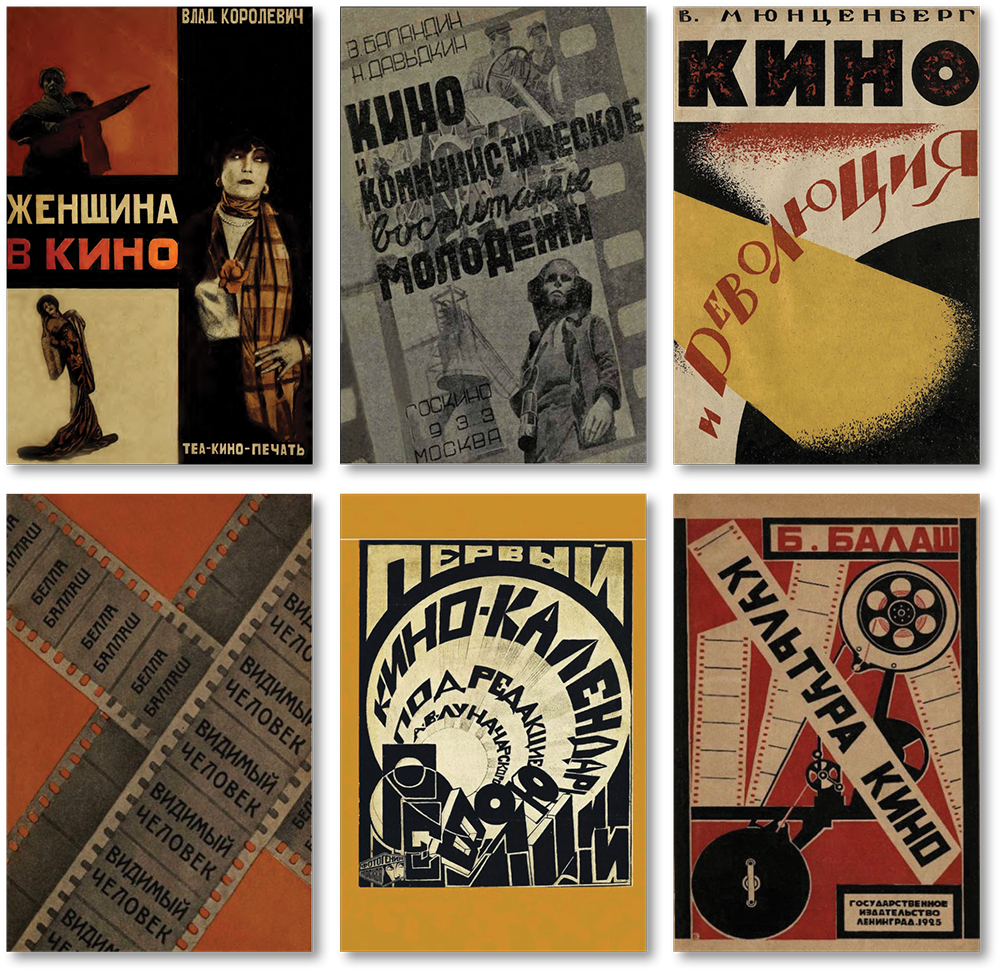
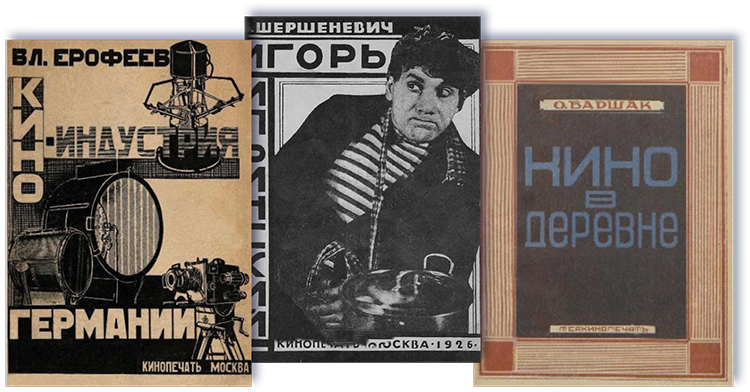
    The Early Soviet Cinema Collection. Part One features 119 e-books, most originally published in print from 1926 to 1948, on everything related to the Golden Age of Soviet cinema:

    • The early years of the Russian film industry
    • Cinema and communist education
    • Criticism of foreign film-making
    • The role of women in cinema
    • The ideology of Soviet films
    • The role of atheist documentaries in Soviet society
    • And much more

    This collection features works of renowned Russian and Soviet film directors, film scholars and film critics of the time, including Lev Kuleshov, Bela Balash, Rudolf Garms, Efraim Lemberg, Natan Zarkhi and others.