Subject: General News

  • SSSR na Stroike Digital Archive

    SSSR na Stroike Digital Archive

    One of the most visual Soviet magazines of the Stalin era

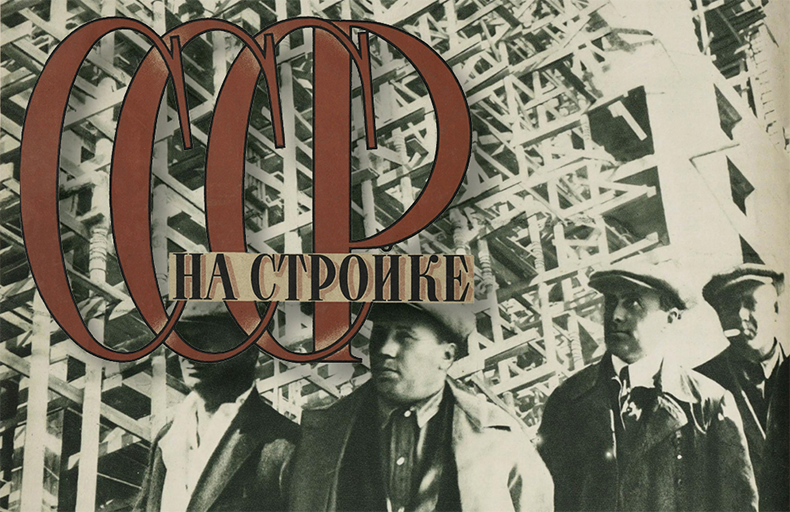
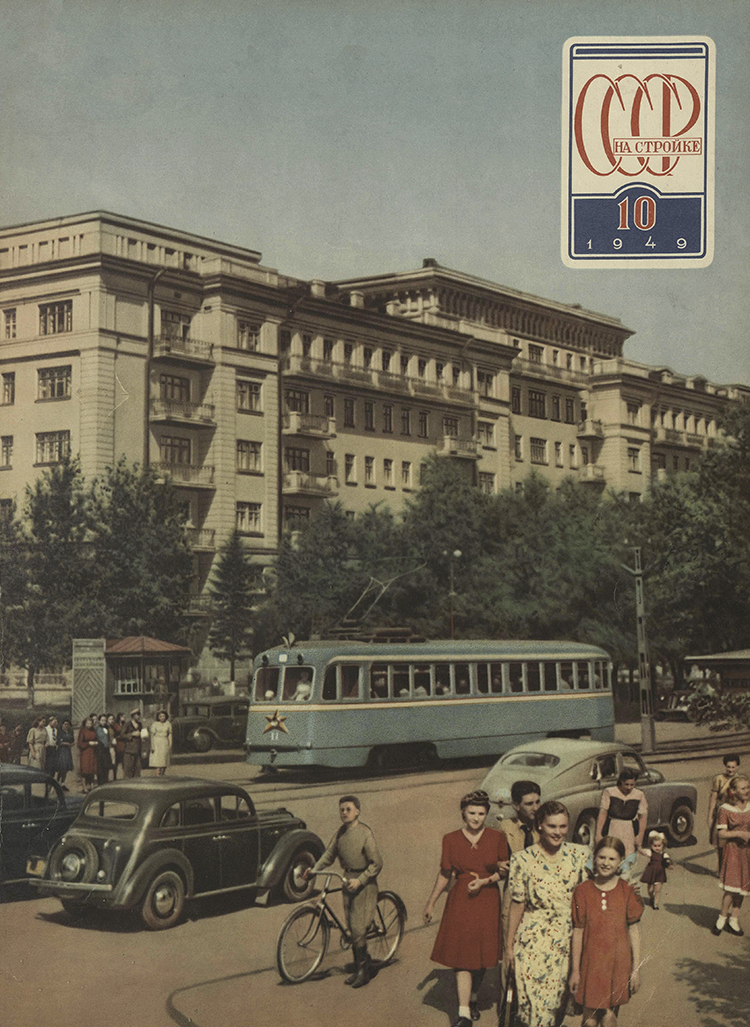
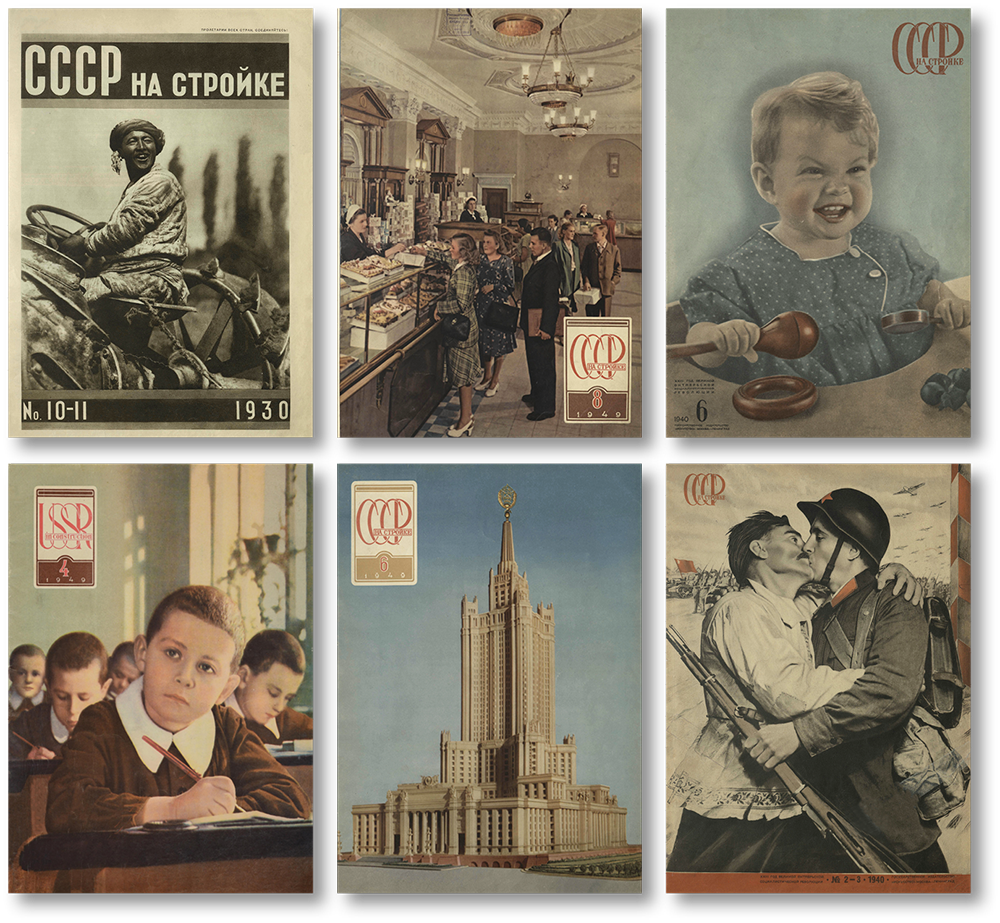
    SSSR na Stroike (СССР на стройке, USSR in Construction) was one of the most visually distinctive and ambitious Soviet periodicals of the Stalin era. Published from 1930 through 1941 and briefly revived in 1949, the journal was created as a lavishly illustrated showcase of Soviet industrialization, modernization, and social transformation. Today, it is an important primary source for the study of Soviet history, political communication, propaganda, photography, graphic design, visual culture, and the international representation of the USSR.

    The complete Russian-language edition comprises 133 issues. The journal was also produced for international audiences in English, French, German, and, beginning in 1938, Spanish. At present, we have located 80 English-language issues for inclusion in this digital collection, and we are continuing to search for additional English issues that can further strengthen the archive.

    Founded under the direction of Maxim Gorky, SSSR na Stroike brought together many leading Soviet photographers, artists, writers, and designers. Contributors included El Lissitzky, Alexander Rodchenko, Varvara Stepanova, Max Alpert, Isaac Babel, and Mikhail Koltsov. The journal became particularly notable for its innovative combination of photography, photomontage, typography, dramatic page layouts, foldouts, inserts, and large-format visual narratives.

    Early issues emphasized major industrial and infrastructure projects, while later journals addressed Soviet republics and regions, transportation, agriculture, aviation, education, children, the arts, everyday life, political events, and military and technological achievements.
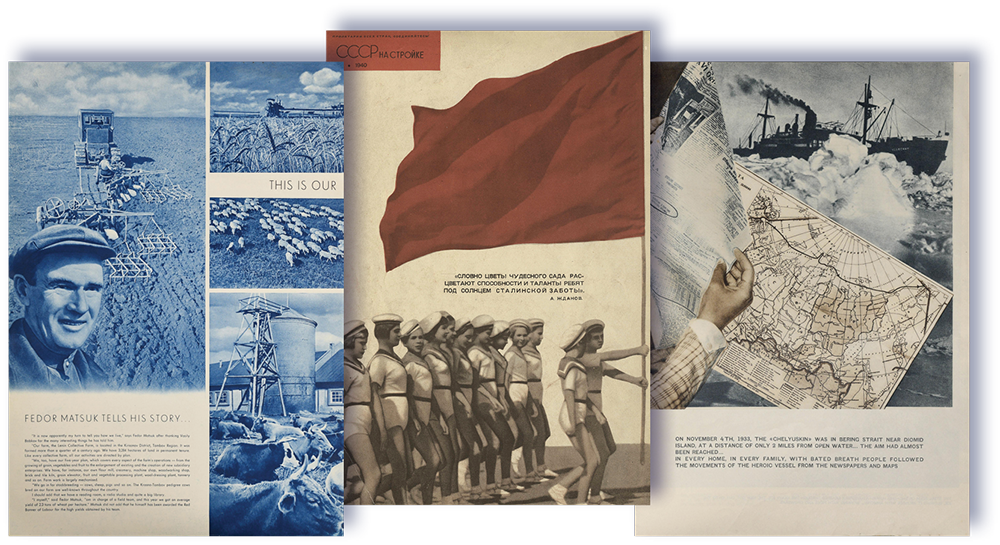
    The SSSR na Stroike Digital Archive offers scholars the most comprehensive collection available for this title, bringing together issues that have previously been scattered among libraries, archives, and private collections. The archive features full page-level digitization and complete original graphics. The archive has searchable text and is cross-searchable with numerous other Infoteka digital resources.

    The archive will be particularly valuable for research and teaching in Soviet and Russian history, Stalinism, propaganda and political communication, photography, graphic and information design, art history, visual and media studies, architecture and urban studies, industrial history, international relations, and Russian and East European studies. By making this rare publication available in a unified searchable digital environment—and by bringing together the Russian and surviving English-language editions—the collection will allow researchers to examine both the visual language of Soviet modernization and the ways in which that message was adapted for international audiences.
  • Zavtra Digital Archive

    Zavtra Digital Archive

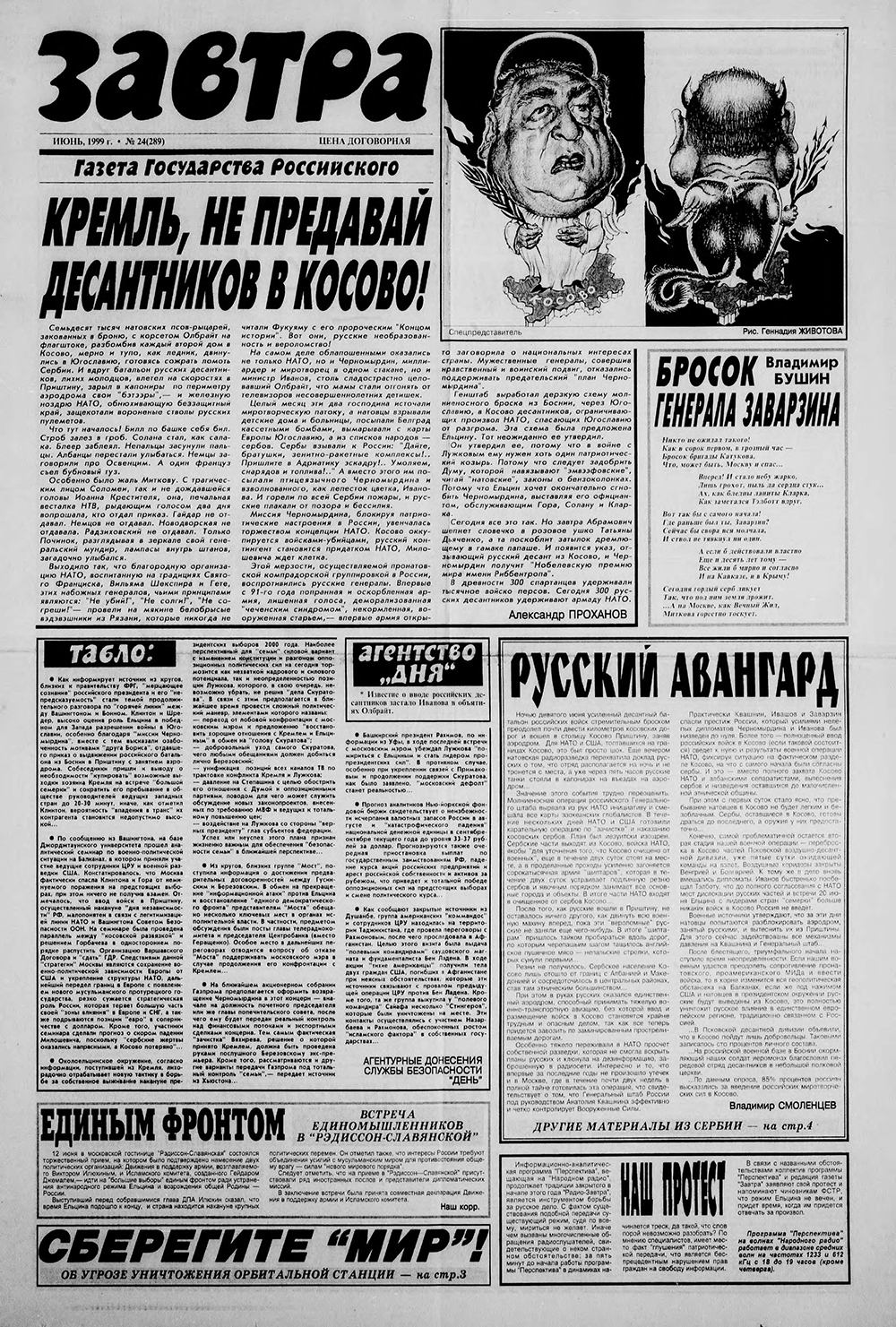
    Influential newspaper of the right-wing opposition.

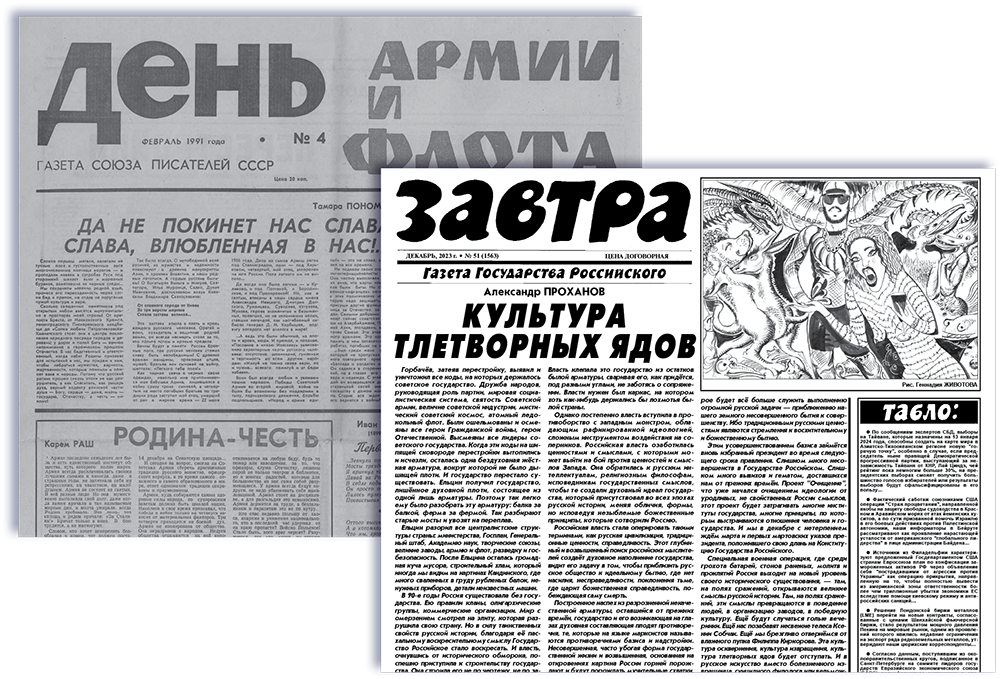
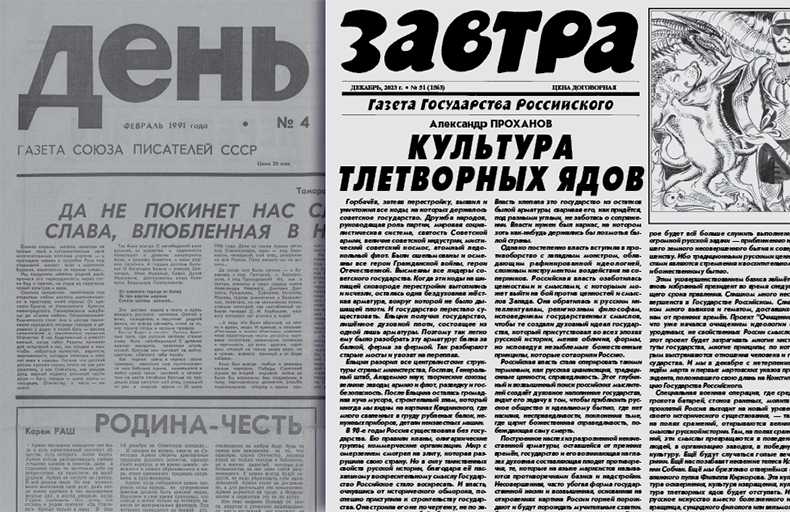
    Founded in Moscow in 1990 by noted Soviet journalist Alexander Prokhanov, Den’ (День, The Day) was created to serve as the “spiritual opposition” to the pro-Western government of Yeltsin. Following the coup in 1993, the paper was shut down by the authorities but was reborn as Zavtra (Завтра, Tomorrow), with Prokhanov still in the lead as editor in chief. One of the most influential publications of the right-wing opposition, Zavtra is a radical-conservative daily newspaper, bringing together a mix of nationalism, monarchism, and nostalgia for the Soviet era.

    Prokhanov has a very colorful personality, and his speeches and writings are poetic and full of metaphors. At a Slavic conference in the US he surprised many during his presentation by asserting that “state borders are not static, they are pulsating – back and forth.” Prokhanov is one of the few Russian citizens to receive an award from North Korean dictator Kim Jong-un, and he also received a medal “For the Liberation of Crimea and Sevastopol” in 2014 from Putin himself.

    The newspaper is a reflection of Prokhanov himself, a self-proclaimed “counter-liberal,” well known as a radical pro-imperial, nationalist figure and a neo-Stalinist. Just as he supported the failed military coup in 1991, the war in Chechnya, and aggression against Georgia in 2008, Zavtra has likewise been an ardent supporter of these actions, as well as the Crimea annexation, the war in Donbas, and the current war in Ukraine.

    The Zavtra Digital Archive contains all obtainable published issues from 1990 on, with an additional year’s worth of content available for purchase on an annual basis. The archive offers scholars the most comprehensive collection available for this title, and features full-text articles, with full page-level digitization and complete original graphics for later years. The archive has searchable text, and is cross-searchable with numerous other Infoteka digital resources.

  • Za Vozvrashchenie na Rodinu Digital Archive

    Za Vozvrashchenie na Rodinu Digital Archive

    Rare newspaper targeting Russian émigrés in the West.

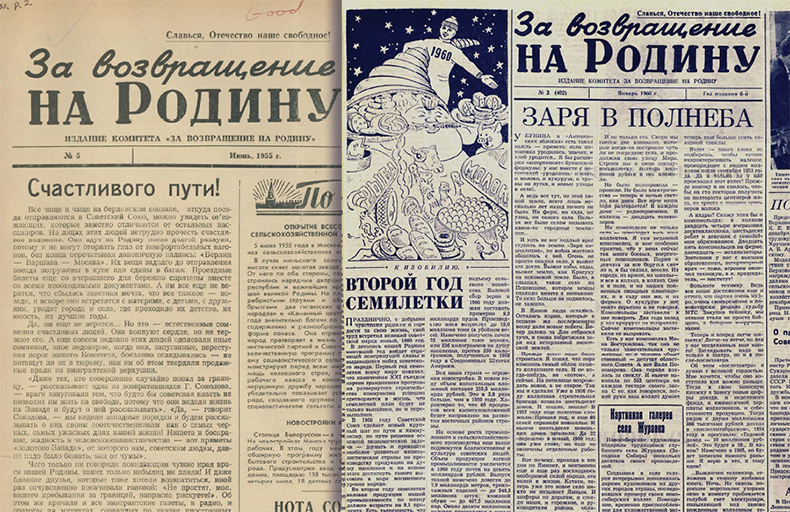
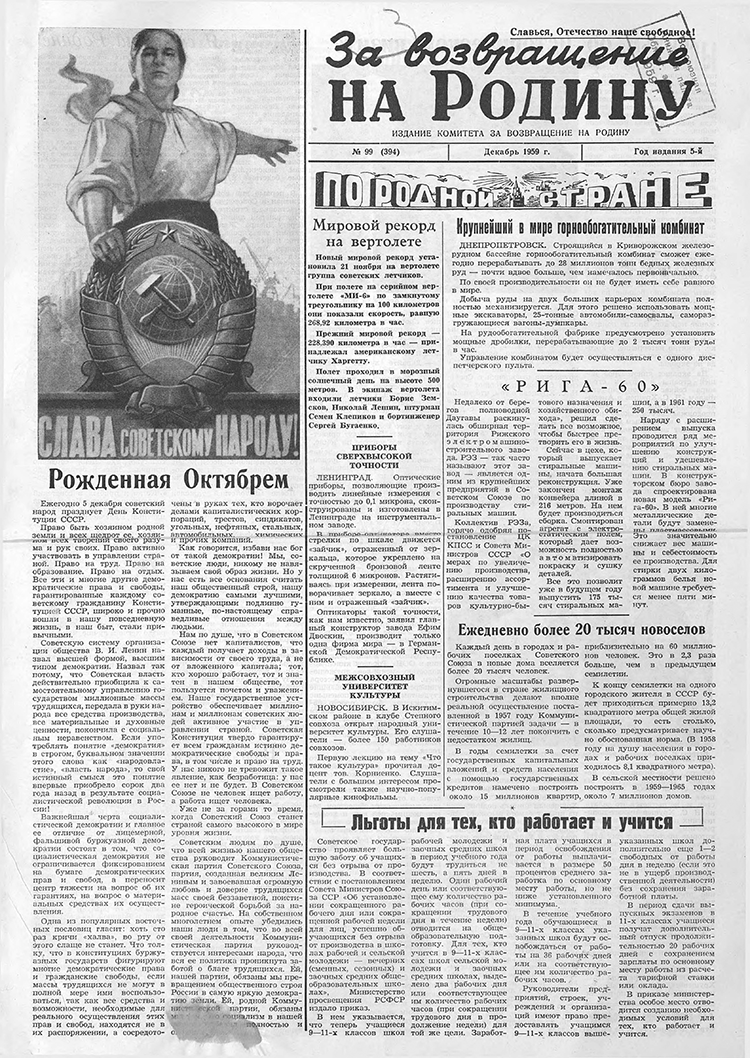
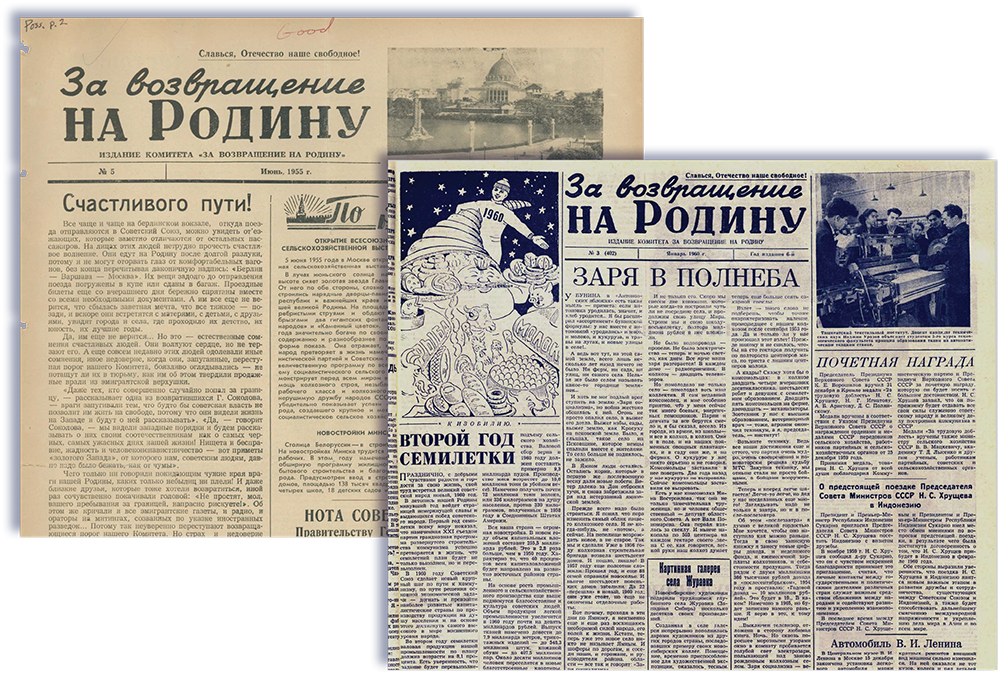
    Established under the watchful eye of the KBG, Za vozvrashchenie na Rodinu (За возвращение на Родину, Return to the Motherland) was a newspaper created by the Cold War. Established in April 1955 in East Berlin as a bi-weekly publication, the newspaper was published by the Soviet Repatriation Committee, which was also established in 1955 and stayed active until 1958. The main objective of Za vozvrashchenie na Rodinu was to create a favorable image of the Soviet Union and to criticize émigré organizations in the post-war period and during the Cold War. The newspaper was principally aimed at Russian emigrants and was an important anti-Western propaganda outlet for the USSR. During its publication, the newspaper was not available to the public on a subscription basis, and therefore it has become a rare information resource.

    The Za Vozvrashchenie na Rodinu Digital Archive contains all obtainable issues published under this title from 1955–1960 (over 1,600 pages). After the third issue of 1960 the name of the newspaper was changed to Golos Rodiny (Голос Родины, Voice of the Motherland). The archive offers scholars the most comprehensive collection available for this title, and features full page-level digitization, complete original graphics, and searchable text, and is cross-searchable with numerous other Infoteka digital resources.

  • V Novom Svete Digital Archive

    V Novom Svete Digital Archive

    A newspaper by and for the fourth wave of immigrants from the Soviet Union.

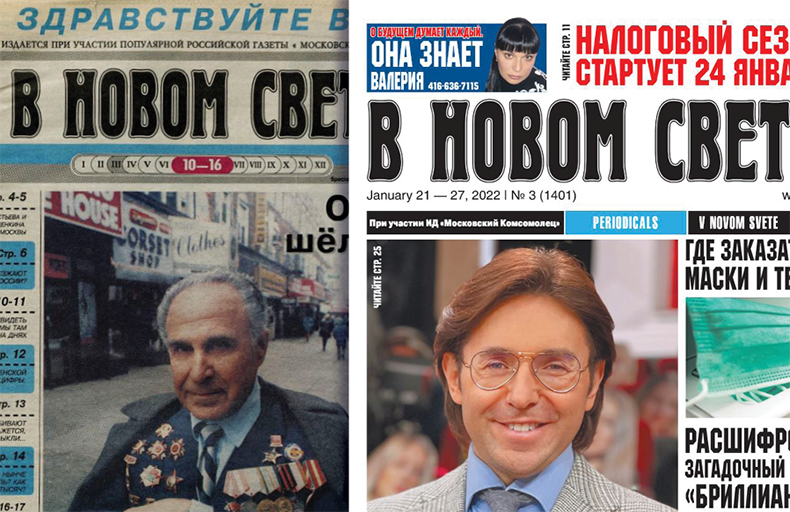
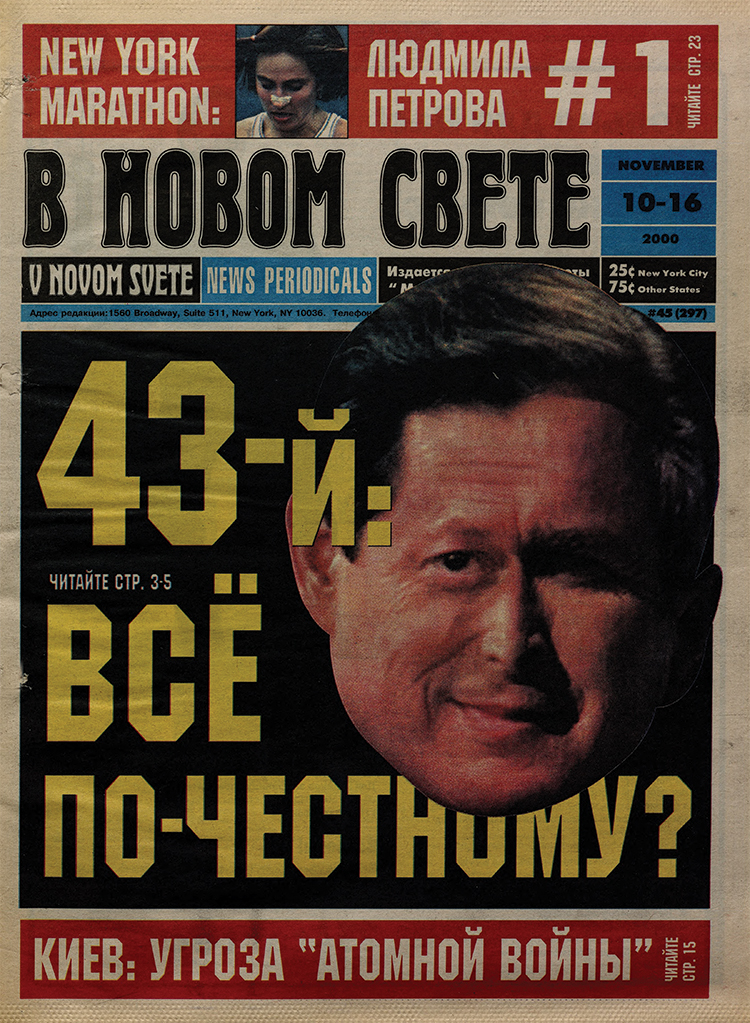
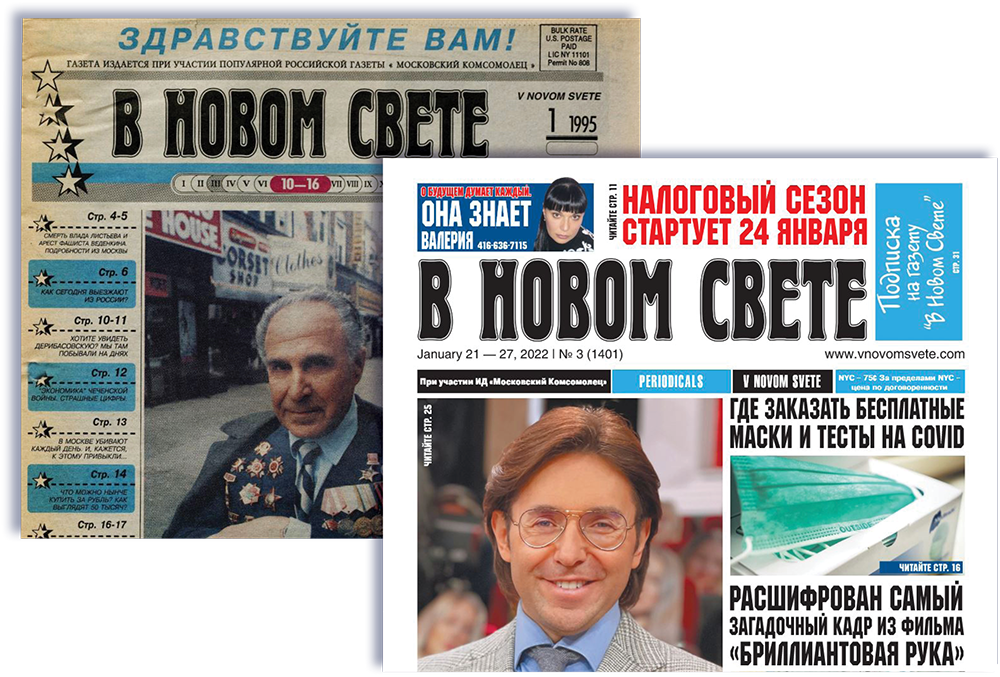
    The first issue of V Novom Svete was published on March 10, 1995, right after a prominent journalist, Vladislav Listiev, was killed in Russia. Tapping into readers’ appetites for salacious news stories and taking advantage of the new sensationalist trend in Russian journalism, V Novom Svete found a formula for success: it combined reprints from Moskovskii Komsomolets (Московский комсомолец, Moscow Komsomolets), a popular Moscow-based daily newspaper known for its topical reporting on social and political issues, with original stories written by US-based Russian-speaking authors. Very soon it became the most popular Russian language weekly in America and the only publication to be distributed nationwide.

    Over the years, famous Russian journalists such as Alexander Minkin, Mark Deutch, Alexander Khinshtein, Stanislav Belkovsky, Matvey Ganapolsky, Svetlana Khokhryakova, Alexander Melman and others were published in the pages of V Novom Svete. Legendary journalist Melor Sturua, who worked for Izvestia’s bureaus in New York and Washington during the Cold War, was one of the major columnists writing for V Novom Svete after he relocated permanently to the United States.

    Strong analytical and cultural content contributed to the growing popularity of the publication in the early 2000s. Alexandra Sviridova’s exclusive interview with the future Editor-in-Chief of Russian Forbes, Paul Khlebnikov, who was later killed in Moscow, was one of many memorable articles created by the team of American journalists. In 2004, V Novom Svete was the winner of the US Independent Press Association awards for Best Editorial and Best Graphic Design.

    After Novoe Russkoe Slovo went out of business in 2010, V Novom Svete became the only newspaper on the market producing quality Russian-language journalism. Writers publishing in the pages of V Novom Svete also worked for such prestigious outlets as the BBC, Russian Forbes, Voice of America, and Radio Liberty.

    During the Covid-19 pandemic, many small businesses that advertised in V Novom Svete were shut down and subsequently the newspaper was never able to recover financially. Despite a stable and dedicated readership, V Novom Svete decided to end its print edition after 27 years, with the last issue published on May 6, 2022.

    The V Novom Svete Digital Archive contains all obtainable published issues from 1995 to 2022. The archive offers scholars the most comprehensive collection available for this title, and features full page-level digitization, complete original graphics, and searchable text, and is cross-searchable with numerous other Infoteka digital resources.

  • Trud Digital Archive

    Trud Digital Archive

    Influential Soviet trade newspaper.

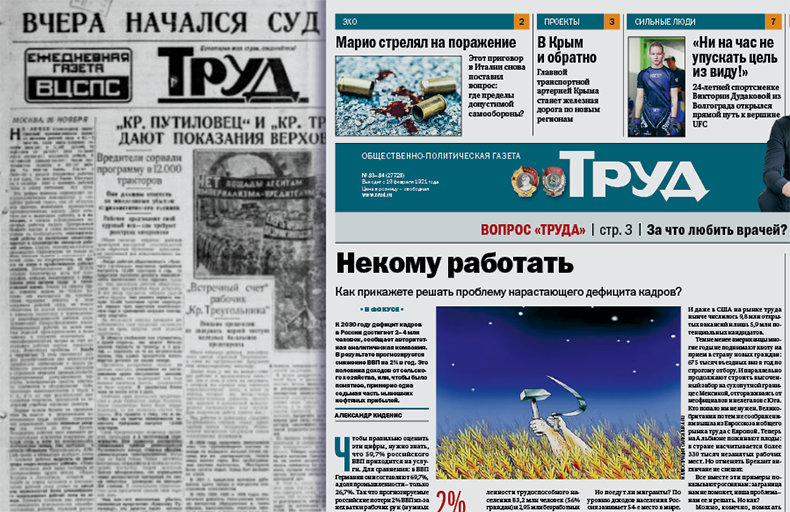
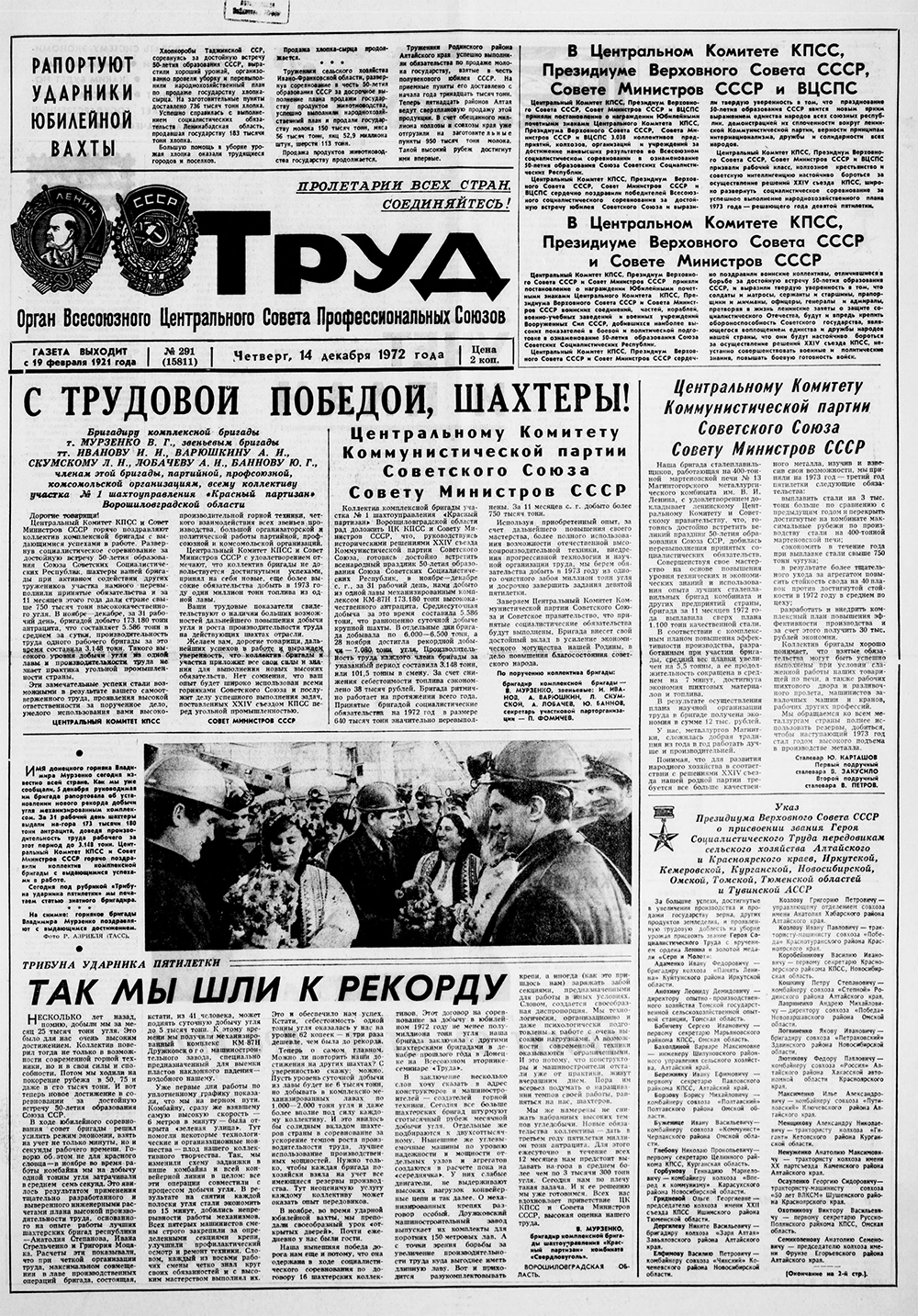
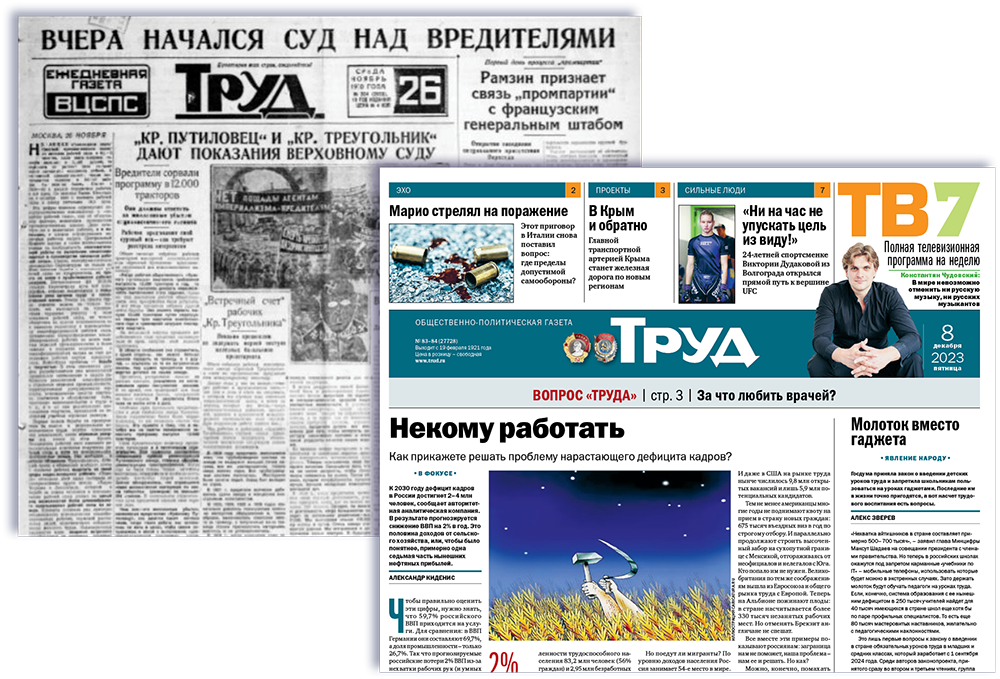
    Founded in 1921 in Moscow, Trud (Труд, Labor) was an influential Soviet newspaper and the official organ of the All-Union Central Council of Trade Unions. Among the earliest Soviet newspapers with a countrywide circulation, it attracted some of the most important journalists and writers in the USSR. Among its regular contributors were such notable poets as Vladimir Mayakovsky and Yevgeny Yevtushenko.

    Although the newspaper was dedicated to covering issues concerning labor relations in the Soviet Union, economic analysis, the plight of workers in foreign countries, and the proliferation of official pronouncements, its more popular component attracted audiences from a broader pool of readers. At the height of the Gorbachev-era reforms the newspaper, like many others, would abandon its usual propagandistic bombast ensuring its growing popularity and catapulting its circulation to well over 20 million.

    With the demise of the Soviet Union and the emergence of new publications in post-Soviet Russia that competed for readers from Trud’s targeted audiences, the popularity of the newspaper subsided, although it has retained some of its former reputation as a reliable source for news and popular culture reportage.

    The Trud Digital Archive includes all obtainable issues published from 1921 on, with an additional year’s worth of content available for purchase on an annual basis. The archive features full page-level digitization, complete original graphics, and searchable text, and is cross-searchable with numerous other Infoteka digital resources.

  • Turkmenskaia Iskra Digital Archive

    Turkmenskaia Iskra Digital Archive

    One of the most widely circulated and influential Turkmen newspapers of its time.

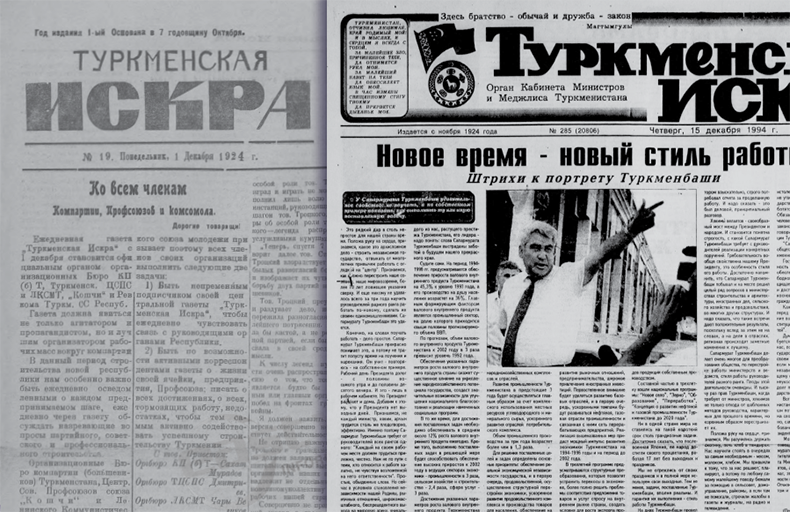
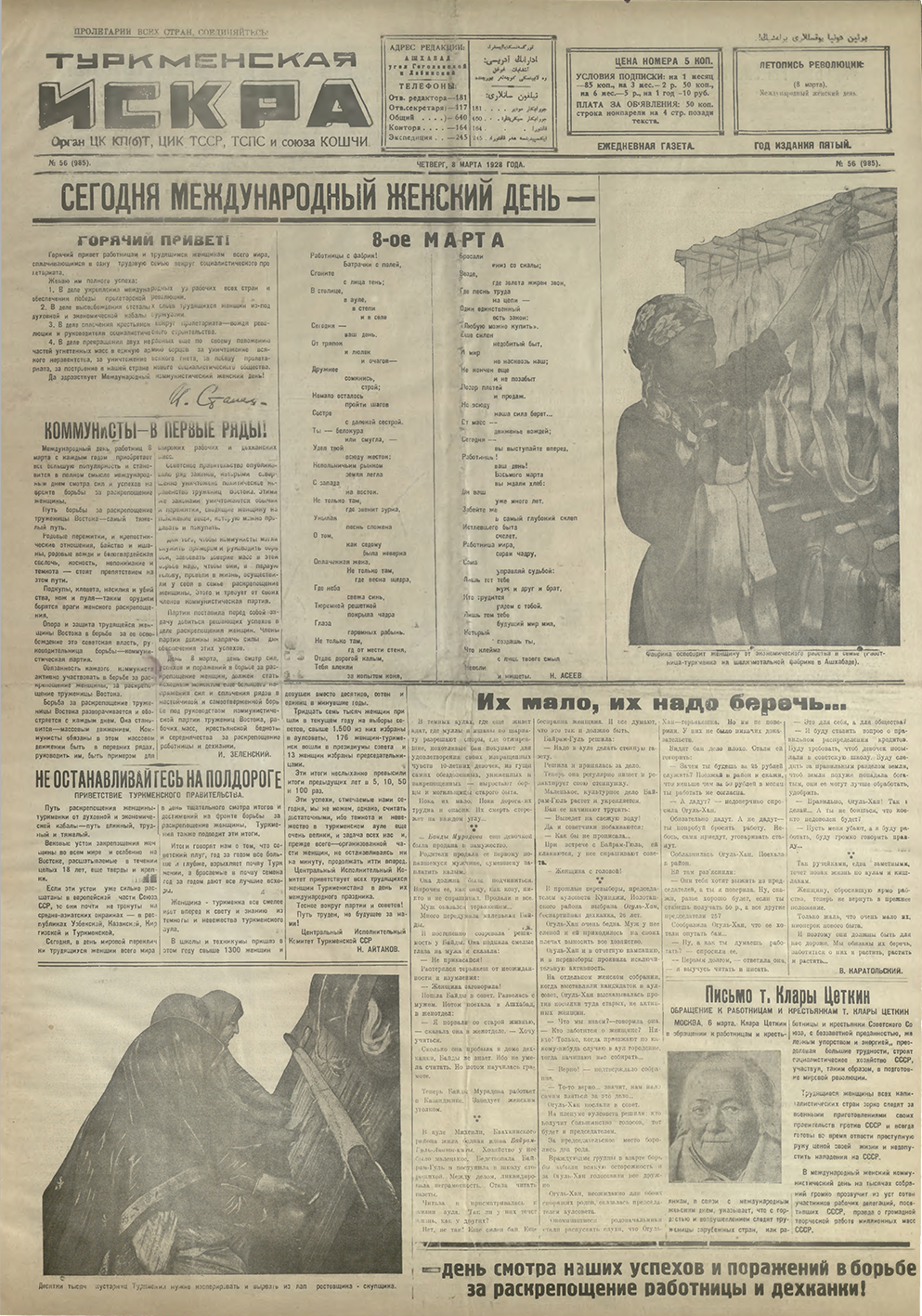
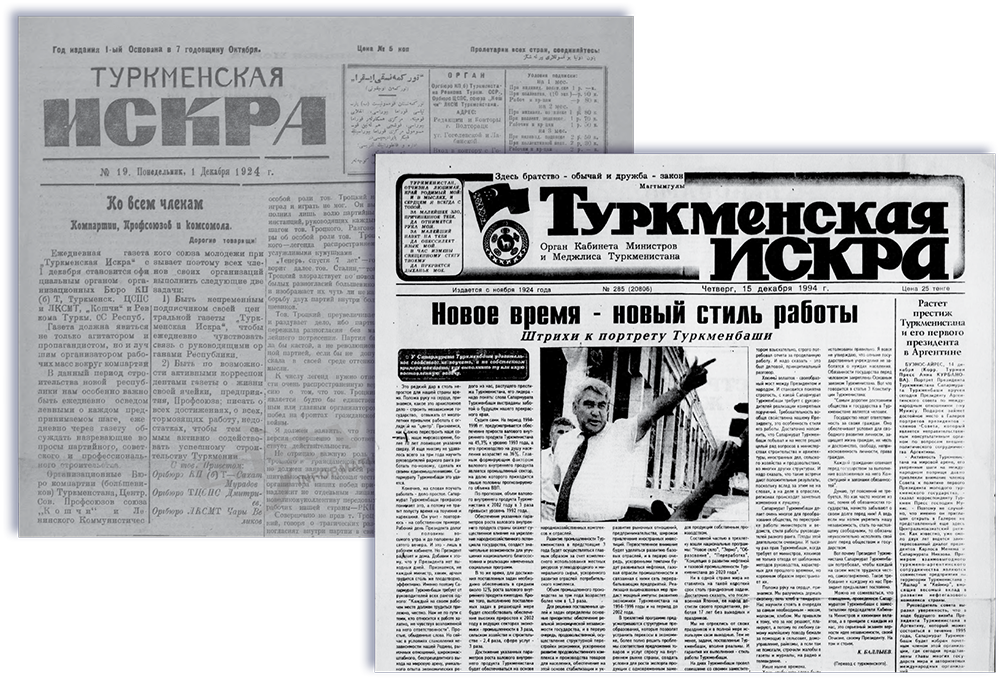
    Founded in 1924 in Ashgabat, Turkmenskaia iskra (Туркменская искра, The Turkmen Spark, a derivative of the Vladimir Lenin-founded newspaper Iskra) was a Russian-language broadsheet newspaper and the official party organ of the Central Committee of the Communist Party of Turkmenistan.

    As a republican newspaper of record, it was responsible for proliferating the Soviet central government’s, as well as the local administration’s, public announcements and pronouncements, party deliberations, policy initiatives, etc., reflecting the government’s positions on a wide variety of issues. Turkmenskaia iskra also regularly featured columns dedicated to sports, local culture, literature, and the arts.

    The Turkmenskaia Iskra Digital Archive includes all obtainable issues published from 1924 to 1995 and represents the most complete collection available for this title. The archive features full page-level digitization, complete original graphics, and searchable text, and is cross-searchable with numerous other Infoteka digital resources.

  • Sovetskaia Kul’tura Digital Archive

    Sovetskaia Kul’tura Digital Archive

    An indispensable source on Soviet and Russian arts and culture.

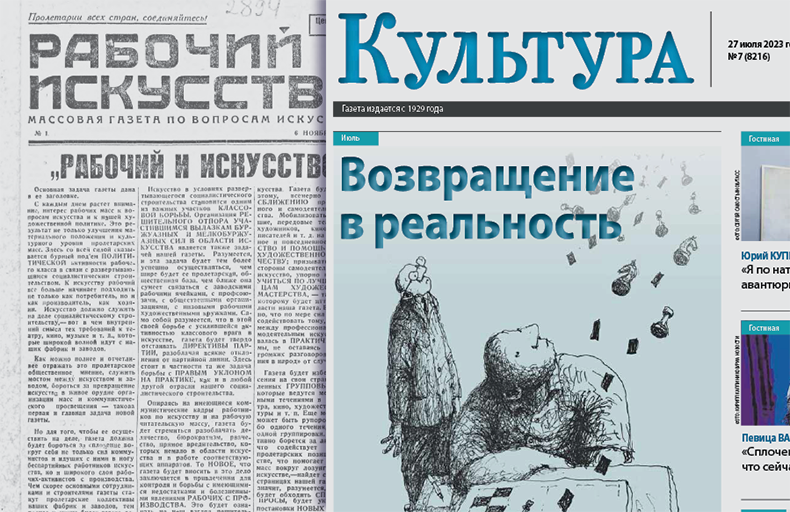
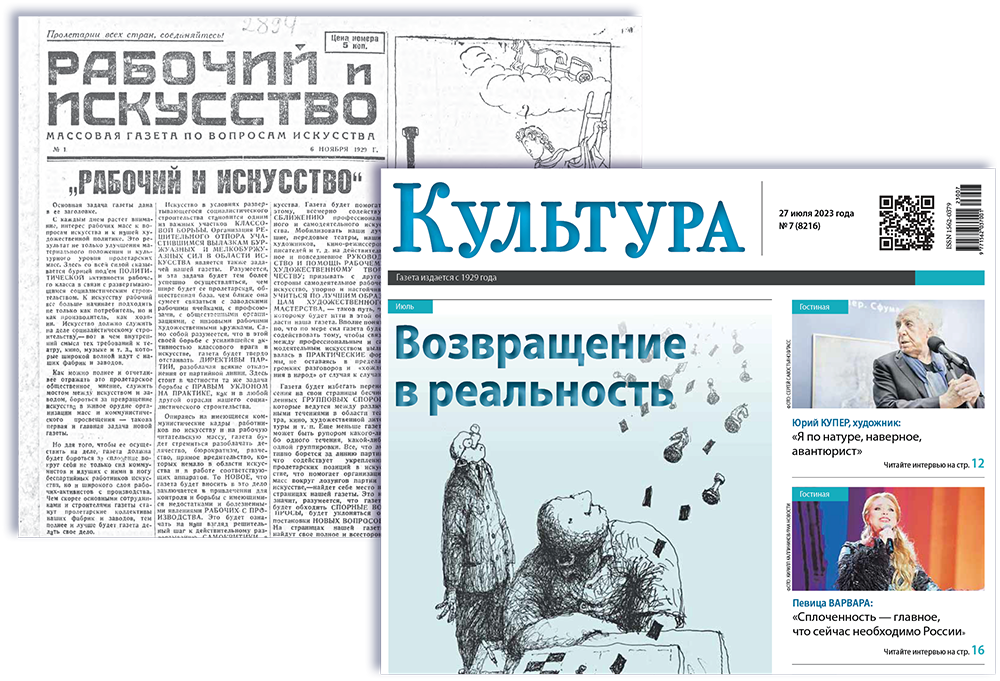
    Kul’tura (Культура, Culture), as it is known today, is the most important Soviet and Russian publication on culture from 1929 to the present, with reviews of major events in literature, theater, cinematography and the arts. For nearly 100 years, Kul’tura has served as a time capsule of Soviet and Russian culture, providing a unique perspective on ever-changing attitudes toward arts and culture in Soviet and Russian societies.

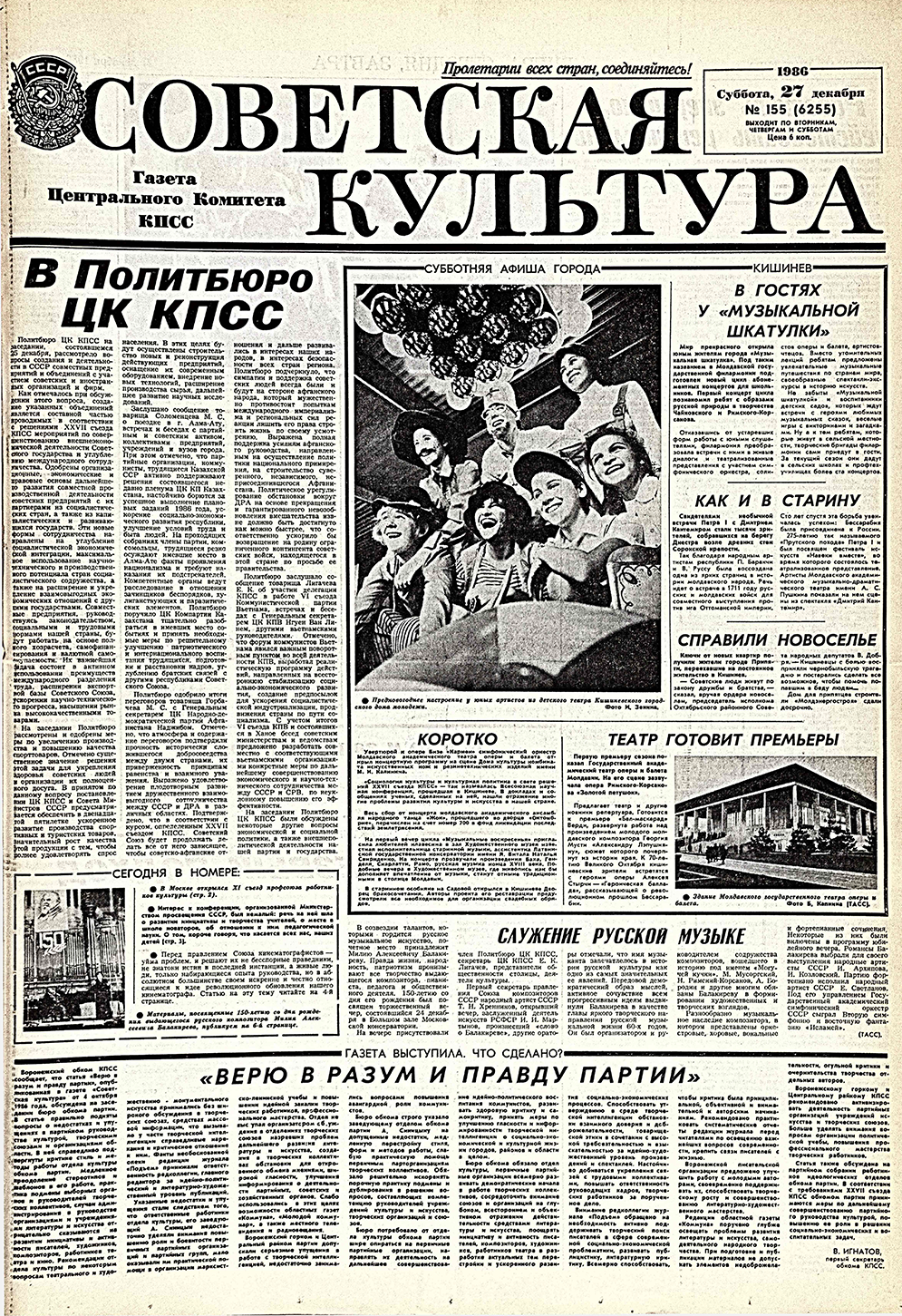
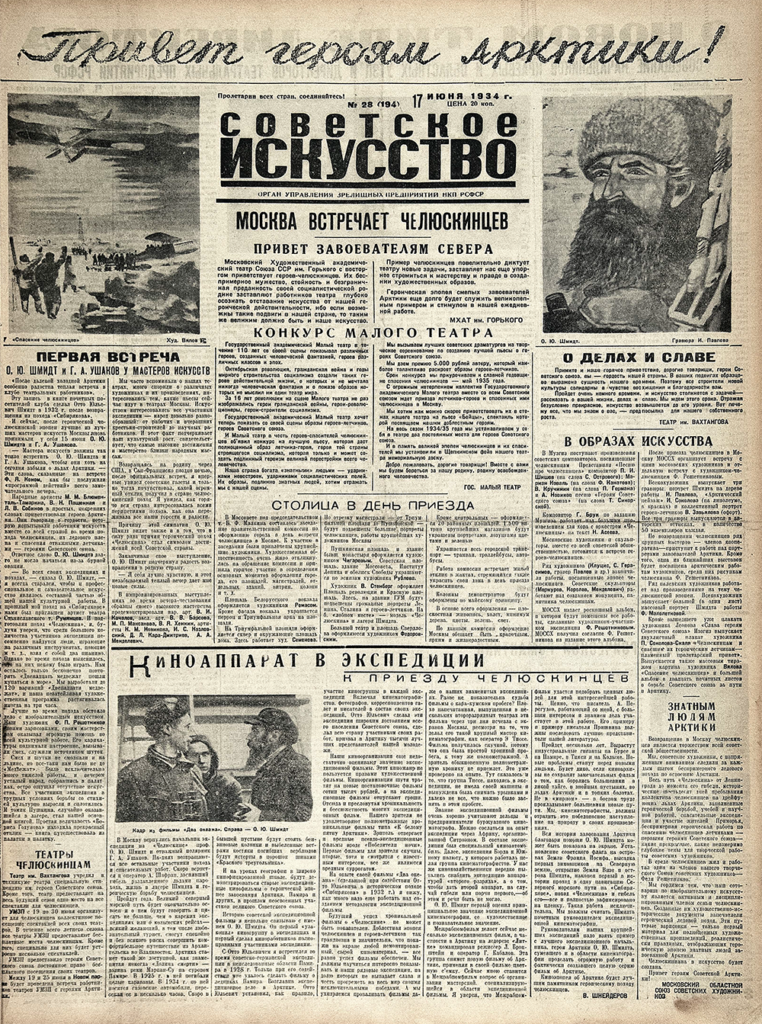
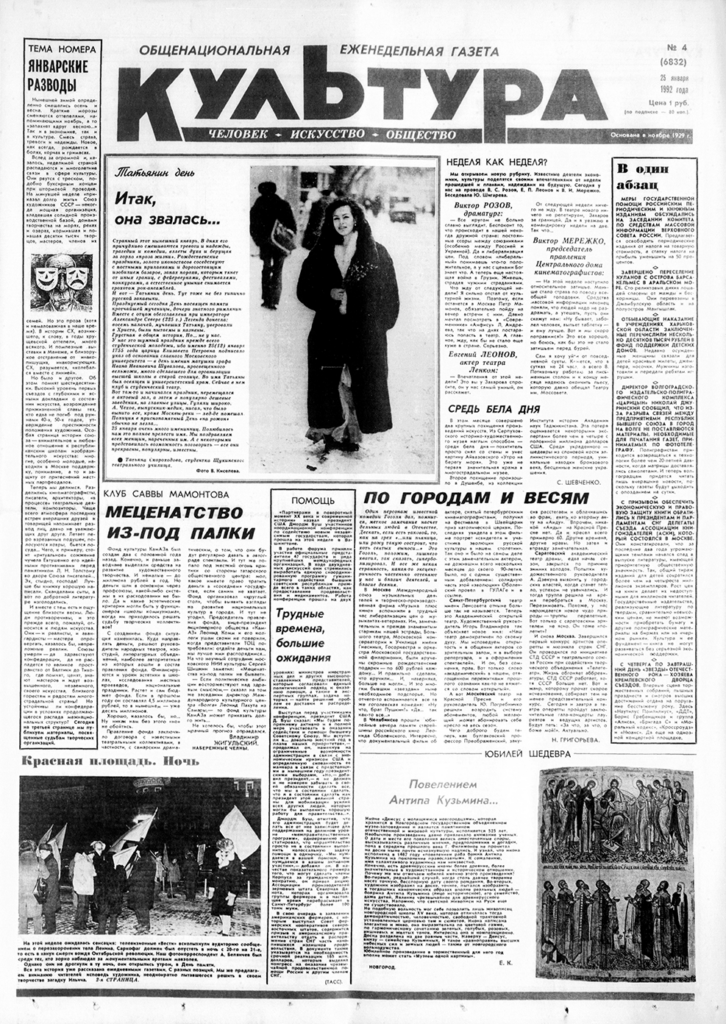
    Kul’tura was previously published as Rabochii i iskusstvo (Рабочий и искусство, Workers and Art, 1929–1930), Sovetskoe iskusstvo (Советское искусство, Soviet Art, 1931–1941), Literatura i iskusstvo (Литература и искусство, Literature and Art, 1942–1944), Sovetskoe iskusstvo (1944–1953), and Sovetskaia kul’tura (Советская культура, Soviet Culture, 1953–1991).

    The Sovetskaia Kul’tura Digital Archive contains all obtainable published issues from all of these titles (1929 on, over 55,000 pages), with an additional year’s worth of content available for purchase on an annual basis. The Sovetskaia Kul’tura Digital Archive offers scholars the most comprehensive collection available for this title, and features full page-level digitization, complete original graphics, and searchable text, and is cross-searchable with numerous other Infoteka digital resources.

    More About Sovetskaia Kul’tura

    Rabochii i iskusstvo was established during a time when artists had relative freedom to create works for the New Soviet man. Artists were enthusiastic in spreading the socialist revolution, and the newspaper at this time reflects that mindset. Art was to be made accessible to the masses. Whether explicitly or implicitly, the newspaper supported writers, artists, and authors who produced works that fostered the concept of the New Soviet Man.

    During the Stalin years, Socialist realism took hold. Any creative expression considered unworthy to support the goals of socialism and communism was banned. Writers such as Mikhail Zoshchenko, Osip Mandelstam, Boris Pasternak, and others were roundly criticized in the pages of Sovetskoe iskusstvo (1931–1941), Literatura i iskusstvo (1942–1944), and Sovetskoe iskusstvo (1944–1952).

    Sovetskaia kul’tura, established in 1953, came about in the thaw of the Khrushchev era. The times changed for the better, but the newspaper still toed the party line. Modern art exhibitions were condemned and avant-garde composers and abstract painters were censured.

    During the Gorbachev era, glasnost created a cultural reawakening, which was reflected in the pages of Sovetskaia kul’tura. For example, the newspaper was the first to report that authorities had rehabilitated Pasternak posthumously and a museum dedicated to the work of Marc Chagall was to open in Belarus.

    Today, the newspaper offers interesting reviews and event listings, often focusing on the cultural life of Moscow and the regions. It is also known for its topical commentaries on popular culture and politics.

  • Slovo Kyrgyzstana Digital Archive

    Slovo Kyrgyzstana Digital Archive

    Official newspaper of the Central Committee of the Kirghiz SSR.

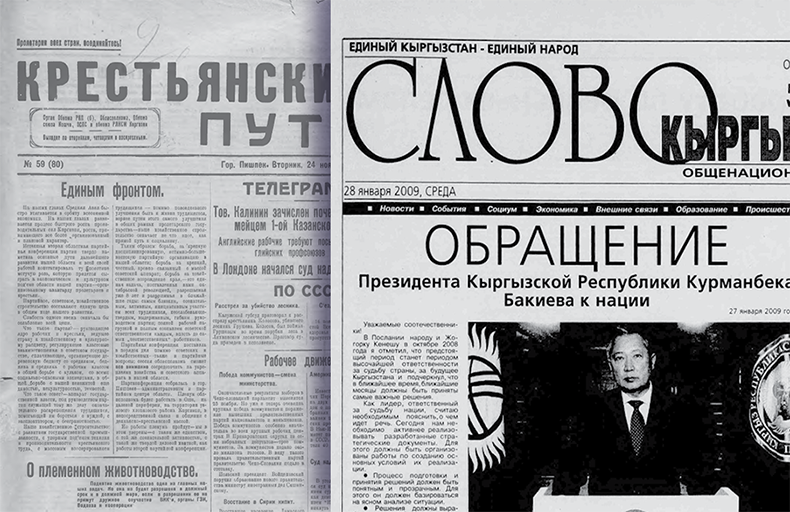
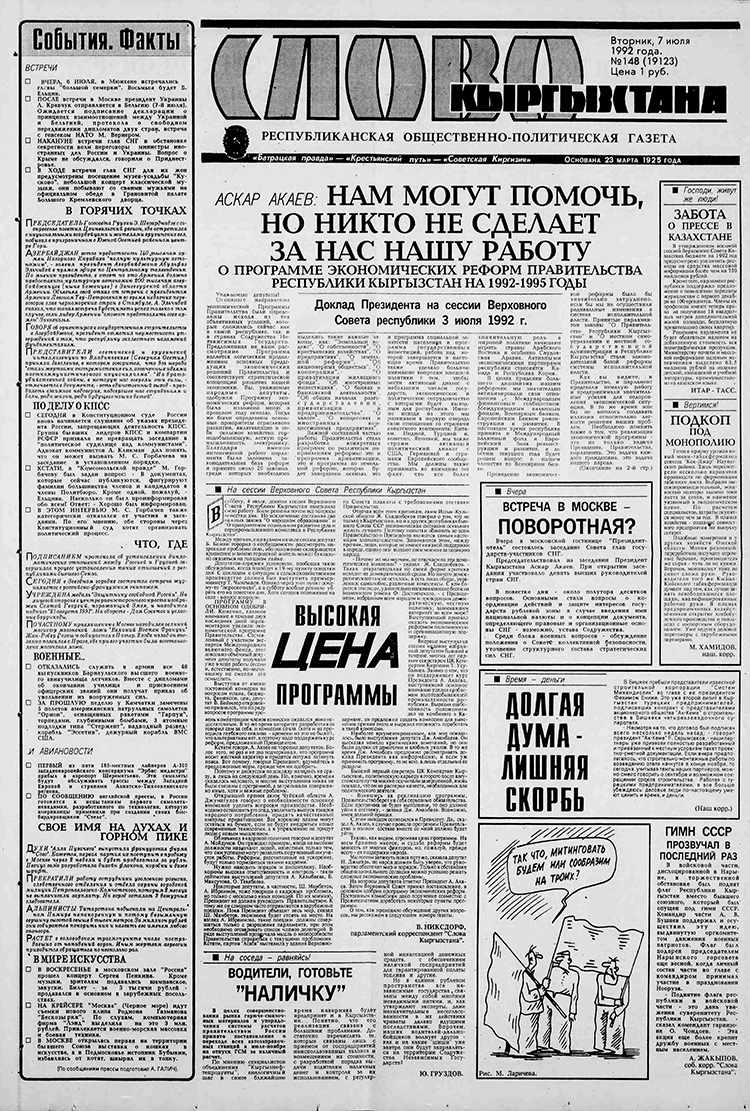
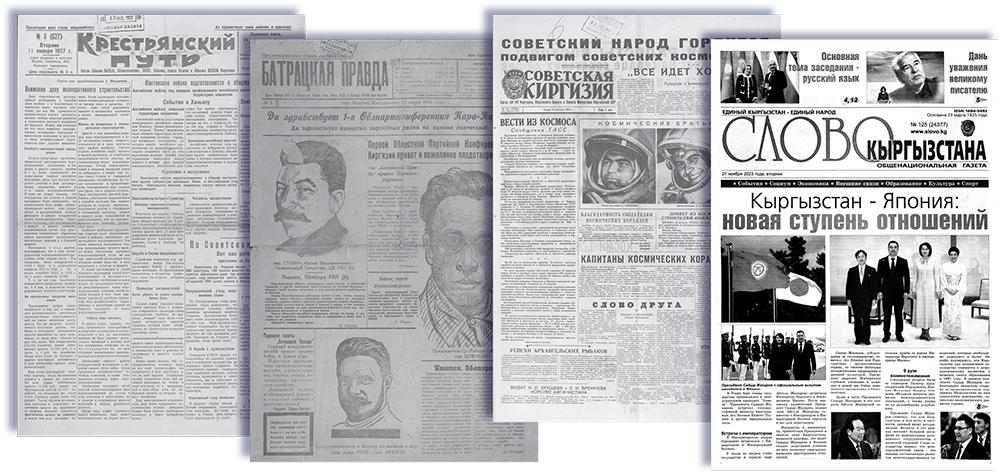
    Established in 1925, in what was then the Kara-Kirghiz Autonomous Oblast in the RSFSR, Slovo Kyrgyzstana (Слово Кыргызстана, Word of Kyrgyzstan) is a Russian-language newspaper that served as the official party organ of the Central Committee of the Kirghiz SSR throughout its Soviet existence. It has been published independently since it gained independence from the Soviet Union in 1991. Known variously as Batratskaia Pravda (Батрацкая правда, Batratskaya Truth, March-June 1925), Krest’ianskii put’ (Крестьянский путь, Peasant Path, 1925-1927), and Sovetskaia Kirgiziia (Советская Киргизия, Soviet Kyrgyzstan, 1927-1991), at its peak the newspaper claimed a circulation of 123,000 copies and was the most important media organization disseminating the Communist party’s official stances and directives.

    As the newspaper of the government of the Republic of Kyrgyzstan, Slovo Kyrgyzstana publishes edicts of the republic’s president, government resolutions, laws, etc. The newspaper also covers both national and international affairs, culture, economics, environmental issues, healthcare, religion and other important issues of concern.

    The Slovo Kyrgyzstana Digital Archive comprises over 120,000 pages and includes all obtainable issues of the newspaper’s previous titles (Batratskaia Pravda, Krest’ianskii put’, and Sovetskaia Kirgiziia). The archive contains all obtainable published issues from 1925 on, with an additional year’s worth of content available for purchase on an annual basis. The archive offers scholars the most comprehensive collection available for this title and features full page-level digitization, complete original graphics, and searchable text, and is cross-searchable with numerous other Infoteka digital resources.

  • Russian/NIS Newswires

    Russian/NIS Newswires

    Concise, timely and authoritative news from Russia and the former Soviet Union.

    Russian/NIS Newswires includes several outstanding sources to follow the day-to-day developments in Russia and CIS. Content includes full-text transcripts of top speeches, statements, press conferences, newspaper articles and television reports of the day, from presidential addresses to remarks by Duma opposition leaders, from Foreign Ministry briefings to commentaries by leading economists and other experts. ITAR-TASS, one of the major world information agencies, delivers a detailed account about the events in Russia and worldwide. The Moscow information agency Oreanda specializes in economic news and its services are used by the largest Russian banks and corporations as well as by government agencies. The daily newswire AP-Blitz is produced by the Tajikistan-based information powerhouse Asia-Plus, covering developments in Central Asia. The database also contains limited archives for six additional newswires.

    Russian/NIS Newswires Content

    • AP-Blitz. Tajikistan News: Daily newswire produced by the Tajikistan-based Asia-Plus, featuring reports of various news media on developments in Tajikistan and Central Asia.
    • Economic News/Ekonomicheskie novosti (Экономические новости): Economic news from the well-known wire service Oreanda Information Agency, in English and Russian editions. Includes various economic reports, government decisions and market reports.
    • ITAR-TASS Daily: Daily selection of news from Russia’s major news agency covering events inside the country.

    See title list for information about archived titles.

  • Russian Regional Newspapers

    Russian Regional Newspapers

    Comprehensive coverage of regional news, current events, economic developments and cultural events in Russia.

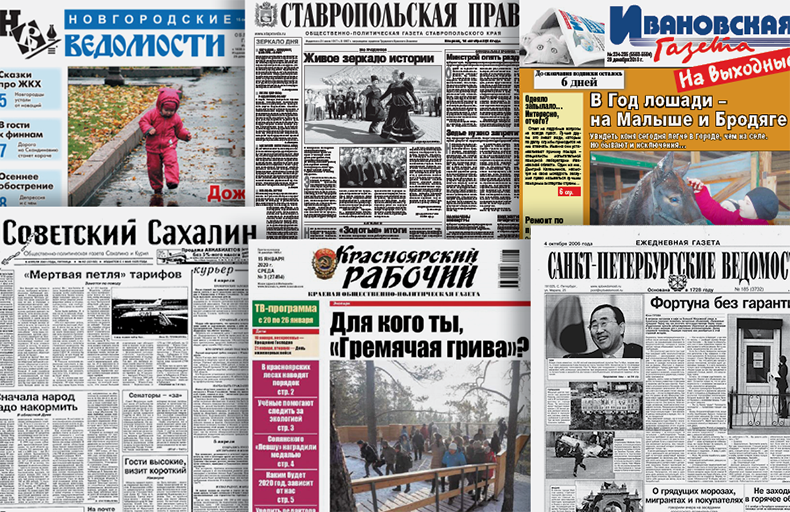
    Russian Regional Newspapers provides close-up coverage of developments throughout Russia’s regions. With nearly 90 active titles, the database includes newspapers from all seven Federal Districts of the Russian Federation, as well as newspapers focusing on local issues of Moscow and Saint Petersburg. The database represents such noteworthy regions as the troubled Northern Caucasus (Vesti Respubliki [Вести Республики] from Chechnya, Severnaia Osetiia [Северная Осетия] from Northern Osetiia-Alania, etc.), oil and gas rich Western Siberia (Tiumenskie izvestiia [Тюменские известия], etc.), the investment-friendly Volga region (Nizhegorodskie novosti [Нижегородские новости] from Nizhnii Novgorod, Volzhskaia kommuna [Волжская коммуна] from Samara, etc.), and many others. The selected newspapers have the largest circulation in their regions and are considered the most authoritative.

    Russian Regional Newspapers Titles

    • Altaiskaia pravda (Алтайская правда)
    • Belgorodskaia pravda (Белгородская правда)
    • Birobidzhanskaia zvezda (Биробиджанская звезда)
    • Dagestanskaia pravda (Дагестанская правда)
    • Iakutiia (Якутия)
    • Ingushetiia (Ингушетия)
    • Kamchatskii krai (Камчатский край)
    • Krainii Sever (Крайний Север)
    • Mariiskaia pravda (Марийская правда)
    • Novosti Sochi (Новости Сочи)
    • Pskovskaia guberniia (web versiia) (Псковская губерния [web версия])
    • Respublika Bashkortostan (Республика Башкортостан)
    • Sovetskaia Chuvashiia (Советская Чувашия)
    • Tiumenskie izvestiia (Тюменские известия)
    • Ural’skii rabochii (Уральский рабочий)
    • Viatskii krai (Вятский край)
    • Vremia i den’gi (Время и деньги)
    • Zolotoe kol’tso (Золотое кольцо)

    See title list for full list of active and archived titles.