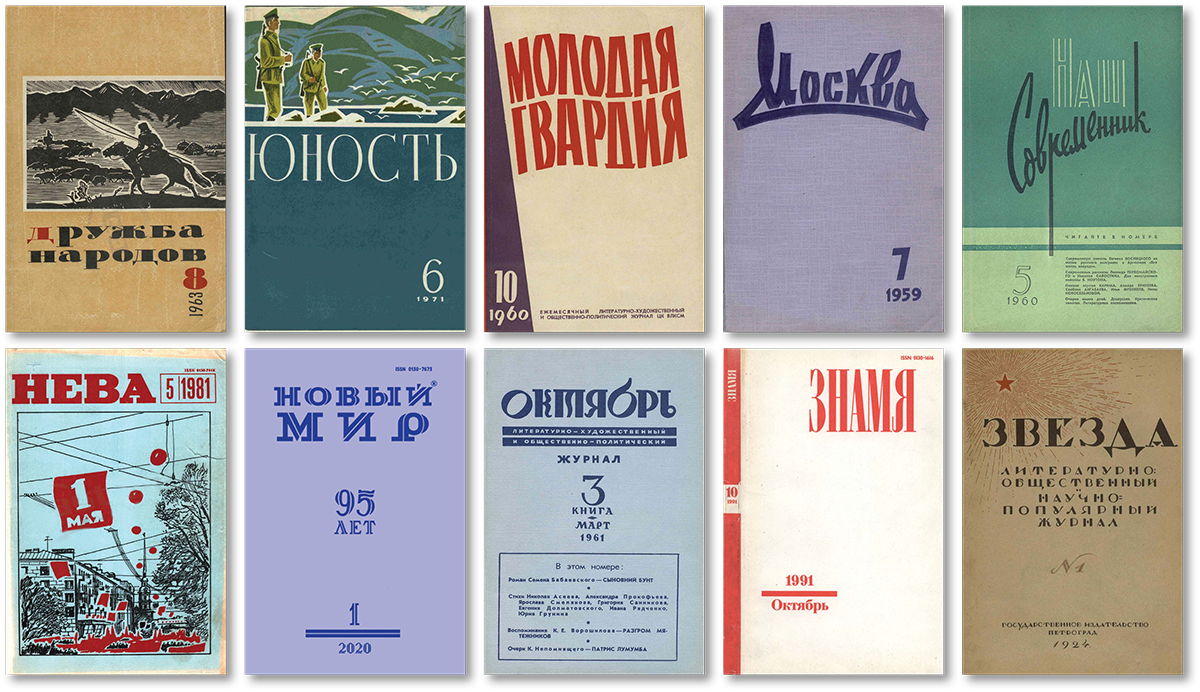
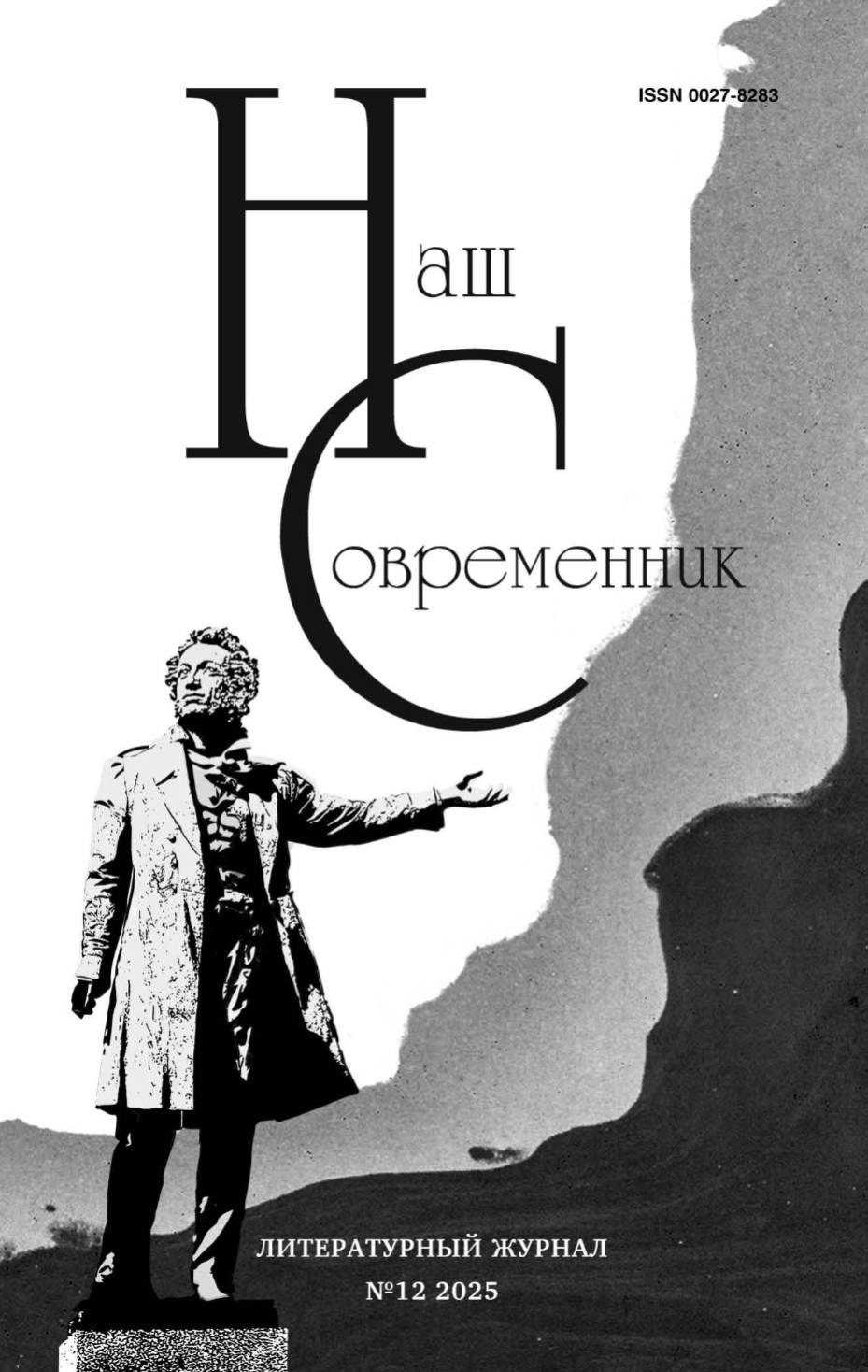
Influential literary periodical of the Soviet and post-Soviet period.
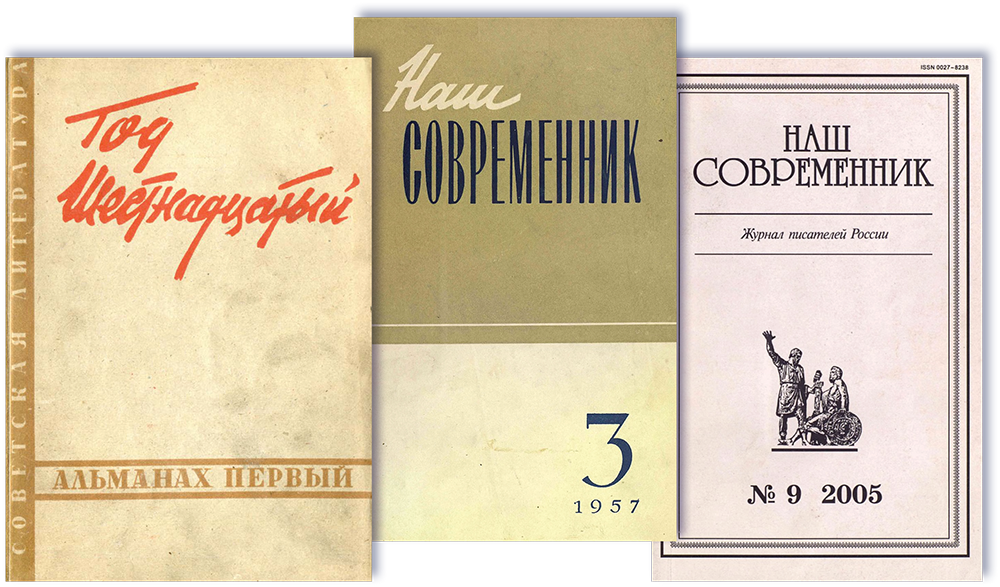
Nash Sovremennik (Наш современник, Our Contemporary) was established in 1956 in Moscow on the basis of the Maxim Gorky-founded literary journal Al’manakh (Альманах, Almanac; pub. 1933–1955, suspended 1940–1947). One of the esteemed Soviet/Russian “thick journals,” Nash Sovremennik was published under the auspices of the RSFSR Union of Writers and was one of the most popular and well-respected Soviet literary periodicals. Unlike many of its contemporary counterparts that tended to attract writers and young talent from a more urban intellectual setting, Nash Sovremennik was a pioneer in finding talent from the Russian glubinka and remote provinces, providing these writers with an important literary platform unavailable elsewhere. As a result, the journal came to be associated with the so-called “village” or “provincial prose,” with some of its most important representatives being such writers as Fyodor Abramov, Viktor Astafyev, Vasily Belov, and Vasily Shukshin, among others.
Though largely faithful to Marxist-Leninist precepts since its founding, during the last years of the Soviet Union the journal underwent dramatic ideological reformulations, moving away from communist orthodoxy to Russian neo-Slavophile conservatism and patriotism that fiercely opposed Western political and literary trends on ideological grounds. At the height of its popularity in the 1990s Nash Sovremennik would boast a circulation of nearly half a million copies.
Led by Stanislav Kunyayev since 1989, the journal has become an important literary and journalistic vehicle for Russian conservatives and traditionalists, attracting such political and literary figures as Gennadi Zyuganov, Nikolay Ryzhkov, Sergey Kara-Murza, Aleksandr Prokhanov, Zakhar Prilepin, and the controversial late Metropolital Ioann (Snychev).
The Nash Sovremennik Digital Archive includes all obtainable issues of Al’manakh and Nash Sovremennik published from 1933 on, with an additional year’s worth of content available for purchase on an annual basis. The archive offers scholars the most comprehensive collection available for this title, and features full page-level digitization and complete original graphics. The archive has searchable text and is cross-searchable with numerous other Infoteka digital resources.
- Product Code: DA-NSOV
- Year First Published: 1933
- Archive: 1933–2025
- Language: Russian
- Country: Russia
- City: Moscow
- Frequency: Monthly
- Format: PDF, article-based
- Producer: Infoteka
More about the Soviet “Thick Journals”
The famed Soviet tolstye zhurnaly, or “thick journals,” were significant platforms for literary and intellectual discourse. Tolstye zhurnaly such as Nash Sovremennik played a complex and multifaceted role in Soviet intellectual and literary life. They were not merely publications but institutions that shaped and were shaped by the cultural, intellectual, and political currents of their time. These journals served multiple roles:
They acted as repositories of high culture, preserving the intellectual and literary achievements of the era. Given the limited avenues for independent publishing, these journals were the primary platforms where established and emerging writers could reach an audience.
State-Controlled Outlets. While they were crucial platforms for intellectual and artistic expression, it’s important to remember that these journals were often used to propagate official ideologies, and the works published in them usually underwent rigorous censorship.
Academic Importance. For academics studying the Soviet period, tolstye zhurnaly offer a valuable glimpse into the state-sanctioned intellectual climate of the time. They provide context for how literature and intellectual thought evolved under different political and social conditions.
Catalysts for Change. During more liberal periods, such as the Khrushchev Thaw and the perestroika years, tolstye zhurnaly could act as catalysts for change, pushing the boundaries of what was acceptable to discuss and publish.