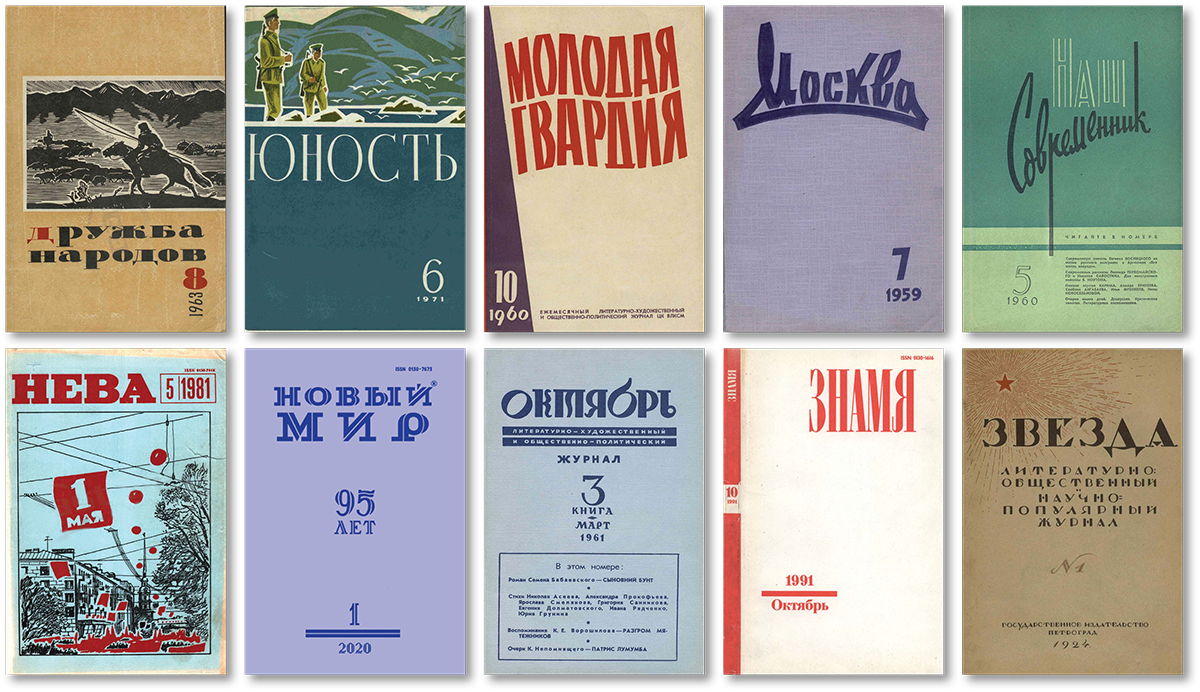
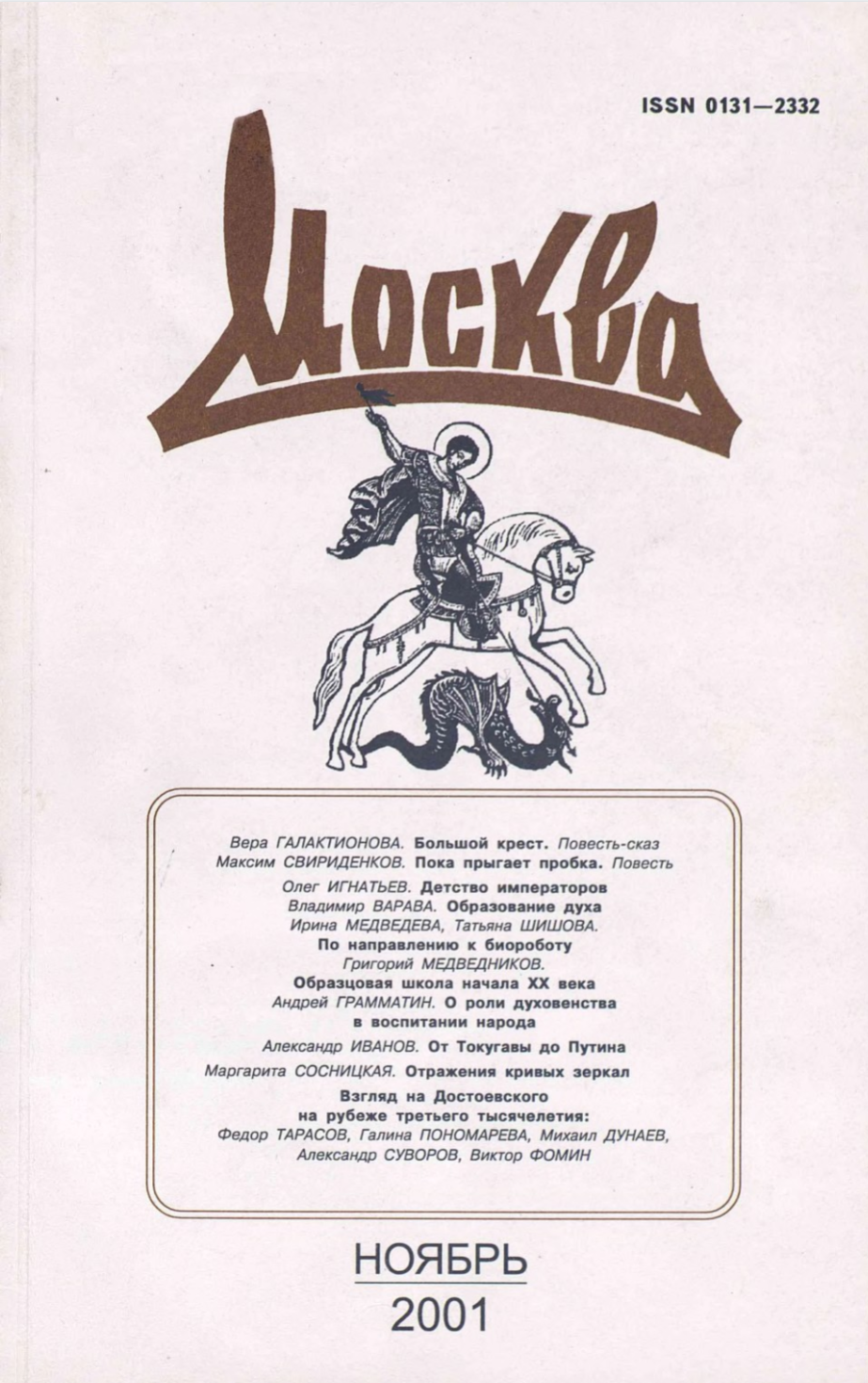
Key publication chronicling nearly 70 years of Russian literary and cultural development.
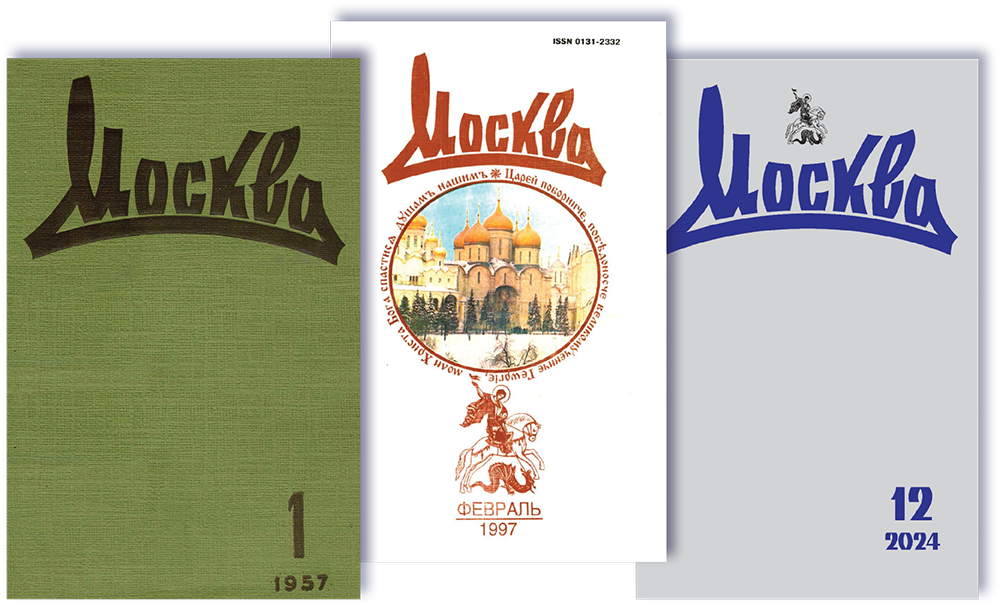
Moskva (Москва, Moscow) has shaped the cultural life of Soviet and Russian society since 1957. Moskva stands among the prestigious “thick journals” of Russia and the USSR that defined the intellectual landscape of their time.
The journal has consistently published works by contemporary writers, including prose, poetry, journalism, and criticism. Moskva holds particular historical significance as the first publisher of Mikhail Bulgakov’s masterpiece The Master and Margarita and Nikolai Karamzin’s monumental work History of the Russian State. Its pages have featured outstanding works of Russian literature by authors such as Bunin, Sholokhov, and Yulian Semyonov, alongside acclaimed international writers including Antoine de Saint-Exupéry, Ernest Hemingway, and William Faulkner.
Uniquely among thick journals, Moskva maintains a section called “Home Church,” which introduces readers to religious values. The journal has served as an intellectual anchor for the intelligentsia, helping to bridge the spiritual divide between past and future. Today, Moskva continues to articulate the ideological doctrine of modernity, uphold Russian ideas, explore traditions of Russian thought, and carefully preserve the excellence of the Russian literary language.
The Moskva Digital Archive offers scholars the most comprehensive collection available for this title, with an additional year’s worth of content available for purchase on an annual basis. Featuring full page-level digitization and complete original graphics, each issue has been carefully digitized and split into individual articles with permanent URLs, making it easier for researchers to create accurate citations in their work. Featuring full page-level digitization, complete original graphics, and a user-friendly bilingual interface in Russian and English, the searchable database enables efficient exploration of key literary works, critical essays, and editorial content that shaped Russian intellectual discourse throughout the 20th century. The archive is cross-searchable with numerous other Infoteka digital resources.
- Product Code: DA-MOSK
- Year First Published: 1957
- Archive: 1957–2025
- Language: Russian
- Country: Russia
- City: Moscow
- Frequency: Monthly
- Format: PDF, article-based
- Producer: Infoteka
More about the Soviet “Thick Journals”
The famed Soviet tolstye zhurnaly, or “thick journals,” were significant platforms for literary and intellectual discourse. Tolstye zhurnaly such as Moskva played a complex and multifaceted role in Soviet intellectual and literary life. They were not merely publications but institutions that shaped and were shaped by the cultural, intellectual, and political currents of their time. These journals served multiple roles:
They acted as repositories of high culture, preserving the intellectual and literary achievements of the era. Given the limited avenues for independent publishing, these journals were the primary platforms where established and emerging writers could reach an audience.
State-Controlled Outlets. While they were crucial platforms for intellectual and artistic expression, it’s important to remember that these journals were often used to propagate official ideologies, and the works published in them usually underwent rigorous censorship.
Academic Importance. For academics studying the Soviet period, tolstye zhurnaly offer a valuable glimpse into the state-sanctioned intellectual climate of the time. They provide context for how literature and intellectual thought evolved under different political and social conditions.
Catalysts for Change. During more liberal periods, such as the Khrushchev Thaw and the perestroika years, tolstye zhurnaly could act as catalysts for change, pushing the boundaries of what was acceptable to discuss and publish.