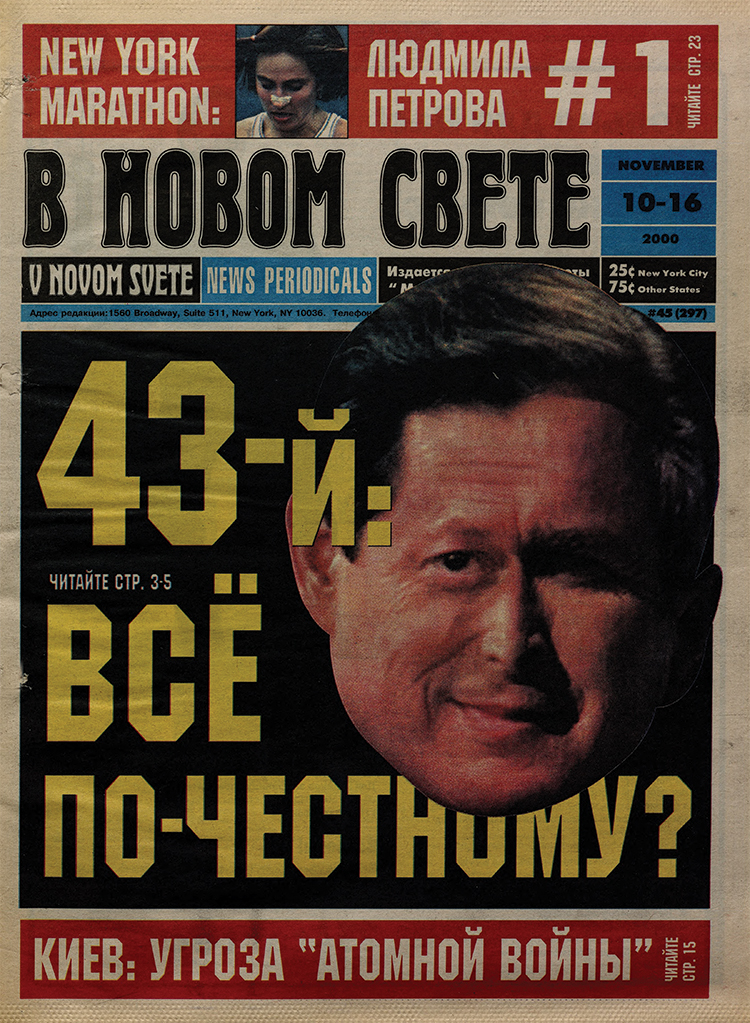
A newspaper by and for the fourth wave of immigrants from the Soviet Union.
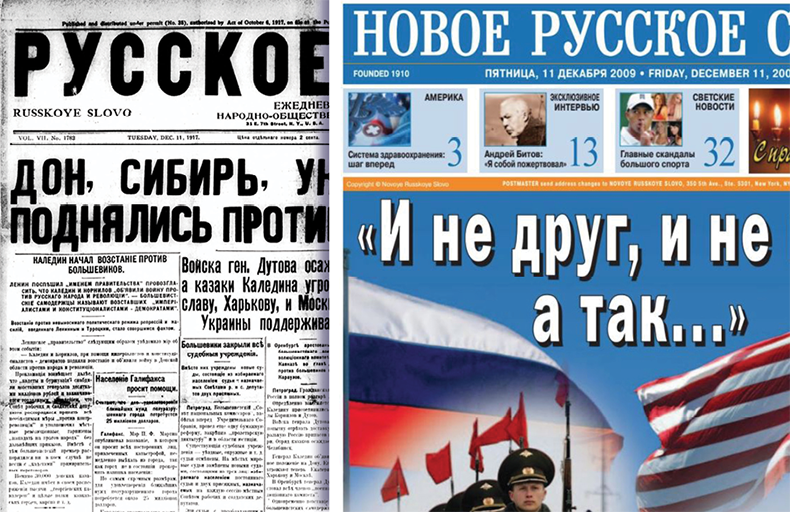
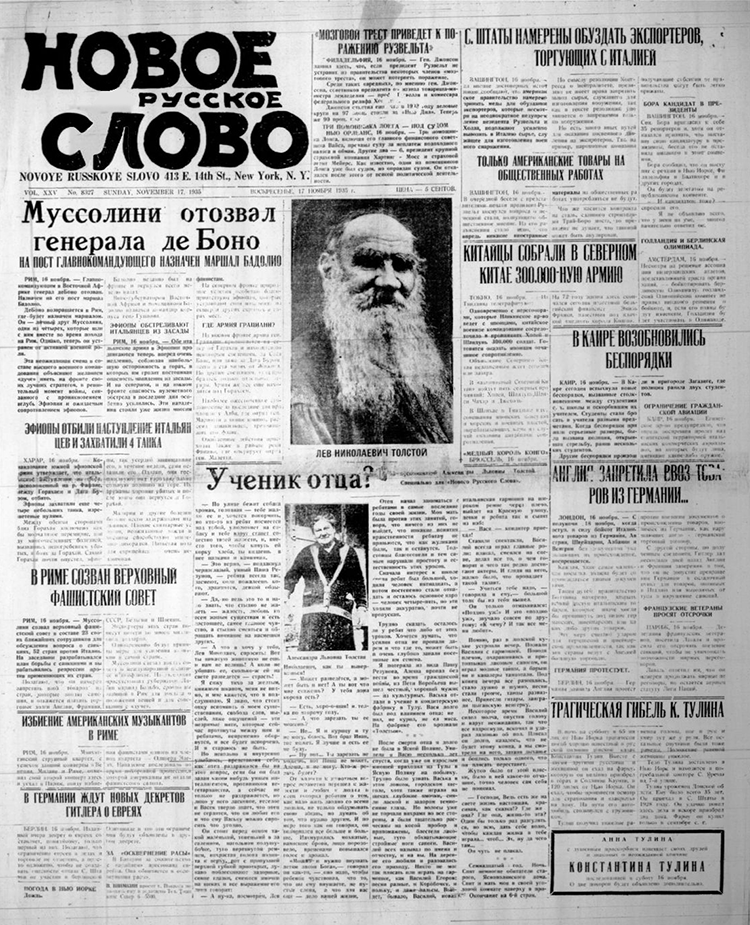
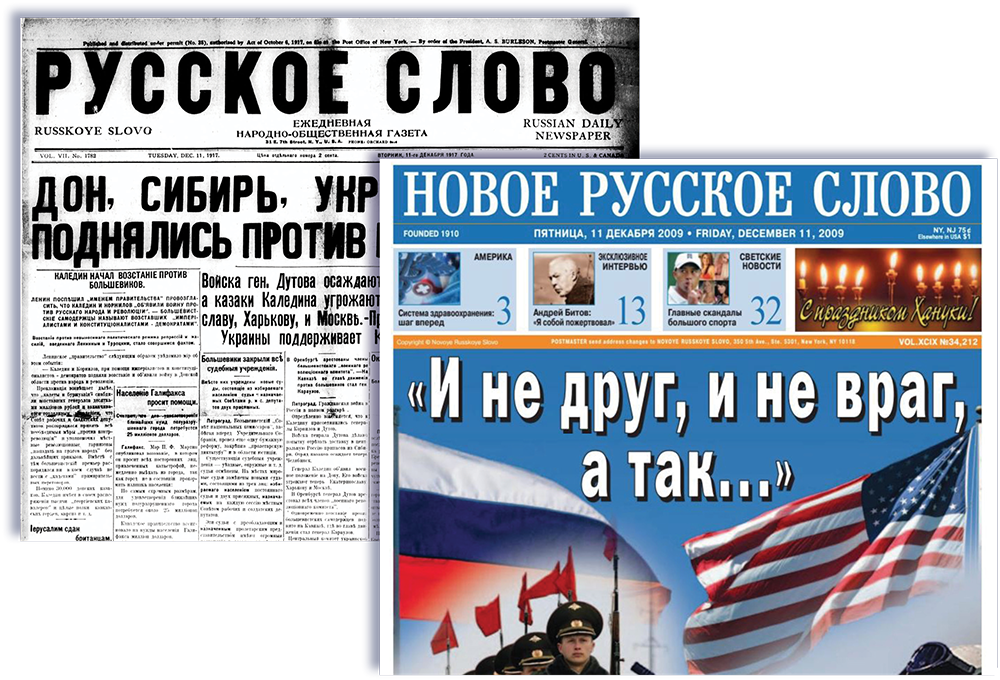
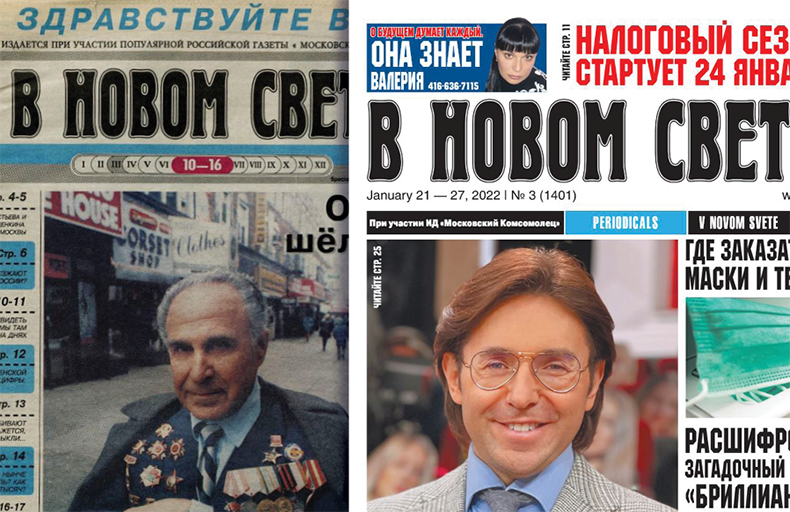
Founded in 1995 in New York City, V Novom Svete (В Новом Свете, In the New World) was the most popular weekly newspaper among the fourth wave of immigrants from the former USSR, which began in the late 1980s. Unlike existing émigré publications, such as Panorama (Панорама) in Los Angeles, which was aimed at readers on the west coast, and Novoe Russkoe Slovo (Новое русское слово, New Russian Word), a New York-based paper aimed at previous generations of immigrants, V Novom Svete published striking interviews with contemporary political and cultural leaders of modern Russia, as well as pieces on the life of the Russian community in the United States.
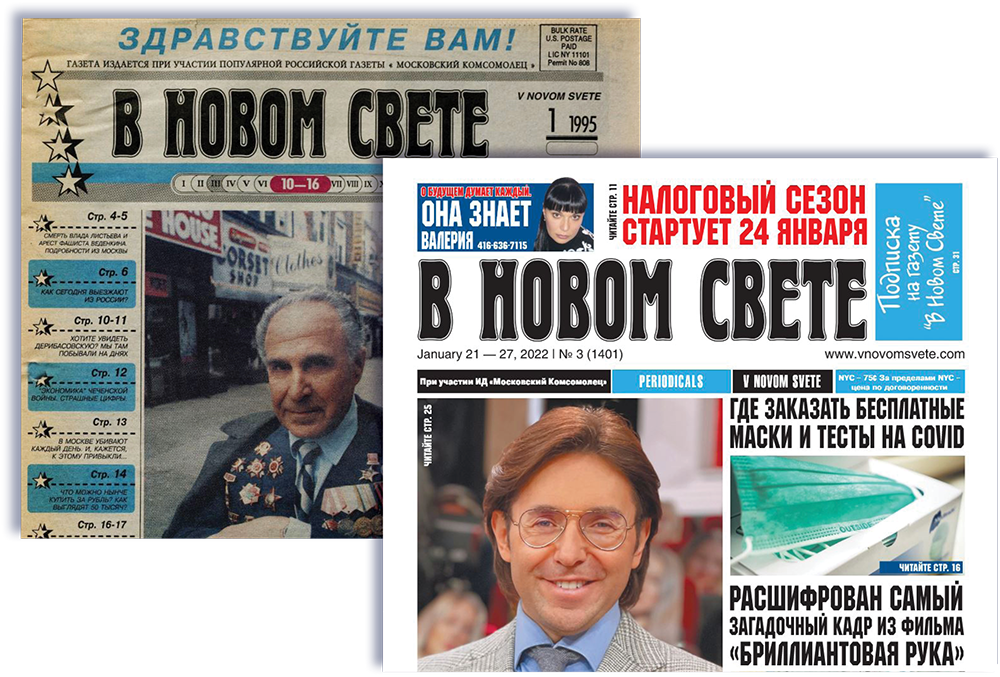
The first issue of V Novom Svete was published on March 10, 1995, right after a prominent journalist, Vladislav Listiev, was killed in Russia. Tapping into readers’ appetites for salacious news stories and taking advantage of the new sensationalist trend in Russian journalism, V Novom Svete found a formula for success: it combined reprints from Moskovskii Komsomolets (Московский комсомолец, Moscow Komsomolets), a popular Moscow-based daily newspaper known for its topical reporting on social and political issues, with original stories written by US-based Russian-speaking authors. Very soon it became the most popular Russian language weekly in America and the only publication to be distributed nationwide.
Over the years, famous Russian journalists such as Alexander Minkin, Mark Deutch, Alexander Khinshtein, Stanislav Belkovsky, Matvey Ganapolsky, Svetlana Khokhryakova, Alexander Melman and others were published in the pages of V Novom Svete. Legendary journalist Melor Sturua, who worked for Izvestia’s bureaus in New York and Washington during the Cold War, was one of the major columnists writing for V Novom Svete after he relocated permanently to the United States.
Strong analytical and cultural content contributed to the growing popularity of the publication in the early 2000s. Alexandra Sviridova’s exclusive interview with the future Editor-in-Chief of Russian Forbes, Paul Khlebnikov, who was later killed in Moscow, was one of many memorable articles created by the team of American journalists. In 2004, V Novom Svete was the winner of the US Independent Press Association awards for Best Editorial and Best Graphic Design.
After Novoe Russkoe Slovo went out of business in 2010, V Novom Svete became the only newspaper on the market producing quality Russian-language journalism. Writers publishing in the pages of V Novom Svete also worked for such prestigious outlets as the BBC, Russian Forbes, Voice of America, and Radio Liberty.
During the Covid-19 pandemic, many small businesses that advertised in V Novom Svete were shut down and subsequently the newspaper was never able to recover financially. Despite a stable and dedicated readership, V Novom Svete decided to end its print edition after 27 years, with the last issue published on May 6, 2022.
The V Novom Svete Digital Archive contains all obtainable published issues from 1995 to 2022. The archive offers scholars the most comprehensive collection available for this title, and features full page-level digitization, complete original graphics, and searchable text, and is cross-searchable with numerous other Infoteka digital resources.
- Product Code: DA-VNOV
- Year First Published: 1995
- Archive: 1995–2022
- Language: Russian
- Country: United States
- City: New York
- Frequency: Weekly
- Format: PDF, page-based
- Producer: Infoteka