
Some of the earliest casualties of revolutions are the ideological and institutional foundations of the political order that legitimized the ancien régime, the old form of government with its established political and socio-economic power relations. Religion and religious institutions, identified by Bolshevik revolutionaries as enablers of centuries-long Tsarist malfeasance, were additionally considered to be obstructionists of scientific progress, veritable peddlers of ancient superstitions. Thus, the eradication of religion would be elevated into policy shortly after the 1917 Revolution.
Russian Orthodox Church property was nationalized, plundered, and desecrated. Clergy were dispatched to gulags or even murdered. Religious beliefs and believers were ridiculed. Although the destruction of churches, mosques, and synagogues would in practical terms curtail public religiosity, it did not guarantee neither radical nor wholesale change in people’s perceptions of the world in which they lived.
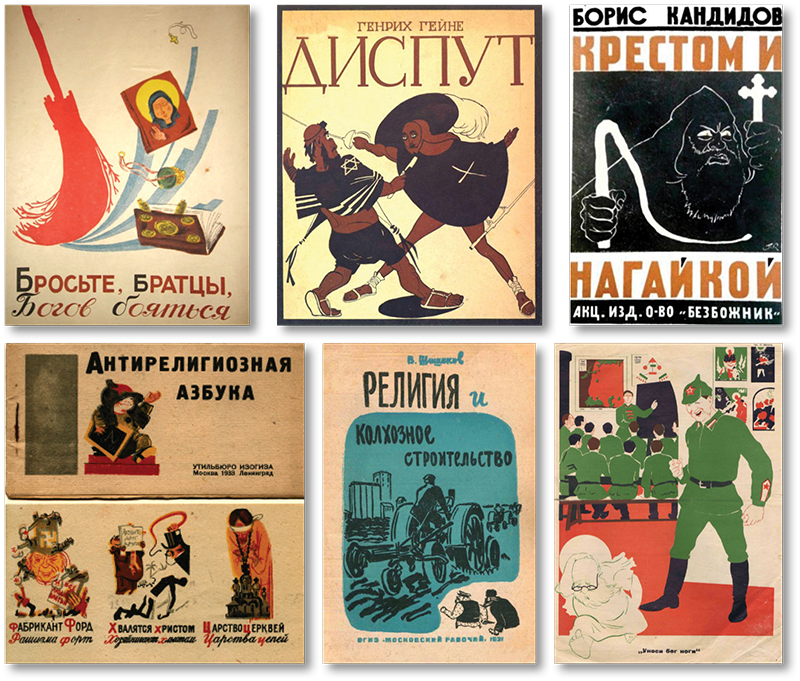
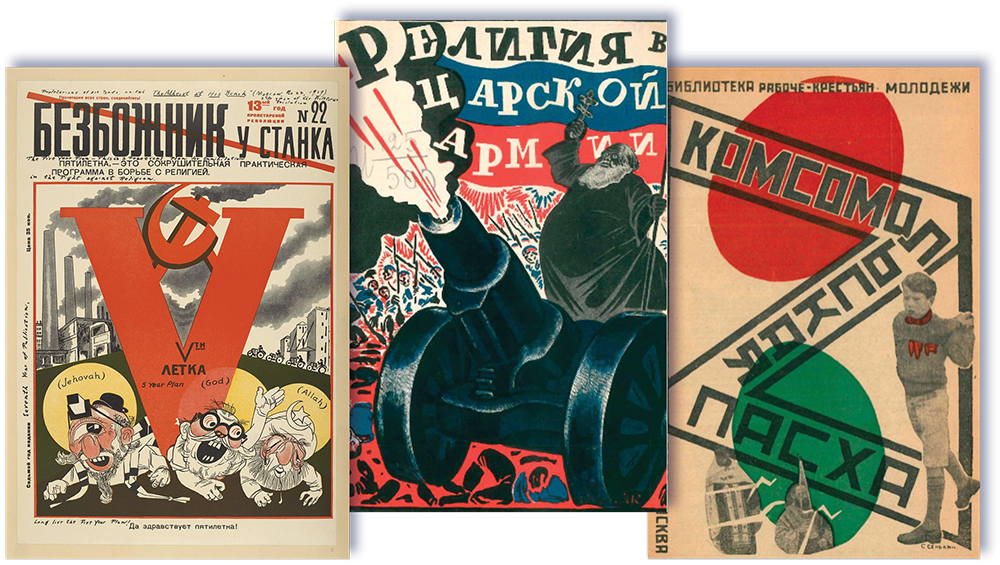
The matter of changing people’s worldviews, therefore, was left to propagandists and the radically rethought educational system. The result of these policy and educational changes was the launching of the fervid anti-religious propaganda campaigns of the early 1920s and 1930s, which saw the publication of hundreds of books, newspapers, and popular magazines designed to stoke hostility against Christianity and Christians.
Comprised of 280 books, the Soviet Anti-Religious Propaganda e-book collection is a treasure trove of these early propaganda efforts, containing some of the most important and influential works of anti-religious literature. Full-text searchable and cross-searchable with other Infoteka digital resources, the collection is a valuable resource for historians of the Soviet Union, religious studies, and secularization.
- Product Code: EB-SARP
- Number of Titles: 280
- Years of Publication: 1906–1961
- Language: Russian
- Country: Russia
- Cities: Multiple
- Format: PDF, chapter-based
- Producer: Infoteka