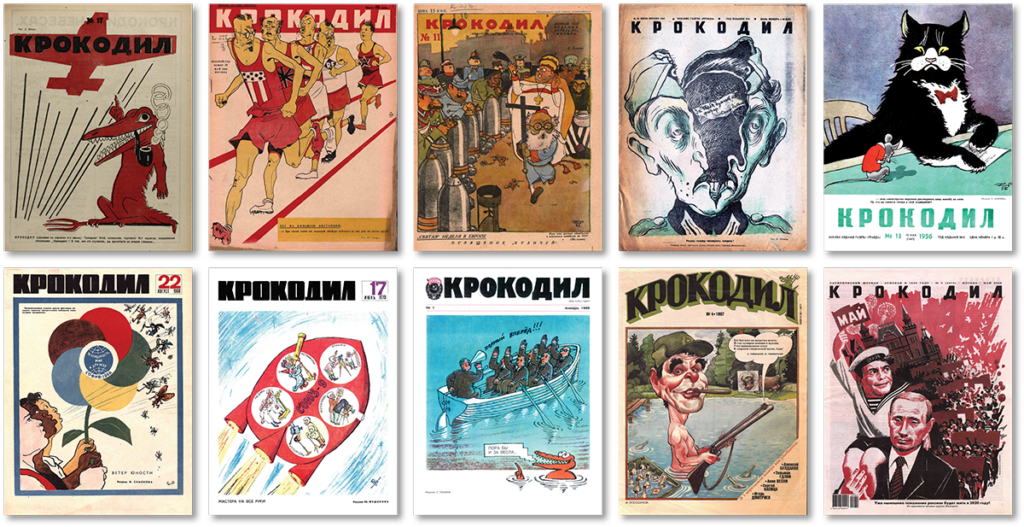
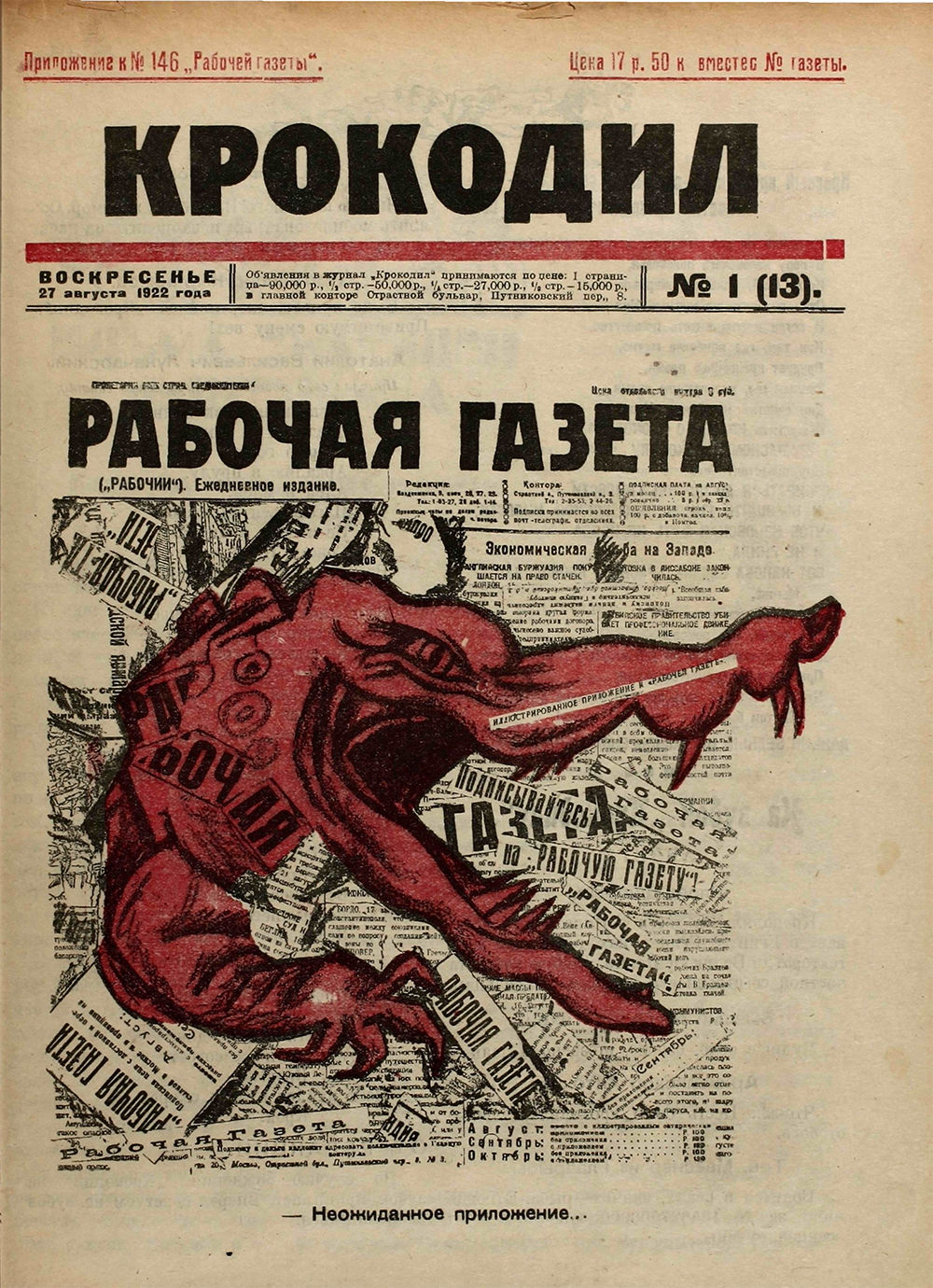
The leading satirical publication of the Soviet Era.
Krokodil (Крокодил, Crocodile) was a satirical magazine published in the Soviet Union. It was first published as an illustrated Sunday supplement to Rabochaia gazeta (Рабочая газета, Workers’ Newspaper; formerly Rabochii [Pабочий, The Worker]). The increasing popularity and circulation of Rabochaia gazeta, combined with the fact that many satirical voices were present in the widening pool of talented journalists, led the editors of Rabochii to establish a separate satirical issue to be circulated free of charge to the subscribers of the newspaper.
The newly established supplementary issue satirized a host of issues and holdovers from pre-revolutionary Russia, including White Russian emigres, the Orthodox Church, bourgeois intellectuals, as well as diverse groups of social outcasts (moonshiners, black marketeers, etc.). After a three-month period of largely haphazard satirical writing, the supplement found its stride and honed its method of bringing its readers incisive satirical commentary. The success of the experiment among its growing readership would directly lead to the establishment of Krokodil as a separate publication on August 27, 1922. Bursting from its front cover was a snarling red crocodile, an avatar that has symbolized the journal and its brand of political satire ever since.
Published continuously until 2008, Krokodil was at one time the most popular magazine for humorous stories and satire, with a circulation reaching 6.5 million copies. Krokodil lampooned religion, alcoholism, foreign political figures and events. It ridiculed bureaucracy and excessive centralized control. The caricatures found in Krokodil can be studied as a gauge of the ‘correct party line’ of the time. During the height of the Cold War, cartoons criticizing Uncle Sam, Pentagon, Western colonialism and German militarism were common in the pages of Krokodil.
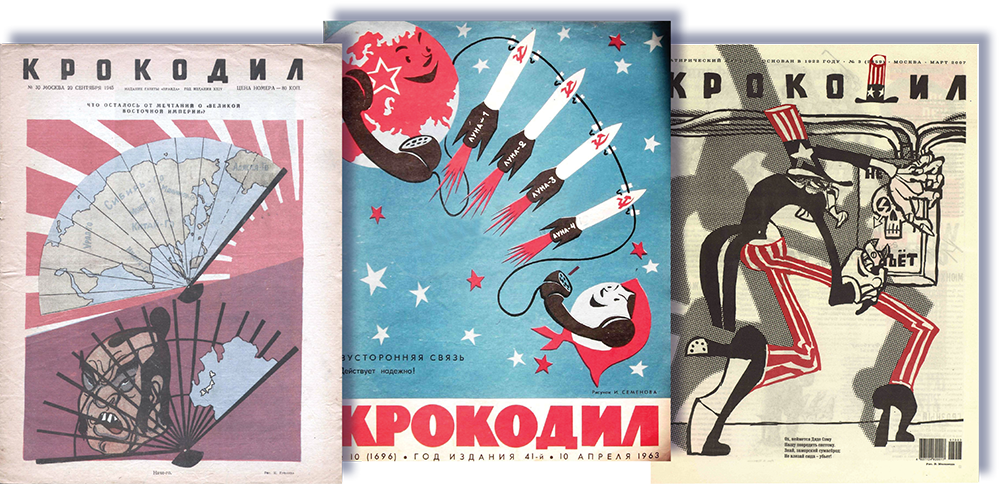
- Product Code: DA-KRO
- Year First Published: 1922
- Archive: 1922–2008
- Language: Russian
- Country: Russia
- City: Moscow
- Frequency: As published (varies)
- Format: PDF, page-based
- Producer: Infoteka
About the Archive
Featuring the most complete set of the journal available (more than 2,740 issues), the Krokodil Digital Archive has been designed specifically to show the rich images found in these pages and provide the convenience of browsing full pages, similar to working with print originals. Full-text searchable tags have been carefully added to identify individuals and organizations within the artwork, where full-text searching would not normally find results. Thanks to this added value, users are able to search for people and organizations and find them not only within the articles, but also wherever they are represented in caricatures and drawings. The Krokodil Digital Archive is also cross-searchable with numerous other Infoteka resources.